


scary zombie costumes
Unleash the Undead: Your Ultimate Guide to Terrifying Zombie Costumes
Stepping out as a zombie is not just about throwing on ripped clothes and smearing on a little fake blood. It is about embodying a creature of pure, unthinking terror and making others question whether the apocalypse has truly arrived. If you want to create scary zombie costumes that leave a lasting impression, it helps to understand what makes undead horror work. The enduring appeal of zombies comes from raw, primal fear, tapping into anxieties about disease, loss of control, and the fragility of life itself. A well-executed zombie costume goes beyond simple dress-up; it becomes a performance.
To create scary zombie costumes, focus on realistic decay, unsettling body language, and a clear zombie archetype. Beyond surface-level gore, attention to detail in makeup, tattered clothing, and controlled movement will elevate your look from ordinary to terrifying. Prioritize quality materials and thoughtful design so your costume stays comfortable and holds up all night.
Why Zombie Costumes Never Die (But You Might!)
Zombie costumes have serious staying power, consistently ranking among the most popular choices for Halloween and themed parties. This is not a fleeting trend; it is a cultural phenomenon rooted in decades of horror films, television shows, and video games. The best part is versatility: you can play a classic slow shambler, a fast-moving infected creature, or even a decaying historical figure. That flexibility, paired with the thrill of embodying something truly monstrous, keeps zombies stalking our nightmares and our costume parties year after year.
The Anatomy of a Truly Scary Zombie: More Than Just Ripped Clothes
A genuinely scary zombie costume involves more than a few tears in your outfit. It needs a thoughtful approach to decay, distress, and psychological impact. Consider the texture of rotting flesh, the vacant stare of lifeless eyes, and the unnatural angles of a reanimated corpse. At MorphCostumes, we test materials such as 125GSM+ fabric used in many designs so they can handle wear, movement, and the rough-and-tumble reality of a long Halloween night. A solid base costume gives you a reliable canvas for makeup and distressing, reducing the risk of a costume fail that can ruin the evening.
Beyond the Bite: Understanding Different Zombie Archetypes for Maximum Impact
Not all zombies are created equal. From the lumbering ghouls of classic cinema to the sprinting infected of modern thrillers, each archetype carries its own brand of fear. Picking your zombie persona early will guide costume choices, makeup, and performance. Are you a recent victim, still showing signs of humanity, or a long-decayed corpse barely holding together? Those details help you deliver a more specific and memorable portrayal, which separates a generic zombie from an unforgettable one.
Pro Tips for a Frighteningly Realistic Zombie Look (No Hollywood Budget Needed!)
Achieving a realistic zombie appearance does not require a professional effects artist. Simple techniques can look impressive. Layering thin strips of tissue with liquid latex can create peeling skin. Dark eyeshadow in the hollows of your face adds depth and a gaunt look. Do not forget the small stuff: dirt under fingernails, grime on clothing, and a slight sheen of sweat can sell the illusion. Think through your zombie’s story, including how it died and how long it has been shambling among the living, then match the damage and staining to that timeline.
Choosing Your Undead Persona: From Classic Shamblers to Viral Nightmares
Your undead persona is your character. Will you be a slow, relentless classic shambler, building dread with every dragging step? Or a fast-moving, rage-filled infected, creating panic with sudden, erratic movement? You can also go niche with a zombie costume realistic to a profession, such as a decaying doctor or a ruined bride. Think about the kind of fear you want to create. Zombie costumes for adults can be incredibly varied, giving you plenty of room to get creative without relying on gore alone.
The "Anatomy of a Scary Zombie": Essential Elements for Undead Horror
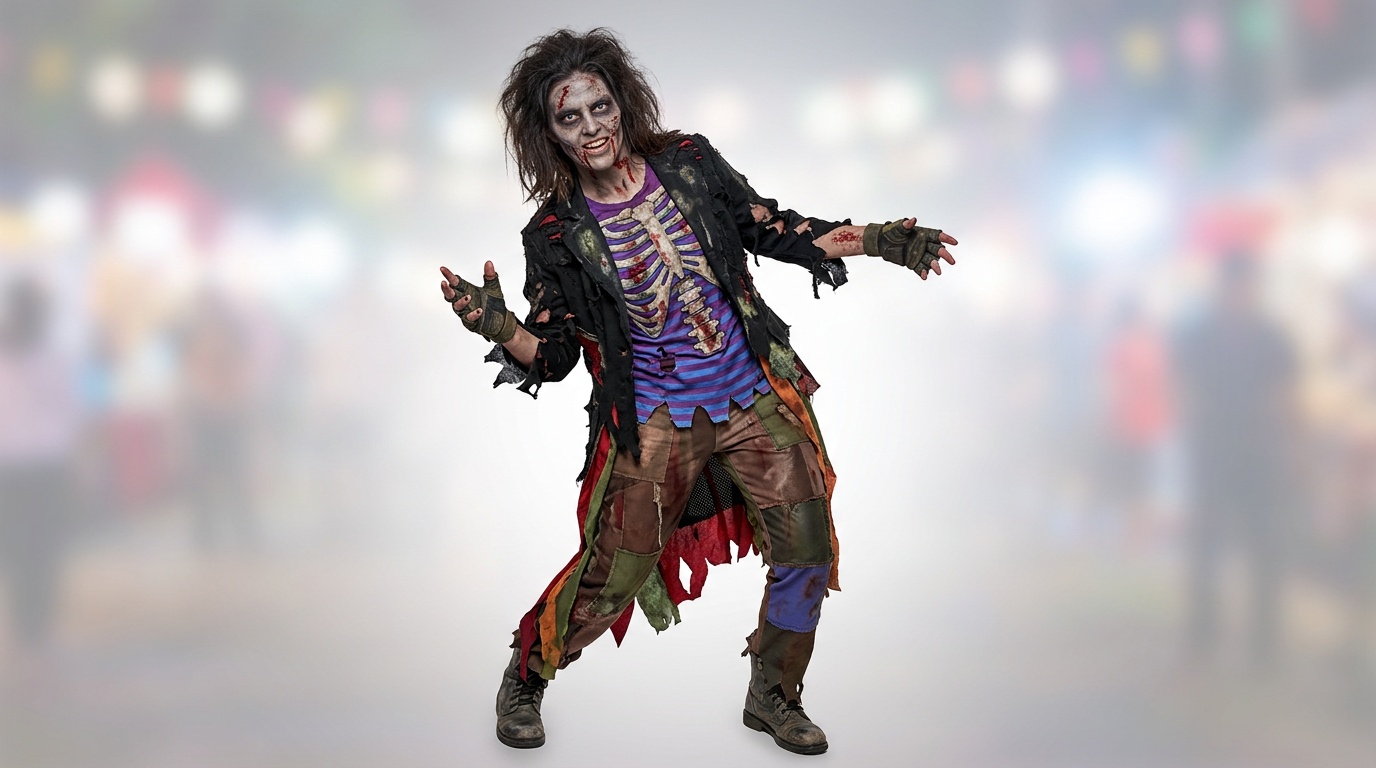
Creating scary zombie costumes comes down to specific details that separate a casual outfit from a nightmare-inducing look. You are building a story of decay and relentless hunger through appearance and behavior. At MorphCostumes, we care about fit because it affects how you move and how long you can stay in character. Many of our designs go through 30+ measurement checks, helping you get a fit that supports shambling, lunging, or dragging without feeling restricted. A costume that fits well looks better and holds up longer.
The Eyes Have It: Mastering the Vacant Stare and Menacing Gaze
The eyes are often the first point of contact, and they can be the most unsettling part of a zombie look. A convincing zombie has a vacant, unfocused stare that reads as empty and unhuman. Clouded contact lenses can help, but makeup does plenty of work on its own: bruised tones, shadows, and slightly reddened waterlines create a sickly, exhausted appearance. Keep your gaze steady and your face slack. Paired with a slightly open mouth, the effect is disturbing without needing constant movement.
Decay & Damage: Tattered Clothing, Rips, and the Art of Controlled Destruction
Your clothes should show what your zombie has survived. Ripping fabric at random rarely looks believable; distressing works best when it follows logic. Add claw marks, bite tears, or frayed hems where fabric would naturally catch. Sandpaper and a cheese grater can rough up elbows, knees, and cuffs, and diluted bleach can fade areas that look sun-worn (use it carefully and test first). Layer dirt and grime in uneven tones to suggest age and weathering. Done right, this supports a zombie costume realistic enough to read from across the room.
The "Primal Scream" Posture: How Body Language Elevates Your Zombie
A scary zombie is not a static display. Body language does a lot of the work. Use a hunched back, dragging feet, stiff limbs, or a head tilt that looks slightly wrong. Practice a shambling gait, a jerky shoulder twitch, or a slow lurch that stops one beat too late. Even when you are still, small details like a tremor in your hand or a delayed head turn can feel more unsettling than constant flailing. Movement turns a costume into a character.
Sound and Fury: Subtle Noises and Movement That Amplify the Terror
Sound can raise the fear factor fast. A low moan, a rasping breath, or the scrape of shoes can build tension before anyone even sees you clearly. Match sound to the archetype: infected zombies can wheeze or choke, while long-dead corpses can click their teeth or breathe in short, dry bursts. Keep it controlled and occasional so it stays effective. When sound and movement align, your presence feels real, not performative.
Beyond the Blood: Exploring Psychological Horror in Zombie Costumes
Gore works, but deeper fear often comes from unease. A zombie that hints at who it used to be can be more disturbing than an outfit soaked in fake blood. Play with contrast: a clean dress with dead eyes, a neat uniform with a broken posture, or a bride who looks perfectly put together until you notice the mouth wounds. That "almost human" feeling sticks with people. If you want a look that lingers in photos and in memory, let the horror come from what feels wrong, not just what looks messy.
From Viral Outbreak to Classic Shambler: Mastering Zombie Archetypes
To stand out in the horde, pick a clear narrative for your character and build around it. A distinct archetype helps you coordinate movement, makeup, and clothing so the finished look feels intentional instead of thrown together. Start with the cause of the transformation, since it affects everything from skin tone to fabric damage. A freshly infected character reads differently than a decades-old corpse pulled from the ground.
At MorphCostumes, we design with movement in mind because a character only works when you can commit to the physical acting. With 30 distinct measurement checks on many garments, you can lurch, sprint, or crawl with fewer worries about seam splits. When performance and design match the archetype, the result feels cohesive and more convincing.
The "Feral Beast" Zombie: Raw, Unpredictable, and Utterly Terrifying
The feral beast archetype is driven by pure hunger with no coordination left. It relies on twitching movement, sudden bursts of speed, and an animal-like posture. Clothing should look shredded and violently damaged, with deep tears, heavy staining around the collar and chest, and signs of struggle rather than slow decay.
To embody it, switch between stillness and sharp movement. Use quick head tilts and sudden directional changes. Makeup should focus on irritation around the mouth and nose, with deep crimson tones that suggest fresh feeding. This high-energy style works best in dim spaces where unpredictability can do the scaring for you.
The "Infected" Zombie: The Subtle Horror of the Fast-Moving, Contagious Threat
The infected zombie represents the immediate aftermath of a biological disaster. Unlike long-dead ghouls, this character wears relatively fresh clothing that has been dirtied or torn during panic and flight. The fear comes from speed and from the traces of humanity that still show in facial expressions and modern attire.
Makeup should focus on high-contrast vascular detail: purples and blues along the neck, collarbone, and temples. Add sweat shine, pale skin, and reddened eyes to signal fever. Movement should be aggressive and direct, communicating to everyone nearby that this threat is fast and close.
The "Undead Soldier/Experiment Gone Wrong" Zombie: A More Organized, Menacing Presence
An undead soldier or lab experiment brings structure and intimidation. Tactical gear, heavy boots, or torn restraints look especially scary when paired with visible decay. The contrast between authoritative clothing and ruined flesh reads as an unstoppable force that still carries echoes of training or containment.
Move with heavy, mechanical pacing, as if the body is trying to follow old routines through reanimation. Rhythmic footsteps and a rigid posture can do more than frantic movement here. The goal is inevitable pressure, closing distance slowly and without hesitation.
The "Ghostly/Ethereal" Zombie: Unsettling and Supernatural Terror
The supernatural or ethereal zombie shifts away from biology and into spiritual decay and curses. This character can look as if it glides rather than walks, using slow steps and fluid arm movement to create a weightless feel. Clothing should be pale, dusty, and loose, with ash-like smudges and dry soil to suggest long burial.
Use pale whites, grays, and soft blues to drain warmth from your face. Skip bright red blood and focus on dry texture, hollow cheekbones, and shadowed eyes. This style builds tension through quiet presence and slow motion, not jump scares.
The "Pop Culture" Zombie: Drawing Inspiration from Iconic Media
Pop culture inspiration lets you create a look people recognize right away. Whether you recreate a classic slow ghoul or a mutated creature from a modern survival game, consistency matters. Match the lore, the movement style, and the signature details so the character reads clearly to fans.
Pay attention to distinct traits made famous by that source material, such as a signature limp, a repetitive sound, or a specific vocal pattern. When you get those details right, your portrayal becomes a tribute that starts conversations and earns respect from other horror fans.
| Zombie Archetype | Movement Style | Key Visual Elements | Primary Scare Factor |
|---|---|---|---|
| Feral Beast | Erratic, twitching, sudden bursts | Shredded garments, heavy facial staining | Unpredictable, animalistic aggression |
| Infected | Rapid sprinting, aggressive lunges | Prominent veins, feverish sheen, fresh tears | Urgency, speed, contagious panic |
| Undead Soldier | Heavy, rigid, mechanical pacing | Torn tactical gear, structured uniforms | Imposing size, unstoppable momentum |
| Ghostly / Ethereal | Slow gliding, fluid gestures | Pale fabrics, dusty textures, hollow eyes | Supernatural unease, haunting silence |
Gear Up for the Apocalypse: Top Picks for Terrifying Zombie Costumes
Finding the balance between scary visuals and physical comfort is the secret to making it through a long night. Plenty of mass-produced costumes rely on thin, itchy fabric that tears in the wrong spots or limits movement. At MorphCostumes, we tackle that with higher-quality materials, including 125GSM+ fabric in many designs, giving you a more durable and comfortable base for your undead look.
Whether you build a custom character or buy a ready-to-wear outfit, durability matters. A reliable base lets you stay focused on the makeup, movement, and character work, instead of worrying about rips or missing pieces. That reliability keeps your scary zombie costumes looking good from the first lurch to the last step home.
Full-Body Frights: The Power of Seamless Zombie Morphsuits
If you want a fast transformation that covers you head to toe, a high-quality printed spandex bodysuit delivers convenience and impact. Many designs use detailed, photo-real prints of exposed muscle, bone, and wounds, creating a strong illusion without hours of body paint or latex work.
Our suits use double stitching and a four-way stretch blend so they contour to your body while staying breathable. The fabric is designed so you can see, breathe, and drink through it, which helps you keep the mask on and stay in character during parties without needing constant adjustments.
Gore-tastic Getups: Realistic Zombie Costumes with Max Impact
If you prefer a dimensional outfit, a pre-distressed ensemble with integrated prosthetic details gives a tactile, movie-style look. Higher-quality options include molded latex wounds, exposed rib effects, and textured elements sewn into the garment so the damage looks built-in, not painted on. This is a strong choice when you want big impact with less prep time.
If you want a chaotic twist on classic horror, unexpected themes can help. One example is the Light Up Scary Jester Mens costume, which pairs a sinister entertainer vibe with glow details that stand out in dark spaces. It is a good reminder that you can mix horror styling with lighting or bold visuals while keeping the overall look scary.
DIY Demystified: Essential Components for Your Homemade Zombie Ensemble
Building your own undead character is rewarding and gives you full control over every tear, stain, and scar. To start a scary zombie costumes diy project, grab old clothes made from natural fibers like cotton or denim since they hold distressing and dye better than many synthetics. Use a wire brush, coarse sandpaper, and a small serrated blade to wear down cuffs, knees, and collars in places that look natural.
For more realistic staining, skip bright red paint that can dry glossy and pink. Mix dark brown, black, and deep crimson fabric dyes to mimic dried, oxidized blood and ground-in dirt. Apply with spray bottles, sponges, and light splatter, concentrating on elbows, knees, cuffs, and the front of the chest where grime would collect during a fall or struggle.
Accessory Arsenal: The Finishing Touches That Seal the Deal
Accessories often separate a decent outfit from a character that feels real. Broken shackles, weathered bandages, or a foam prop tool covered in grime can establish a backstory quickly. Props also give your hands something to do, which naturally improves posture and movement when you are staying in character.
Prioritize safety and comfort. Choose lightweight foam or hollow plastic props that will not become a burden after a few hours. Secure hand-held items with a hidden lanyard or stash them in a belt so you can free your hands when needed without dropping anything in a crowd.
Kid-Approved Terror: Spooky Zombie Costumes for Younger Survivors
Kids love spooky fun, but comfort and visibility matter. A zombie costume boy look or a zombie costume girl outfit should be durable and easy to move in so trick-or-treating stays safe. Skip heavy masks that block vision or make breathing uncomfortable, since those tend to come off quickly anyway.
Our youth designs focus on wearability, using soft, flexible fabrics that work well with layers on colder fall nights. We keep elements lightweight and securely attached to reduce tripping hazards and lost pieces. The goal is a costume that looks spooky and still feels fun after a long walk around the neighborhood.
Beyond the Gore: Psychological Scares and Zombie Survival Tactics
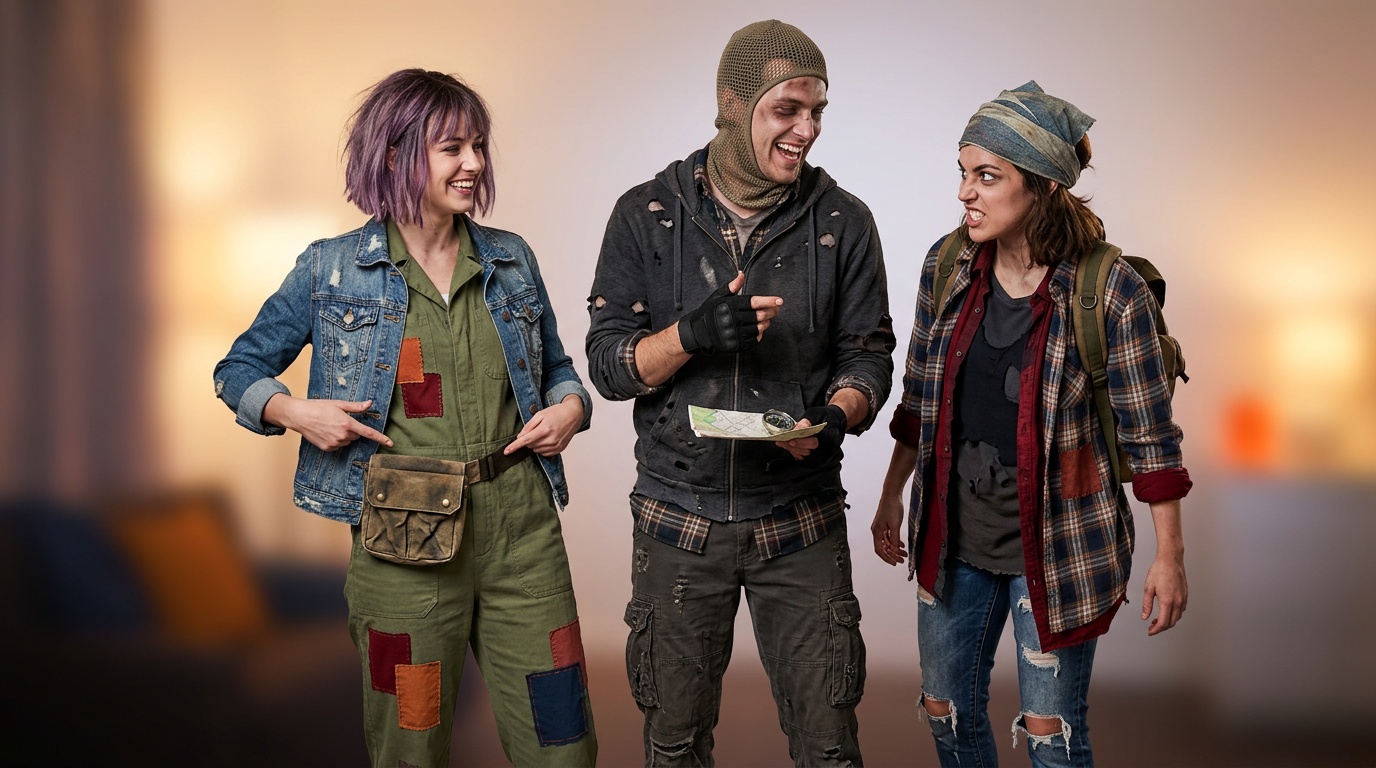
True terror relies on anticipation and that uneasy feeling that something is not quite right. Heavy blood effects can work, but visual shock loses power when it is the only trick. Taking your character further to create scary zombie costumes means leaning into behavior, timing, and the uncanny nature of the undead. When you understand instinctive reactions, you can turn a good outfit into a chilling experience people remember.
We build costumes with durability in mind so you can commit to the acting. When your outfit holds up, you can stay in rigid poses or pull off sudden movements without worrying about tears or shifting pieces. That reliability makes it easier to focus on the scare, not the outfit.
The "Aim for the Head" Mindset: Embodying Urgency and Desperation
To portray convincing undead behavior, commit to single-minded hunger. A zombie wants one thing, and it does not negotiate. When interacting with others, hold unblinking eye contact slightly above their eyes, aimed at the forehead or collarbone, as if you are sizing up a meal. That focused gaze reads as predatory and unsettles people more than a wandering stare.
Let your movement show a lack of caution. Push forward with steady momentum and brush past walls or furniture without reacting. That disregard for comfort signals a body that does not protect itself, which makes the character feel relentless and difficult to stop.
Subtle Terrors: How Restraint Can Be Scarier Than Excess
In horror, what people imagine can hit harder than what you show. Instead of constant fake blood, try the power of stillness. A zombie that stands motionless in a dim corner, staring into space, creates tension because everyone waits for the first movement.
When you finally move, keep it slow, controlled, and quiet. A dragging step behind someone can be scarier than a loud rush. Restraint builds suspense, which makes the moments when you do lurch or groan land with more impact.
The "Uncanny Valley" Effect: When Almost Human Is Truly Frightening
The uncanny valley describes the discomfort people feel when something looks almost human but is slightly off. You can use that reaction by keeping recognizable human elements visible, then twisting them. A neat hairstyle paired with dead eyes, or a professional uniform worn with a broken posture, creates a contrast that people find deeply unsettling.
Focus on small behavior glitches: tilt your head too far, keep facial muscles slack, or let one arm hang limp while the other twitches in a steady rhythm. Those details break normal patterns and make your character feel wrong in a way people cannot ignore.
Creating a "Zombie Zone": Setting the Mood and Environment
Your performance gets stronger when the environment supports it. If you are hosting or decorating, build sensory cues that match your character: low lighting, flicker effects, and distant mechanical hums can prime people to feel uneasy before you even appear.
Place yourself where shadows distort your silhouette and make your posture look stranger. Use corners, narrow hallways, and blind turns to control how people approach. When the space forces a closer encounter, your presence feels immediate and harder to shrug off.
Your Zombie Survival Guide: Tips for a Killer Night Out
Staying undead for an entire evening takes planning. These tips help you keep energy up, stay safe, and stay in character longer.
Undead Survival Checklist
- Hydrate early: Drink water before face paint or full-body suits to reduce overheating.
- Protect your skin: Apply a barrier cream before heavy makeup or liquid latex so removal is easier.
- Footwear matters: Wear comfortable, broken-in shoes under your distressed look since you may be on your feet for hours.
- Keep essentials accessible: Use a hidden pocket or secure pouch for your ID, keys, and phone.
- Plan for breaks: Know how to remove a mask or headpiece quickly if you need a cool-down.
Combine practical planning with controlled, psychological performance and you get a night that is fun for you and unsettling for everyone else. With quality materials and a clear character story, your scary zombie costumes can deliver strong scares without falling apart mid-event.
Frequently Asked Questions
How do I distress clothing for a scary zombie costume?
To create truly scary zombie costumes, think about your zombie's story when distressing clothes. Instead of random rips, add tears where fabric would naturally catch or show damage from a struggle. You can use sandpaper or a cheese grater to rough up areas like elbows and knees, then layer on dirt and grime for a weathered look.
What's the best scary Halloween costume?
For a truly terrifying Halloween, a scary zombie costume is always a top choice. Zombies tap into primal fears, making them incredibly effective and consistently popular. With a great base costume and thoughtful details, you can create a look that makes people question if the apocalypse has arrived.
Are there any illegal Halloween costumes?
While most Halloween costumes are perfectly fine, it's always smart to avoid anything that could be mistaken for a real uniform, like a police officer or firefighter. Also, be mindful of cultural appropriation or anything that could be genuinely offensive. Our goal at MorphCostumes is to help you have the best time, so choose something fun and respectful.
What is the most overused Halloween costume?
Some costumes, like witches or vampires, appear every year, but that doesn't mean they can't be amazing with a unique twist! Even with zombie costumes, you can stand out by choosing a specific archetype, like a fast-moving infected or a decaying historical figure. It's all about the quality and the details you put into it.
How can I make my zombie costume look truly terrifying?
To make your scary zombie costume truly terrifying, focus on realistic decay and unsettling body language. Pay attention to details like a vacant stare, gaunt makeup, and tattered clothing that tells a story of survival. Choosing a specific zombie archetype, like a slow shambler or a fast infected, will also guide your performance and make your look unforgettable.
Why are zombie costumes so popular year after year?
Zombie costumes never go out of style because they tap into our primal fears about disease and loss of control. Their enduring popularity also comes from their incredible versatility, allowing you to portray anything from a classic shambler to a modern infected creature. It's a cultural phenomenon that lets you embody something truly monstrous.
Last reviewed: May 24, 2026 by the MorphCostumes Team
