Key Takeaways
- The 1960s featured two distinct fashion eras: mod in the early 60s and hippie in the late 60s.
- Mod fashion focused on clean lines, geometric shapes, and bold colors.
- Hippie style embraced flower power, tie-dye, and bohemian rebellion.
- Understanding the shift between mod and hippie styles is essential for authentic 60s dress up.
- Your choice of hemline and accessories depends on whether you’re channeling early or late 60s fashion.
Table of Contents
- Understanding 60s Fashion: From Mod to Hippie Revolution
- Mod Style vs. Hippie Style: Two Very Different 60s Vibes
- Building Your 60s Dress-Up Outfit: The Essential Pieces
- Creating an Early 60s Mod Look: Step-by-Step
- Best 60s Costume Options: Professional vs DIY Solutions
- Men’s 60s Outfit Essentials: From Beatnik to Peacock Revolution
- Women’s 60s Costume Styling: Beyond the Mini Skirt
- Couples 60s Costume Ideas: Coordinated Without Matching
Understanding 60s Fashion: From Mod to Hippie Revolution
The 1960s wasn’t just one fashion moment—it was a full-blown style revolution that split the decade into two distinct eras. The early 60s championed clean lines, geometric precision, and bold colors through mod fashion, while the late 60s embraced flower power, tie-dye, and bohemian rebellion through hippie culture. Understanding this shift is crucial for authentic 60s dress up because it determines everything from your hemline to your accessories.
The mod movement emerged from London’s youth culture, influenced by designers like Mary Quant who championed the mini skirt and A-line shift dress. Meanwhile, the American counterculture movement brought psychedelic prints, fringe, bell-bottoms, and earth tones. Both movements rejected conservative fashion of previous decades, but they took completely different approaches to doing it. If you’re looking for an easy way to capture either style, 1960s themed fancy dress costumes offer a quick and authentic solution.
What makes 60s fashion so appealing today is the confidence factor. Whether you’re channeling Twiggy’s geometric mini dress or a flower child in a paisley maxi, 60s style is about making a statement. The decade proved that clothing could be political, creative, and fun all at once. For a bold mod-inspired look, consider the Women’s 60s Mod Union Jack Dress for instant impact.
Mod Style vs. Hippie Style: Two Very Different 60s Vibes

Mod Style (Early-to-Mid 60s) celebrates youth culture, precision, and modernity. It’s about bold geometric patterns, primary colors, clean lines, and attitude. Think Twiggy, The Who, and Carnaby Street London. Mod style is graphic, confident, and sometimes deliberately provocative. The silhouettes are slim and simple; the colors are bright and clashing; the attitude is cool and detached.
Hippie Style (Late 60s-Early 70s) celebrates individuality, nature, and anti-establishment values. It embraces bohemian elements, earthy colors, organic patterns, and layering. Think Janis Joplin, Woodstock, and San Francisco counterculture. Hippie style is expressive, spiritual, and deliberately different. The silhouettes are loose and flowing; the colors are muted or psychedelic; the attitude is laid-back and free-spirited.
Key Distinction: You cannot authentically blend these two styles. Choosing to do a mod 60s look means committing to geometric patterns, bold primaries, structured silhouettes, and minimal jewelry. Choosing to do a hippie 60s look means committing to earthy tones, organic patterns, flowing fabrics, and layered jewelry.
For more inspiration on festival-ready looks and how the 60s influence modern events, check out what type of festival goer are you? on our blog.
Building Your 60s Dress-Up Outfit: The Essential Pieces
Finding the Right Base Dress
The success of your 60s dress up look depends entirely on getting the base dress right. For early 60s mod style, seek out A-line dresses with clean lines, minimal embellishment, and knee-length or shorter hemlines. The fabric should be crisp—cotton, linen blends, or structured synthetics that hold their shape. For a playful take on mod, the Womens 60s Pink Swirl Dress Costume is a standout choice.
For late 60s hippie style, you want looser, more flowing fabrics. Maxi dresses with empire waists, wrap dresses, and layered pieces work beautifully. Look for natural fabrics or printed jersey that moves with your body. The fit matters more than the size label—your 60s dress should skim your body without clinging.
Footwear: From Go-Go Boots to Mary Janes
Go-go boots—white, black, or patent leather, typically hitting mid-calf—are the quintessential 60s shoe. They’re bold, youthful, and they completely transform an outfit. Pair them with a shift dress and you’re instantly transported to 1965. The key is that boots should have a sleek, streamlined silhouette, not chunky or overly detailed.
Mary Jane shoes offer a more innocent, schoolgirl interpretation of 60s style. With a single strap across the instep and a rounded toe, they work beautifully with tights and shift dresses for that early 60s vibe. Platform shoes and chunky heels appeared as the decade progressed, especially in the late 60s.
Accessories: The Make-or-Break Details
Colored tights were revolutionary in the 60s. Pale pink, white, or bold patterns transformed a simple dress. Thick black tights gave a more dramatic, modern look. Consider wearing tights in an unexpected color or pattern—it’s a small detail that screams “I know my 60s fashion.”
For jewelry, keep it minimal for mod style (thin metal bracelets, small earrings, delicate chains), or go bold with hippie style (chunky wooden beads, peace sign pendants, long layered necklaces). The difference is in the materials and volume—mod is refined; hippie is expressive.
Creating an Early 60s Mod Look: Step-by-Step
Step 1 – Choose Your Base: Select a shift dress in a single bold color or a geometric pattern. The silhouette should be straight and unfitted, hitting at or above the knee.
Step 2 – Add Tights: Pair with either neutral tights, white tights, or tights in a complementary color. Consider patterned options like stripes or Op Art designs.
Step 3 – Select Footwear: Go with go-go boots in white or black, Mary Jane shoes, or simple ballet flats. The shoe should be sleek and minimal to keep the look authentic.
Step 4 – Accessorize: Add minimal jewelry—think small hoop earrings or a thin bangle. For a true mod touch, try a bold hairband or a geometric handbag.
Step 5 – Hair and Makeup: Style your hair in a sleek bob or a high ponytail. For makeup, focus on dramatic eyeliner, pale lips, and defined brows to channel that iconic Twiggy look.
Best 60s Costume Options: Professional vs DIY Solutions

When planning your 60s dress up look, you face a crucial decision between investing in professional-quality costumes or assembling pieces yourself. Professional costume retailers like MorphCostumes offer complete, tested solutions that eliminate guesswork, while DIY approaches require more effort but allow customization. The difference isn’t just about price—it’s about accuracy, fit, and the confidence that comes from knowing your look will work.
Professional 60s costumes solve the authentication problem that plagues most DIY attempts. When MorphCostumes designs a decade costume, they research period-accurate details like hemlines, color palettes, and fabric choices. This means you get the right shade of orange for a 1960s shift dress, the correct proportions for go-go boots, and accessories that actually belonged in the era. DIY shoppers often end up with “vintage-inspired” pieces that miss crucial details, creating a look that feels more like a modern interpretation than authentic 60s dress up. For a fun and feminine hippie option, try the Womens Groovy Hippie Costume for a complete ensemble.
The fit factor cannot be overstated. Quality costume retailers test their patterns across multiple body types and size ranges, ensuring that a 60s shift dress actually hangs correctly rather than clinging in modern ways. They understand that 60s silhouettes were designed for different undergarments and body ideals. When you buy separates from various sources, you’re gambling that they’ll work together proportionally—a risk that often results in an unbalanced final look.
| Factor | Professional Costumes (MorphCostumes) | Thrift Store DIY | Fast Fashion Retailers |
|---|---|---|---|
| Period Accuracy | Research-backed authentic details | Hit-or-miss depending on finds | Often inaccurate proportions |
| Complete Look | All accessories included | Requires multiple shopping trips | Basic pieces only |
| Fabric Quality | 125GSM+ breathable materials | Varies widely by piece | Often cheap, uncomfortable fabrics |
| Fit Guarantee | 30+ measurements tested per design | No guarantees on vintage sizing | Modern cuts that don’t capture era |
| Time Investment | One purchase decision | Multiple store visits required | Quick but often disappointing results |
MorphCostumes 60s Collection: Authentic Period Pieces
Best for: Anyone who wants guaranteed authenticity and complete looks without the research and hunting required for DIY assembly.
The MorphCostumes 60s collection demonstrates exactly why professional costume design matters. Their 1960S Costumes?Gender=Womens collection includes both early mod and late hippie aesthetics, with each piece researched for historical accuracy. The mod shift dresses feature the correct A-line proportions and hemlines that defined the era, while their hippie-inspired pieces capture the flowing, layered aesthetic without looking like a caricature.
What sets these costumes apart is the attention to complete looks rather than individual pieces. When you purchase their Girls Hippie Girl Costume, you receive not just a dress but coordinated accessories that work together harmoniously. This eliminates the common DIY problem of accumulating pieces that don’t quite mesh into a cohesive 60s outfit. The fabrics meet their 125GSM standard, ensuring comfort during extended wear while maintaining the drape and structure essential to 60s silhouettes.
Quality Advantage: MorphCostumes conducts over 500,000 in-person quality checks annually, ensuring that every 60s costume meets their standards for accuracy, comfort, and durability before reaching customers.
For more tips on assembling the perfect costume and fun trivia, visit our blog for inspiration.
Men’s Groovy Hippie Suit: Capturing Late 60s Counterculture
Best for: Men seeking an authentic late 60s hippie look for themed parties, Halloween, or costume events.
The Mens 60s British Spy Costume Blue exemplifies how professional costume design translates historical research into wearable pieces. This isn’t a generic “hippie costume”—it’s a carefully constructed interpretation of late 1960s counterculture fashion. The suit features the wide lapels, bold patterns, and relaxed fit that defined the era when men’s fashion began rejecting traditional business attire in favor of more expressive, colorful options.
The pattern and color choices reflect authentic late 60s aesthetics rather than modern interpretations of what “looks hippie.” The fabric weight and construction allow for comfortable movement while maintaining the suit’s structure throughout wear. This addresses a common problem with cheaper alternatives that either feel costume-like due to flimsy construction or look too modern due to contemporary tailoring. For men tackling 60s dress up, this represents a complete solution that eliminates guesswork about fit and authenticity.
Men’s 60s Outfit Essentials: From Beatnik to Peacock Revolution
Men’s 60s dress up requires understanding the decade’s dramatic shift from conservative suiting to bold self-expression. Early 60s men’s fashion maintained structured silhouettes with slim-cut suits, narrow ties, and polished leather shoes—think Mad Men meets British Invasion. By decade’s end, the “Peacock Revolution” introduced vibrant colors, wider lapels, and experimental fabrics that challenged traditional masculinity.
The key distinction lies in timing and subculture. Mod men embraced fitted suits in unexpected colors, turtlenecks, and Chelsea boots. Hippie men adopted flowing fabrics, ethnic influences, and layered accessories. Both rejected the gray flannel conformity of the 1950s, but through completely different aesthetic languages. For more on how pop culture and comics influenced 60s style, enjoy this blog post on Marvel cameos.
For authentic 60s outfit male styling, focus on fit over flash. Even the most conservative early 60s look requires precise tailoring—jackets should be trim through the torso, trousers should sit higher on the waist, and everything should appear deliberately chosen rather than default business attire.
Mod Suits and Slim Silhouettes
The mod suit revolutionized menswear by prioritizing youth and precision over traditional authority. These suits featured shorter jackets with minimal padding, high button stances, and trousers that skimmed the body without excess fabric. Colors expanded beyond navy and charcoal to include burgundy, forest green, and even subtle patterns.
Pair mod suits with thin ties, pointed-toe shoes, and minimal accessories. The aesthetic celebrates clean lines and attention to detail—pocket squares should be crisp, shoes should be polished, and hair should be precisely styled. This isn’t casual weekend wear; it’s deliberate sophistication with a rebellious edge.
Late 60s Bohemian Menswear
As the decade progressed, men’s fashion embraced flowing shirts, wide-leg trousers, and ethnic-inspired accessories. Nehru jackets, peasant shirts, and bell-bottoms became acceptable alternatives to traditional suiting. Natural fabrics like linen and cotton replaced synthetic blends, emphasizing comfort and movement over structure.
The hippie aesthetic for men includes layered necklaces, headbands, and longer hair. Unlike women’s hippie fashion, men’s bohemian style often retained some structured elements—a flowing shirt might be paired with fitted jeans, or a traditional jacket might be worn over a patterned turtleneck.
Women’s 60s Costume Styling: Beyond the Mini Skirt
While mini skirts dominate popular perception of 60s costume womens fashion, the decade offered diverse silhouettes that flattered different body types and personal styles. Empire waist dresses, A-line coats, and palazzo pants provided alternatives to the ultra-short hemlines, especially for professional settings or conservative social circles.
The key to successful women’s 60s styling lies in understanding proportion and attitude. Mod fashion emphasized geometric shapes and bold contrasts—if you’re wearing a mini skirt, balance it with a structured top and minimal accessories. Hippie fashion celebrated natural beauty and flowing movement—if you’re choosing a maxi dress, enhance it with layered jewelry and textured fabrics. For a classic hippie-inspired look, the Womens Long Hippie Dress Costume is a comfortable and stylish option.
Sizing Reality Check: Vintage 60s women’s clothing runs 1-2 sizes smaller than contemporary sizing due to different body measurements and fit preferences. Always check actual garment measurements rather than relying on size labels.
Professional 60s Looks for Modern Settings
Workplace-appropriate 60s dress up ideas focus on the decade’s more structured pieces. A navy shift dress with a coordinating jacket, worn with neutral tights and low-heeled pumps, captures 60s sophistication without appearing costume-like. Add a simple string of pearls and a structured handbag for complete authenticity.
Alternatively, a well-fitted turtleneck with a knee-length A-line skirt and tall boots creates a mod-inspired look that works in contemporary professional settings. The key is choosing pieces that reference the era without overwhelming your professional credibility.
Couples 60s Costume Ideas: Coordinated Without Matching

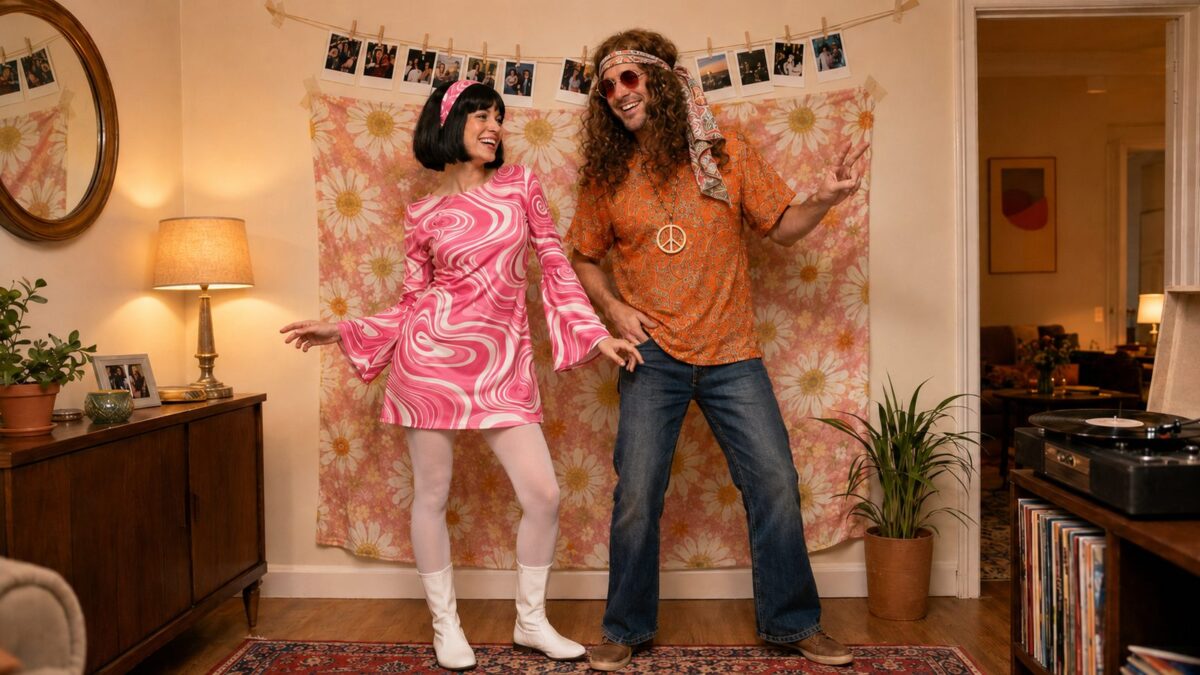
Successful 60s costume ideas for couples require choosing complementary aesthetics rather than identical outfits. The most effective approach pairs one partner in mod styling with another in bohemian elements, representing the decade’s evolution from structured rebellion to free-form expression.
Consider these proven combinations: a woman in a geometric shift dress with a man in a slim-cut suit and narrow tie; a woman in a flowing maxi dress with a man in bell-bottoms and a peasant shirt; or both partners in full mod regalia with coordinating colors but different silhouettes.
| Couple Style | Her Look | His Look | Key Accessories |
|---|---|---|---|
| Early 60s Mod | Geometric shift dress, go-go boots | Slim suit, narrow tie, Chelsea boots | Matching color palette, minimal jewelry |
| Late 60s Hippie | Maxi dress, layered jewelry | Bell-bottoms, flowing shirt, vest | Earth tones, natural materials |
| Mixed Decade | Mod mini dress | Hippie shirt and jeans | Coordinated accessories, peace signs |
Frequently Asked Questions
What are the main differences between early 60s mod fashion and late 60s hippie style?
Early 60s mod fashion focuses on clean lines, geometric shapes, and bold primary colors with mini skirts, shift dresses, and go-go boots. Late 60s hippie style embraces a bohemian vibe with flower power, tie-dye, bell bottoms, fringe, and psychedelic prints reflecting a free-spirited rebellion.
How can I create an authentic 60s dress-up outfit that accurately reflects either the mod or hippie era?
To nail an authentic mod look, choose sharp silhouettes like A-line mini dresses, bold patterns, and accessories like go-go boots and geometric jewelry. For a hippie outfit, go for flowing bell bottoms, tie-dye tops, fringe details, and headbands to capture the laid-back, colorful spirit of the late 60s.
What are some essential clothing pieces and accessories for men and women to achieve a true 60s look?
Men can channel the 60s with slim-fit suits or colorful shirts for mod style, or loose, patterned shirts and bell bottoms for hippie vibes. Women should consider mini skirts, shift dresses, and go-go boots for mod, or maxi skirts, peasant blouses, and flower crowns for hippie style. Accessories like bold sunglasses, headbands, and statement jewelry complete the look.
Is it possible to blend mod and hippie styles in one outfit, or should they be kept separate for authenticity?
For the most authentic 60s dress-up, it’s best to keep mod and hippie styles separate since they represent distinct cultural moments and aesthetics. However, a subtle blend can work if done thoughtfully, mixing a mod silhouette with hippie-inspired accessories, but sticking to one style usually makes a stronger statement.
About the Author
Joe is the chief contributing writer for the MorphCostumes Blog.
MorphCostumes is the Costume Brand that gives you the costumes that make your best times in life even better.
We are the brand for people who want to make Halloween, Christmas, Easter, Birthdays or BBQ Parties even better with great costumes and have won many awards.
We know that many people have experienced having these events ruined by a rubbish costume they have bought online from a no-brand Chinese factory. The costume might turn up not looking like it was advertised, badly fitting, of poor quality so it tears easily. The material may be see-through, non-breathable or itchy. It also might be missing key accessories that complete the look.
MorphCostumes ensures that it makes your best times better by doing the following:
- Having thousands of innovative and unique costume designs.
- Ensuring fit by testing 30 or more separate measurements on each costume design.
- Guaranteeing quality by performing over 500,000 in-person quality checks each year.
- Always using 125 GSM or more material for a soft, breathable and quality feel.
- Always being clear on what is included in the costume so you are never disappointed.
Through sticking to these values since launching in 2009, we have won awards such as Disney Product of the Year, and the business has been recognised as an Ernst & Young Entrepreneur of the Year finalist (twice), featured on the FEBE 100 fastest growing companies list (twice), the Sunday Times Fast Track, and the Maserati Top Companies List.
We have also appeared across publications such as the Wall Street Journal, CNBC, BBC, Wired, BuzzFeed, The Times, The Telegraph, The Financial Times, and The Guardian.