


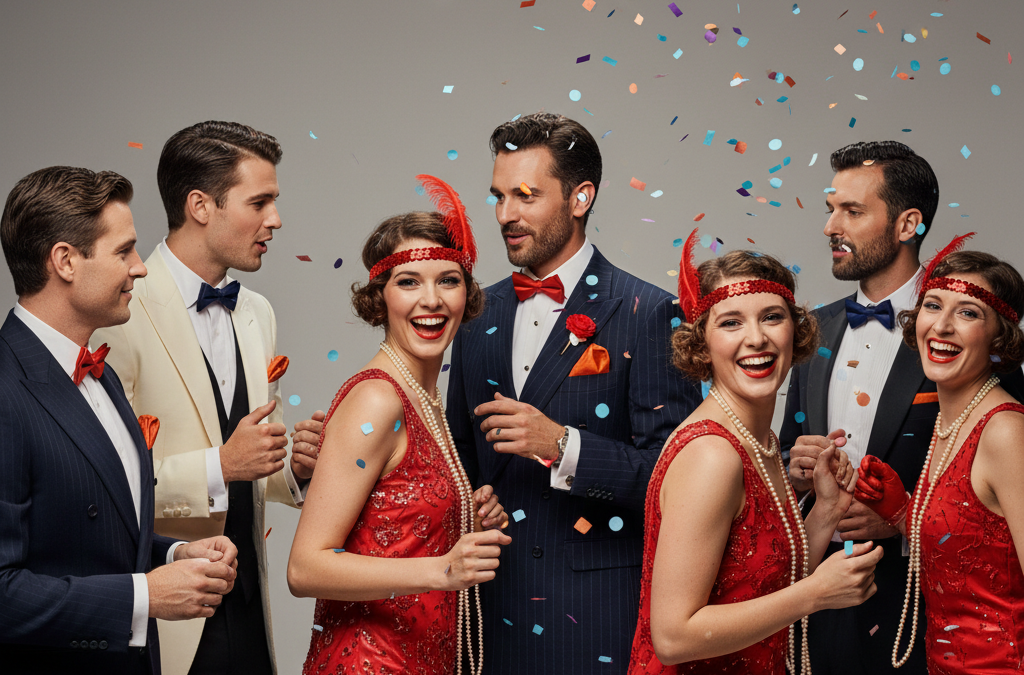
1920’s costumes
Key Takeaways
- 1920s costumes are perfect for Roaring Twenties parties, Great Gatsby events, and themed Halloween celebrations.
- Authentic 1920s looks help you stand out as if you’ve stepped out of a speakeasy.
- Choosing the right costume avoids the appearance of wearing low-quality or inappropriate outfits.
- Durability is important to ensure your costume lasts through energetic dances like the Charleston.
Table of Contents
1920s Costumes: Flapper, Gangster & Gatsby Looks Guide
You’ve got a Roaring Twenties party, a Great Gatsby bash, or a themed Halloween event. You want to look like you’ve stepped out of a speakeasy, not like you’ve raided a charity shop with a see-through dress that tears after one Charleston dance. Explore a full range of 1920s costumes for every occasion to ensure you make a memorable entrance.
Flapper costumes feature fringed dresses and headbands; gangster looks include pinstripe suits and fedoras; Gatsby styles emphasize tailored suits and elegant accessories.
The 1920s was the Jazz Age – an era of rebellion, glamour, and iconic style. Flappers shocked society with their short hemlines and bold attitudes, while dapper gentlemen and notorious gangsters ruled the streets in sharp pinstripe suits. Today’s 1920s costumes capture this electric energy, but choosing the right one means understanding what actually makes a costume look authentically twenties versus just “old-fashioned.” For women seeking the classic look, the Womens Black Flapper Girl 20s Costume is a timeless choice.
This guide covers everything from flapper dresses and gangster suits to the accessories that complete your look. You’ll discover how to avoid common pitfalls like poor-fitting costumes, missing accessories, and cheap materials that fall apart mid-party. By the end, you’ll know exactly how to choose a costume that fits perfectly, includes all the essential pieces, and lets you dance the night away in true 1920s style. If you’re aiming for a dapper men’s ensemble, consider the Mens 20s Gentleman Costume for an authentic vintage vibe.
What Actually Makes a 1920s Costume? (And Why It’s Not Just a Beaded Dress)
A true 1920s costume captures the revolutionary spirit of the Jazz Age through specific design elements that broke every fashion rule of the previous decade. While historically accurate 1920s clothing featured subtle details and conservative cuts, modern party costumes amplify the era’s most recognizable features for maximum visual impact.
The cultural context matters: post-WWI liberation led to shorter hemlines, looser silhouettes, and women’s newfound freedom to dance, smoke, and challenge social norms. Men embraced sharp tailoring with personality – think pinstripes, waistcoats, and fedoras that commanded respect in speakeasies and boardrooms alike.
Modern 1920s costumes fall into three categories: authentic reproductions (museum-quality but restrictive), Hollywood-inspired pieces (think Great Gatsby glamour with exaggerated sparkle), and party-friendly interpretations that prioritize comfort and recognizability over historical accuracy. For most events, the latter works perfectly – you want people to instantly recognize your era without sacrificing the ability to move and enjoy yourself. For more inspiration on themed events and costume ideas, check out the Morphsuits blog.
The Core Elements of a 1920s Costume
Every effective 1920s costume relies on four fundamental elements: silhouette, fabric, accessories, and styling. The silhouette features the iconic drop waist (positioned at the hips rather than natural waistline), creating that straight, tubular shape that defined flapper fashion. For men, it’s the three-piece suit with high-waisted, wide-leg trousers and a fitted waistcoat.
Fabrics tell the story through texture and movement. Beading, sequins, fringe, velvet, and satin weren’t just decorative – they caught light in dimly lit speakeasies and moved beautifully during the energetic dances of the era. Quality costumes use substantial materials (at least 125GSM) that feel authentic and photograph well under party lighting.
Accessories and styling transform a simple outfit into a complete 1920s look. A plain dress becomes flapper-worthy with the right headband, pearls, and gloves, while a modern suit gains gangster credibility through a fedora, waistcoat, and period-appropriate props. These finishing touches often matter more than the base garment itself.
1920s Women’s Fashion: From Flapper to Gatsby Glamour

Women’s fashion underwent a seismic shift in the 1920s, abandoning the restrictive corsets and floor-length skirts of the 1910s for revolutionary new silhouettes. Hemlines rose to scandalous knee-length, waistlines dropped to the hips, and necklines plunged in ways that shocked conservative society. This wasn’t just fashion – it was a declaration of independence.
The key transformation involved three main styles: daywear featured simple shift dresses with modest drop waists, evening wear embraced heavy beading and dramatic backs, and the iconic flapper style combined both with shorter hemlines and bold accessories. For costume purposes, evening wear and flapper styles dominate since they’re most recognizable and photogenic. If you’re looking for a standout party dress, the Womens 1920s Black Flapper Dress is a perfect choice for capturing the era’s glamour.
Modern 1920s costume interpretations amplify these elements for party wear. Where authentic 1920s dresses might feature subtle beading and conservative cuts, costume versions often include dramatic fringe, extensive sequining, and more revealing necklines that capture the era’s rebellious spirit while remaining comfortable for contemporary wearers.
The Flapper Look – What It Really Was (And What It Is Today)
The original flapper was a young, rebellious woman who challenged every social convention – she danced the Charleston, smoked cigarettes, drank cocktails, and wore her hair in a shocking bob cut. Her dress reflected this attitude: a straight, tubular silhouette with a drop waist at the hips, hemline at or above the knee, and often a daringly low back or bare arms.
Authentic flapper dresses featured geometric Art Deco patterns, subtle beading, and fringe that moved with the wearer’s energetic dancing. The silhouette deliberately de-emphasized curves, creating an androgynous, youthful appearance that represented women’s newfound equality and freedom.
Today’s flapper costumes simplify and dramatize these elements. Modern versions often feature more extensive beading, longer fringe, and may not achieve the true drop waist construction but fake it with strategically placed belts or seaming. The goal shifts from historical accuracy to instant recognition and party-appropriate comfort – and that’s perfectly fine for themed events where the vibe matters more than museum-quality authenticity.
Great Gatsby Style – Hollywood Glamour vs. Real 1920s Fashion
“Great Gatsby style” represents Hollywood’s amplified interpretation of 1920s fashion rather than historical accuracy. Real 1920s evening wear featured understated beading, modest necklines, and subtle sparkle, while Gatsby-inspired costumes embrace maximum drama with heavy sequining, extensive fringe, and bold, revealing cuts designed for red-carpet impact.
Authentic 1920s party dresses used delicate glass beads in geometric patterns and shorter fringe that barely moved. Gatsby-style costumes feature chunky plastic sequins, metallic threads, and dramatic floor-length fringe that creates movement and catches light spectacularly. The necklines plunge deeper, backs drop lower, and overall sparkle factor increases tenfold.
This Hollywood interpretation works perfectly for themed parties where you want maximum visual impact. Gatsby-style 1920s costumes photograph beautifully, stand out in crowds, and capture the era’s spirit of excess and rebellion, even if they wouldn’t pass historical scrutiny. For party wear, dramatic beats accurate every time.
Key Elements of a 1920s Women’s Outfit (Drop Waist, Beading, Fringe)
The drop waist defines 1920s silhouettes by positioning the waistline at hip level rather than the natural waist, creating that signature straight, tubular shape that revolutionized women’s fashion. Authentic drop waists require specific construction techniques, but modern costumes achieve the look through strategic seaming, attached belts, or contrasting fabric bands placed at hip level.
Beading and sequins serve both decorative and cultural purposes, reflecting the era’s Art Deco aesthetic through geometric patterns, chevrons, and zigzag designs. Quality costumes feature securely attached embellishments that won’t shed after one wear – test by gently rubbing a small section before purchasing. Common placements include hemlines, necklines, and sleeve edges where they catch light during movement.
Fringe became iconic because it moved beautifully during the energetic dances of the Jazz Age. Short fringe (2-3 inches) provides subtle movement and works well for daytime events, while long fringe (6+ inches) creates dramatic swaying effects perfect for evening parties. Quality fringe should be securely attached at the base and maintain its shape after handling – cheap versions shed constantly and look sparse after minimal wear.
1920s Men’s Fashion – From Dapper Gentlemen to Gangsters
Men’s 1920s fashion represented a shift toward relaxed formality – still sharp and tailored, but with personality and flair that distinguished it from the rigid Victorian styles of previous decades. Jackets became shorter, trousers grew wider, and accessories gained prominence as men embraced individual expression within structured elegance.
The decade produced two iconic masculine archetypes: the dapper gentleman who embodied sophistication through perfectly fitted three-piece suits, and the notorious gangster whose pinstripe suits and fedoras commanded respect in speakeasies and back alleys. Both styles emphasized quality tailoring, attention to detail, and accessories that completed the look. For those wanting to channel a classic gangster, the Mens 30s Gangster Costume offers a striking and authentic option.
For costume purposes, these dramatic interpretations work better than authentic daywear because they’re instantly recognizable and photographically striking. Modern 1920s costumes for men focus on these bold archetypes, often exaggerating elements like pinstripe width, waistcoat contrast, and accessory prominence for maximum visual impact at themed events.
The Gangster Look – Pinstripes, Fedoras and the Speakeasy Vibe
The 1920s gangster emerged from Prohibition’s criminal opportunities, and his wardrobe reflected both wealth and danger. The classic outfit featured a pinstripe suit (typically black, grey, or navy), crisp white shirt, bold tie, and essential fedora worn at a confident angle. This wasn’t just fashion – it was armor that projected authority and success.
Authentic gangster suits emphasized sharp tailoring with high-waisted, wide-leg trousers, fitted jackets with peaked lapels, and contrasting waistcoats that added visual interest. The pinstripes weren’t merely decorative – they created vertical lines that enhanced the wearer’s stature and presence, crucial for men who needed to command respect.
Modern gangster costumes capture this intimidating elegance through simplified construction and exaggerated details. Contemporary versions often feature wider pinstripes for visibility, may include costume props like fake guns or cigars, and prioritize recognition over historical accuracy. The goal is instant “gangster” identification that works for Halloween, themed parties, or any event requiring memorable impact.
The Dapper Gentleman – 1920s Suit, Tuxedo and Accessories
The dapper gentleman represented 1920s sophistication without criminal associations – think Jay Gatsby’s refined elegance rather than Al Capone’s dangerous charm. His wardrobe centered on impeccably fitted three-piece suits with high-waisted trousers, low-cut waistcoats, and accessories that demonstrated taste and attention to detail.
Key elements included the three-piece construction (jacket, waistcoat, trousers), wide-leg trousers with sharp creases, and a waistcoat that created visual interest through contrasting colors or subtle patterns. Evening wear featured dinner jackets, bow ties, and formal accessories like pocket watches, cufflinks, and boutonnières.
Modern dapper gentleman costumes emphasize elegance and sophistication, often including period-appropriate accessories like pocket watches, walking canes, or monocles. These costumes work particularly well for formal 1920s events, Great Gatsby parties, or any occasion requiring refined vintage style without the edginess of gangster themes. For more fun facts and quizzes about pop culture and costume inspiration, visit the Morphsuits Game of Thrones quiz blog.
Key Elements of a 1920s Men’s Outfit (Pinstripe, Waistcoat, Hat)
The pinstripe suit became the defining element of 1920s masculine style, with thin vertical stripes creating an elongating effect that enhanced the wearer’s presence. Authentic pinstripes were subtle – barely visible except in certain light – but modern costumes often feature bolder stripes for instant recognition. Quality pinstripe patterns should be evenly spaced and straight, with no wavering or distortion across seams. For a complete kids’ look, the Kids 20s Pinstripe Gangster Costume is a fun and recognizable option for younger partygoers.
The waistcoat (vest) completed the essential three-piece look and served as the outfit’s focal point through contrasting colors or patterns. Proper 1920s waistcoats sat at the natural waist with a low-cut front that revealed the shirt and tie. Modern costume versions should fit snugly without pulling or gaping, and the bottom should just meet the trouser waistband without overlapping.
Hats weren’t optional accessories – they were essential elements that instantly communicated social status and personal style. Fedoras worked for gangster looks with their sharp creases and tilted angles, while trilbys suited dapper gentlemen with their softer construction. Bowler hats represented traditional respectability. The key is wearing any hat with confidence, positioned correctly rather than perched awkwardly on top of the head.
1920s Accessories – The Secret to an Authentic Look
Accessories transform basic garments into convincing 1920s costumes by providing the specific visual cues that instantly communicate the era. A simple black dress becomes a flapper outfit with the right headband and pearls, while a modern suit transforms into gangster attire with a fedora and pocket watch.
The most effective 1920s accessories serve dual purposes: they’re historically recognizable and photographically striking. Long pearl necklaces catch light and movement, feathered headbands create dramatic silhouettes, and fedoras cast intriguing shadows. These elements work because they’re designed to be noticed – the 1920s celebrated bold self-expression.
Quality accessories make the difference between a costume that looks expensive and one that screams “cheap fancy dress.” Well-made pieces maintain their shape, don’t shed components, and feel substantial rather than flimsy. They’re also the easiest way to customize a look – the same dress can become modest or glamorous depending purely on accessory choices. For more creative ideas on accessorizing and party themes, you might enjoy reading What Type of Festival Goer Are You? on the Morphsuits blog.
Hats and Headwear – Cloche, Fedora, and Flapper Headbands
The cloche hat defined 1920s feminine style with its close-fitting, bell-shaped design that perfectly complemented the era’s short bob hairstyles. Worn low on the forehead with the brim just above the eyebrows, cloches created an air of mystery and sophistication. Modern versions should fit snugly without causing headaches and stay secure during movement.
Fedoras and trilbys served as the masculine equivalent – essential rather than optional. The difference lies in construction: fedoras feature sharper creases and more structured brims, perfect for gangster attitudes, while trilbys offer softer lines suited to dapper gentleman looks. Both should be worn slightly tilted, never straight or pushed too far back.
Flapper headbands offer the most versatile option for modern wearers, working with any hairstyle and providing instant 1920s recognition. Quality headbands feature secure elastic that doesn’t dig into the head, well-attached decorative elements that don’t catch on hair, and balanced weight distribution. Position the decorative element slightly off-center for the most flattering effect.
Jewelry and Pearls – Long Strands, Art Deco and Sparkle
Long pearl necklaces epitomize 1920s jewelry – multiple strands worn loose and long, often extending past the waist. The key is movement: pearls should swing and sway with the wearer, creating dynamic visual interest. Quality costume pearls have weight and luster, while cheap versions feel light and appear obviously plastic under normal lighting.
Art Deco jewelry reflects the era’s geometric aesthetic through bold shapes, contrasting colors, and dramatic scale. Authentic pieces featured platinum settings with diamonds, emeralds, and sapphires, but effective costume versions use quality metals and glass stones that catch light convincingly. Look for pieces with clean lines, symmetrical designs, and substantial weight.
The most impactful 1920s jewelry makes statements rather than whispers. Oversized cocktail rings, chandelier earrings, and elaborate brooches all work because they’re designed to be conversation starters. Modern reproductions should maintain this boldness while ensuring comfortable wear – heavy earrings need secure backs, and large rings shouldn’t impede hand movement.
How to Choose the Right 1920s Costume for You

Selecting the perfect 1920s costume requires balancing historical accuracy with personal comfort, budget constraints with quality expectations, and individual style preferences with occasion appropriateness. The best costume makes you feel confident and authentic while serving the specific event’s requirements. For a bold and glamorous twist, the Womens Red Flapper Girl Costume is sure to stand out at any party.
Body type considerations matter more than historical perfection. The 1920s silhouette suits some figures naturally while requiring adaptations for others. Drop-waist dresses work beautifully on straight figures but may need strategic styling on curvier bodies. Similarly, three-piece suits flatter most men but require proper fitting to avoid looking costume-y rather than stylish.
Budget doesn’t have to determine quality if you prioritize wisely. Investing in one excellent piece – a well-made dress or quality suit – then building around it with carefully chosen accessories often produces better results than buying complete costume sets. Focus spending on items that will be most visible and handle the most wear. For more tips on maximizing your costume investment, you can find helpful guides on the Morphsuits blog.
Frequently Asked Questions
What are the key design elements that make a 1920s costume authentic rather than just old-fashioned?
Authentic 1920s costumes feature shorter hemlines, loose silhouettes, and bold embellishments like fringe and beads that reflect the Jazz Age’s rebellious spirit. Key details include drop waists for women, pinstripe suits for men, and accessories like cloche hats or fedoras that capture the era’s distinctive style rather than just generic vintage looks.
How can I choose a 1920s costume that balances historical accuracy with comfort and durability for dancing?
Look for costumes made from quality, breathable materials with tested fits to ensure comfort during energetic dances like the Charleston. Choosing designs that include all essential accessories and durable stitching means your costume won’t fall apart mid-party, letting you enjoy the night with confidence and style.
What accessories are essential to complete an authentic 1920s look for both men and women?
For women, essential accessories include headbands with feathers or jewels, long pearl necklaces, and T-strap shoes. Men complete their look with fedoras or newsboy caps, pocket watches, suspenders, and polished dress shoes to nail that dapper 1920s vibe.
What are the differences between flapper, gangster, and Gatsby-style costumes from the 1920s?
Flapper costumes showcase fringed dresses and bold, playful accessories reflecting youthful rebellion. Gangster looks focus on sharp pinstripe suits, fedoras, and a tough edge. Gatsby-style costumes emphasize elegance with tailored suits, waistcoats, and refined accessories for a polished, high-society appearance.
About the Author
Joe is the chief contributing writer for the MorphCostumes Blog.
MorphCostumes is the Costume Brand that gives you the costumes that make your best times in life even better.
We are the brand for people who want to make Halloween, Christmas, Easter, Birthdays or BBQ Parties even better with great costumes and have won many awards.
We know that many people have experienced having these events ruined by a rubbish costume they have bought online from a no-brand Chinese factory. The costume might turn up not looking like it was advertised, badly fitting, of poor quality so it tears easily. The material may be see-through, non-breathable or itchy. It also might be missing key accessories that complete the look.
MorphCostumes ensures that it makes your best times better by doing the following:
- Having thousands of innovative and unique costume designs.
- Ensuring fit by testing 30 or more separate measurements on each costume design.
- Guaranteeing quality by performing over 500,000 in-person quality checks each year.
- Always using 125 GSM or more material for a soft, breathable and quality feel.
- Always being clear on what is included in the costume so you are never disappointed.
Through sticking to these values since launching in 2009, we have won awards such as Disney Product of the Year, and the business has been recognised as an Ernst & Young Entrepreneur of the Year finalist (twice), featured on the FEBE 100 fastest growing companies list (twice), the Sunday Times Fast Track, and the Maserati Top Companies List.
We have also appeared across publications such as the Wall Street Journal, CNBC, BBC, Wired, BuzzFeed, The Times, The Telegraph, The Financial Times, and The Guardian.
