


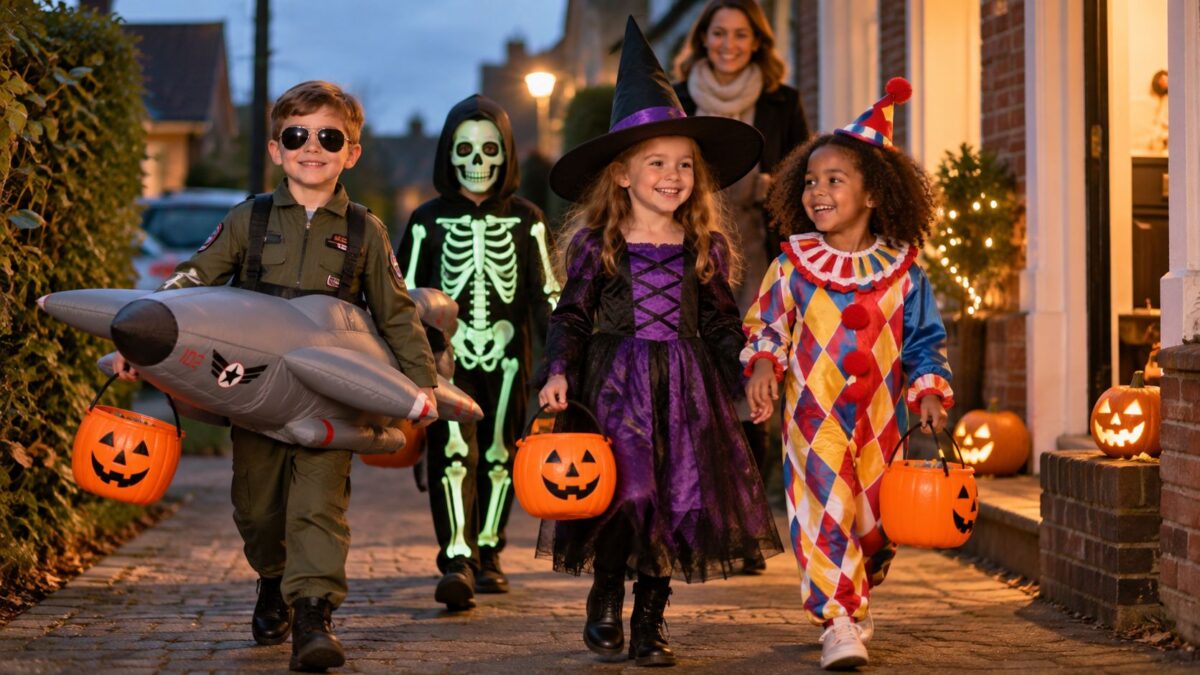
Yes, Halloween costumes are safe when they fit well, keep the eyes and airway clear, and stay clear of open flame, the same basics behind the CPSC's 3-step Halloween safety check and the AAP's guidance, across three categories with their own questions below: inflatable costumes, kids' masks and wigs, and clown costumes.
Every costume goes through over 30 measurement checks, and that settles fit. Sight lines, flame and stairs are checks you run yourself, on the costume in front of you, and no brand can run those for you.
Asking whether a seller is safe and asking whether a costume is safe are two different questions, and only one is answered here. Is Morphsuits legit covers the first, and who makes Morphsuits names the company behind us. What follows is the second: the garment, the fan, the mask, the fabric. Once those checks are done, the range of Halloween costumes is the next stop.
Are inflatable Halloween costumes safe?
Yes, an inflatable costume is safe when the fan's vents stay clear, the battery pack is handled the way its product page says, and the wearer can still see and move around stairs and crowds. Four checks are specific to this category, on top of the fit and flame basics above:
- Keep the fan's air intake clear of hands, bags or other costumes; a blocked intake is what makes an inflatable sag mid-evening.
- Check the battery type and count on the product page before you buy, and check whether they are included; ours are not. The pack should also come out before the costume is washed or stored.
- Confirm the suit fits over regular clothing without dragging. The CPSC's costume guidance is explicit on this point for any costume: avoid "overly long or baggy costumes to prevent trips and falls."
- Keep any inflatable, like any costume, away from candles, jack-o'-lanterns or other open flame; the same CPSC guidance notes that "any fabric can burn" on contact with an open flame, inflatable or not.
What a real inflatable costume actually specifies
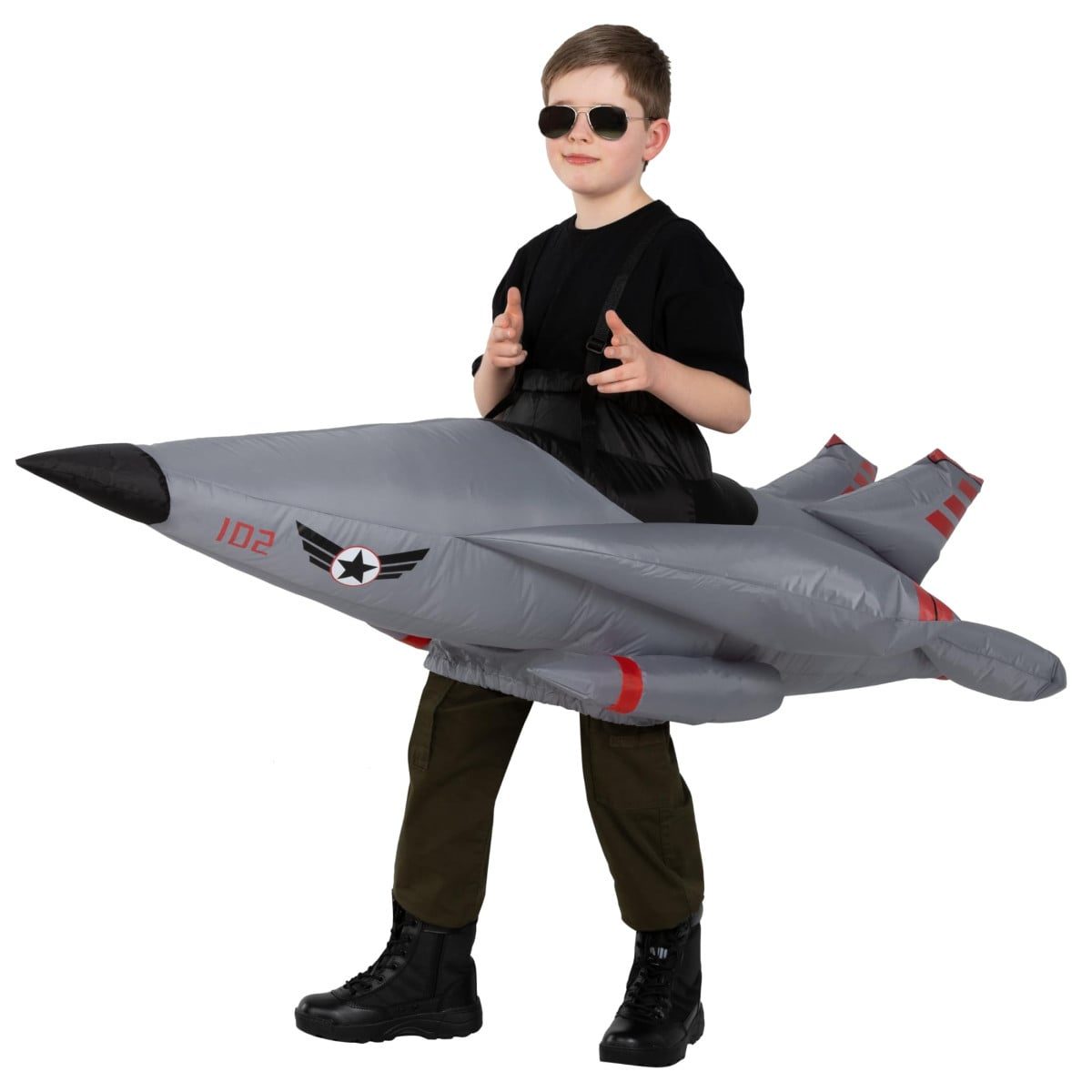
Our Fighter Jet Gray Inflatable Kids costume shows what those four checks look like answered on a page. It lists a built-in fan with a battery pack connector, 4 AA batteries required and not included, 60 seconds to inflate and up to 4 hours puffed, and elasticized seals at the openings that hold the air in. It is meant to go over regular clothes, not against bare skin. Hand wash only, with the battery pack and fan unit taken out first.
The CPSC's costume guidance does not name inflatable suits, and we would rather say that than pretend it does. What carries over is fit and sight lines. An inflated suit is far wider than the child wearing it, so doorways, car doors and a busy sidewalk all want more room than the wearer expects. The jet above is a one-size design, so check its height range on the size guide before the night, not on it. One more point from that page: it warns twice that the costume is not suitable for children under 3, due to small parts, and its size guide runs roughly 6 to 12 years anyway.
The drive there needs its own rule: an inflated suit does not belong under a car seat harness. Consumer Reports warns that "puffy costumes and outfits with excess material can interfere with the seats' ability to keep the child safe in a collision." The fix: change into it after arriving, or buckle the child in first in regular clothes and add the costume once there.
What should you check on kids' costume masks and wigs?
Check that a mask's eye holes give full, unobstructed vision, that a wig can't slide down over the eyes, and that a full-face mask does not restrict breathing. All of our kids' products are safety tested by accredited labs, and that testing still does not close this section out, because a sight line is a fit question. It is settled on one child's face on the night, not in a lab months earlier. The four checks below come straight from the CPSC's mask guidance and the AAP's.
- Vision first. Eye and nose openings should, in the CPSC's own words, "permit full visibility and adequate breathing," not narrow slits.
- Makeup as the swap. If a mask's visibility is in doubt, the AAP recommends non-toxic makeup instead, and to "test makeup ahead of time on a small patch of your child's skin" before the full application.
- Flame resistance. Check for a "Flame Resistant" label, the exact wording the CPSC's costume guidance calls out, on wigs, beards and costumes, and keep flowing hair or fabric away from candles and jack-o'-lanterns.
- Props. Skip sharp or long accessories like swords or canes; the AAP flags them as a hazard if a child falls while carrying one.
Most of that can be settled on the product page first. Our masks and wigs pages state sizing and exactly what's in the pack, the difference between finding out this week and finding out at the front door.
Are clown costumes safe to buy?
Yes, a clown costume is safe to buy: it carries no more physical risk than any other costume, and the fit, visibility and flame-resistance checks above already cover it. Neither the CPSC nor the AAP singles clown costumes out. The phrase people actually search, "are clown costumes safe to buy," is really a question about reputation, not construction, and a fit check doesn't measure reputation.
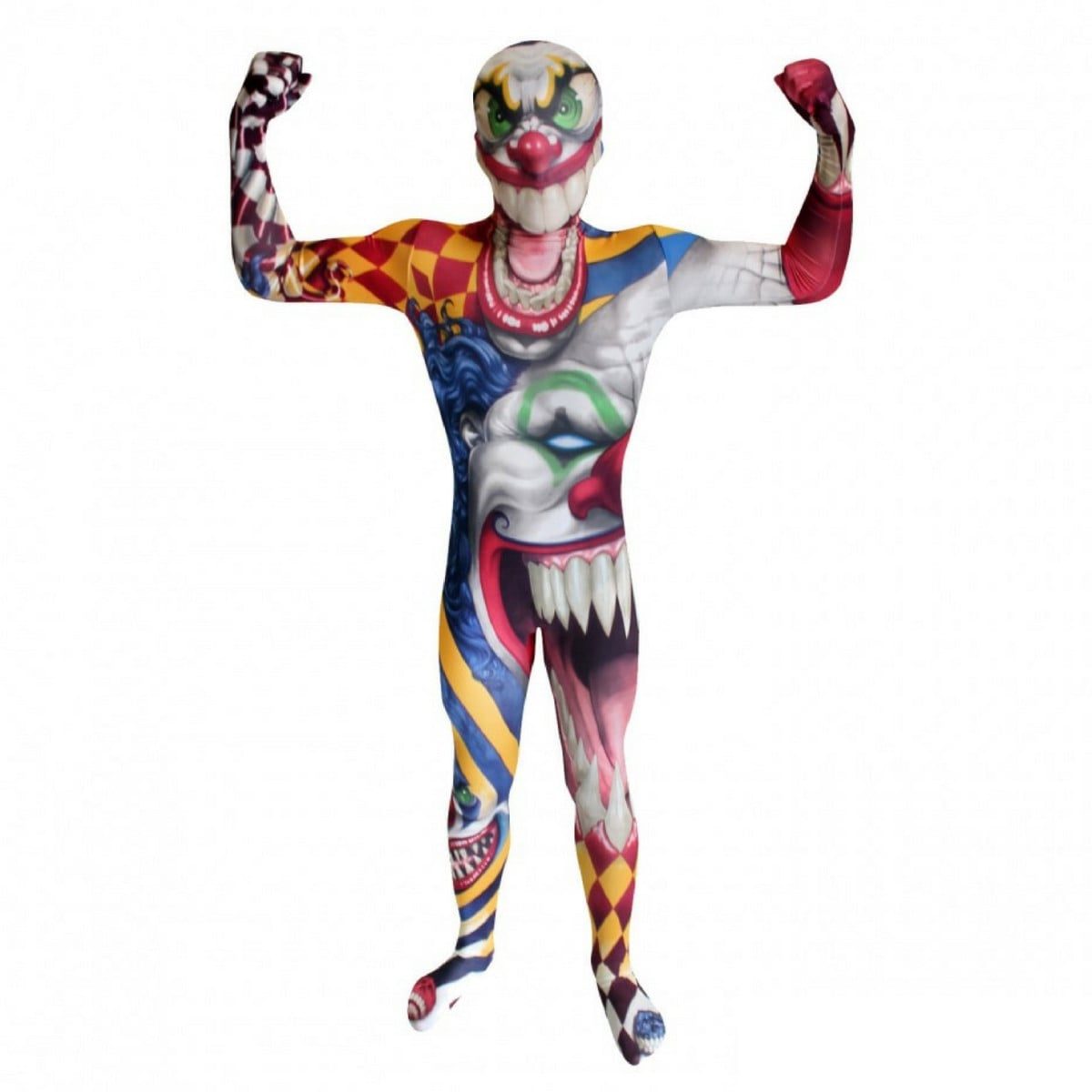
Construction does vary in one way that changes which checks apply. A clown costume built as a one-piece suit with the face printed into the fabric has no eye-hole cutout and no separate mask; the fabric over the eyes still has to do the job a hole normally does, so check that the specific product page states it is breathable and see-through from the inside.
A printed face instead of a separate mask
The Kids The Clown Morphsuit is that design. The pack is the suit alone, the clown face printed into the fabric, head to toe, in a 91% polyester and 9% elastane knit built to our 125GSM+ breathable standard, with cover-stitched inner seams. Its product page states the fabric over the face is breathable and see-through from the inside, so your child can see and breathe comfortably while wearing it. It is sized by height, not by age: Small, Medium and Large, with the height range for each on the size guide, so measure rather than order off the age bands (S is 3 to 6 years, M is 7 to 9, L is 10 to 12). Hand wash only, in cool water, air-dried flat.
If a specific clown costume includes a separate mask, run it through the same vision and breathing checks as any other kids' mask; "clown" doesn't change the answer.
Frequently asked questions
Are Halloween costumes safe, and what should I check before buying one?
Yes. Check for a snug fit that won't drag on the ground or catch on stairs, full visibility through any mask or eye hole, and a "Flame Resistant" label if the costume, wig or beard is loose or flowing. Those three checks, plus light colors or reflective tape so drivers can see the wearer, are the core of the CPSC's own costume safety guidance.
Are inflatable Halloween costumes safe for kids?
Yes, as long as the fan's vents stay clear, the batteries are handled the way the product page says, and the wearer can still see well enough to manage stairs and crowds. Our Fighter Jet Gray Inflatable Kids costume runs on 4 AA batteries not included, inflates in about 60 seconds, and goes over regular clothes, not bare skin.
What should I check on a kids' costume mask or wig?
Check that the eye holes give full, unobstructed vision, that the wig can't slide down over the eyes, and that wigs and beards carry a "Flame Resistant" label. If visibility is in doubt, the American Academy of Pediatrics recommends non-toxic makeup, patch-tested on a small area of skin first, as the safer swap for a hard mask.
Are clown costumes safe to buy?
Yes. A clown costume carries no extra physical risk beyond the same fit, visibility and flame-resistance checks that apply to any costume, and neither the CPSC nor the AAP singles the category out. A one-piece design with the face printed into the suit, like our Kids The Clown Morphsuit, has no eye-hole cutout to check; check instead that the product page states the fabric is breathable and see-through from the inside.
Is trick-or-treating in a costume safe at night?
It is, with the same basics that make any costume safe after dark: light colors or reflective tape so drivers can see the group, glow sticks or flashlights to carry, well-fitting and sturdy shoes rather than a costume's own footwear (the CPSC specifically flags high heels as a bad idea), and an adult accompanying any child too young to cross a street alone. Safe Kids Worldwide gives the reason: on average, children are more than twice as likely to be hit by a car and killed on Halloween than on any other day of the year.
