


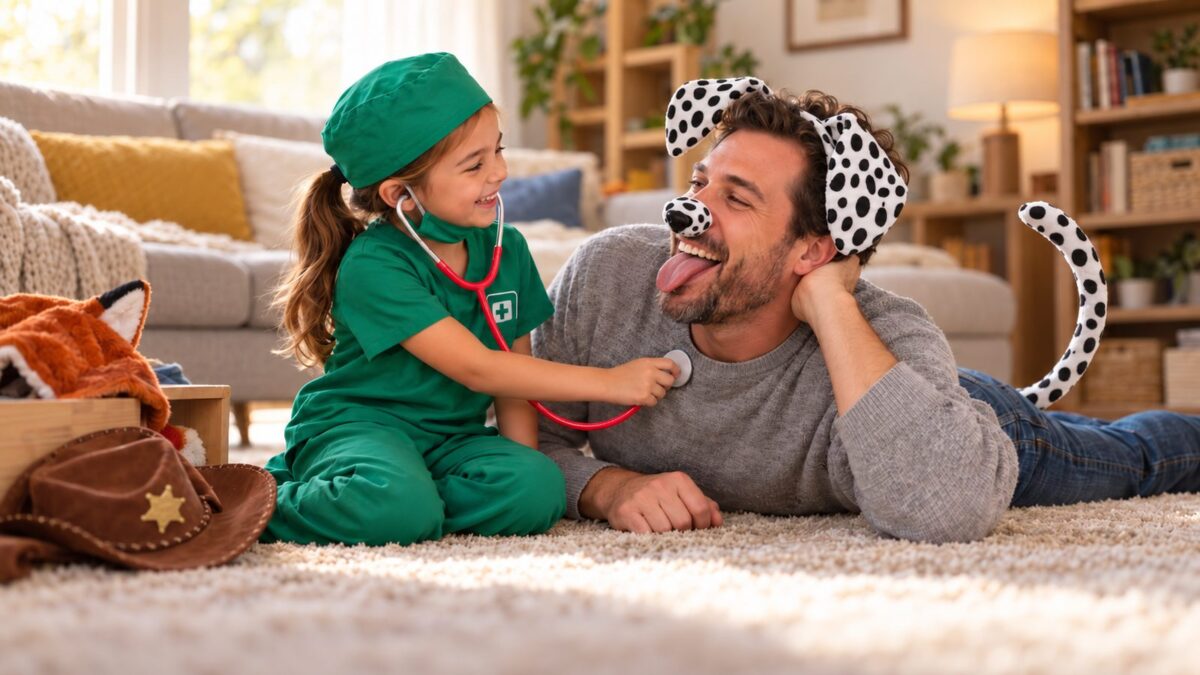
The benefits of dress up for kids are real but narrower than the usual lists claim. In three small studies, pretend play helped children stick with a dull task, hold instructions in mind, and keep their emotions in check. A 2013 review adds the limit: pretend play is one route to those skills, not the key.
From our own orders: about three in ten kids' costumes bought on morphsuits.com between May 1 and October 25, 2026 was an animal, a dinosaur, or a dragon. Every pick below is from our kids costumes range; our best kids Halloween costumes guide covers the October rush.
Is dress-up good for kids' development?
Dress-up supports kids' development as one type of play, though each pretend-play study found only a narrow effect. The American Academy of Paediatrics' 2018 clinical report, The Power of Play, ties developmentally appropriate play to social-emotional, cognitive, language, and self-regulation skills, but it covers play in general and mentions dress-up only in passing; it does not study costumes. The pretend-play research, side by side:
| Study | Design and sample | What it found | What it does not show |
|---|---|---|---|
| White and colleagues, Child Development, 2017 | Experiment, 180 children aged 4 and 6 | Children playing a hard-working character, with a simple prop such as a cape, stuck at a dull 10-minute task longest | No replication we could find; the role may just have made the task more fun |
| Thibodeau and colleagues, Journal of Experimental Child Psychology, 2016 | Randomised trial, 110 children aged 3 to 5 | Five weeks of fantastical pretend play improved executive function, mainly working memory | A small sample; the authors call fantasy play one of many routes |
| Goldstein and Lerner, Developmental Science, 2018 | Randomized trial, 97 four-year-olds from low-income families | Dramatic pretend-play games improved emotional self-control | No change in the other social-emotional skills measured |
| Lillard and colleagues, Psychological Bulletin, 2013 | Review of the research to date | Pretend play may be one of many routes to development, or a by-product | Strong causal claims that pretend play is essential |
Does pretending to be a hero help kids keep going?
Pretending to be a hero helped young children keep going in one 2017 study. Of 180 four- and six-year-olds given a dull, repetitive computer task for 10 minutes, with a tempting video game on a tablet beside them, the ones asked to be a hard-working character they admired worked longest on average, then children who talked about themselves by name, then those who simply thought about themselves; only the gap between the first and last groups was clear-cut (White and colleagues, 2017).
We have found no replication, and one critic suggests the role-play simply made the task more fun. Children playing the character were also handed a simple prop to dress up with, such as a cape, and the authors think the prop may have helped them get into the role. So the study cannot separate the role from the dress-up: the takeaway is the game of being someone else, with a costume piece as the way in.
The fighter pilot for a child with a hero in mind
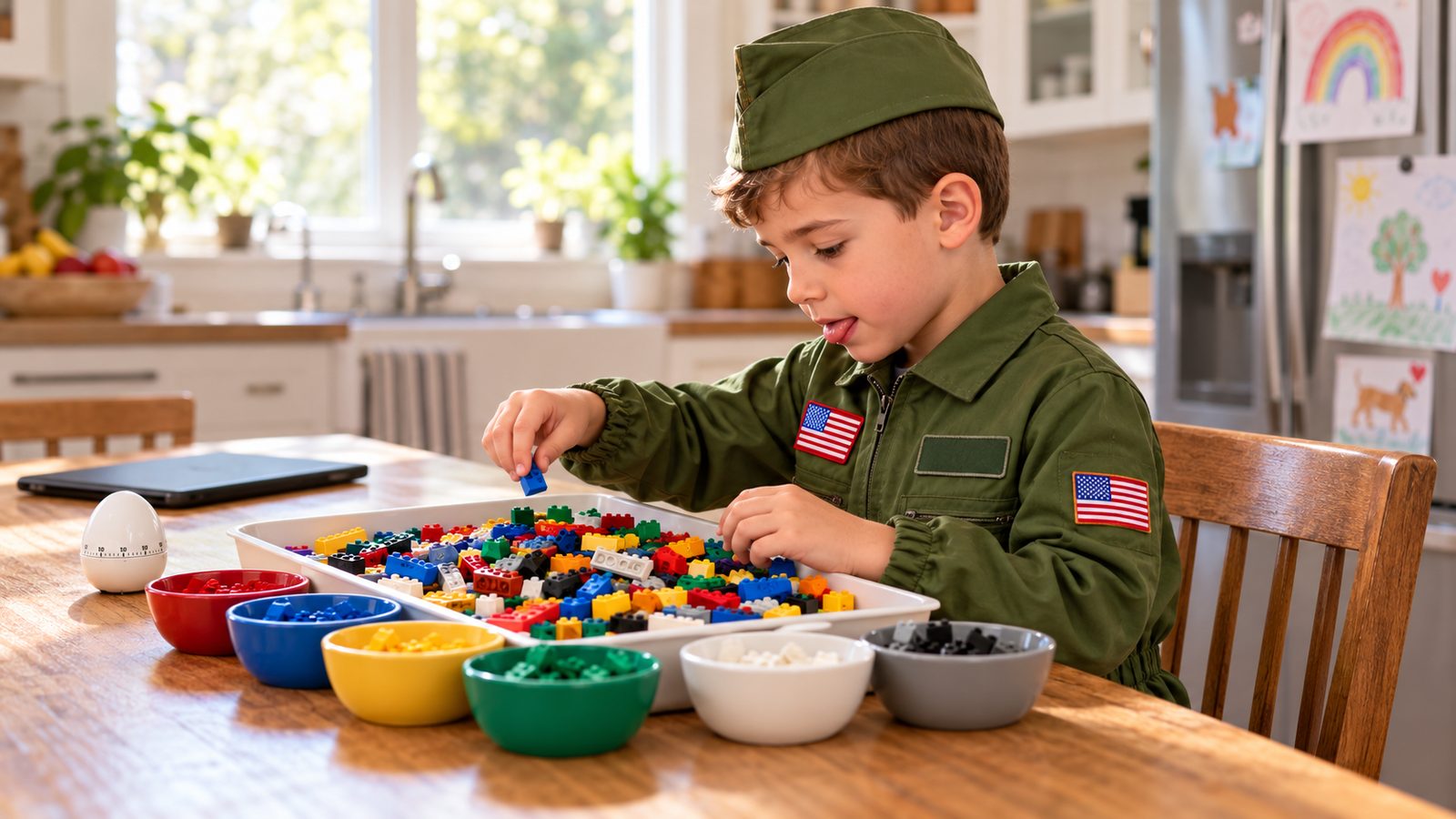
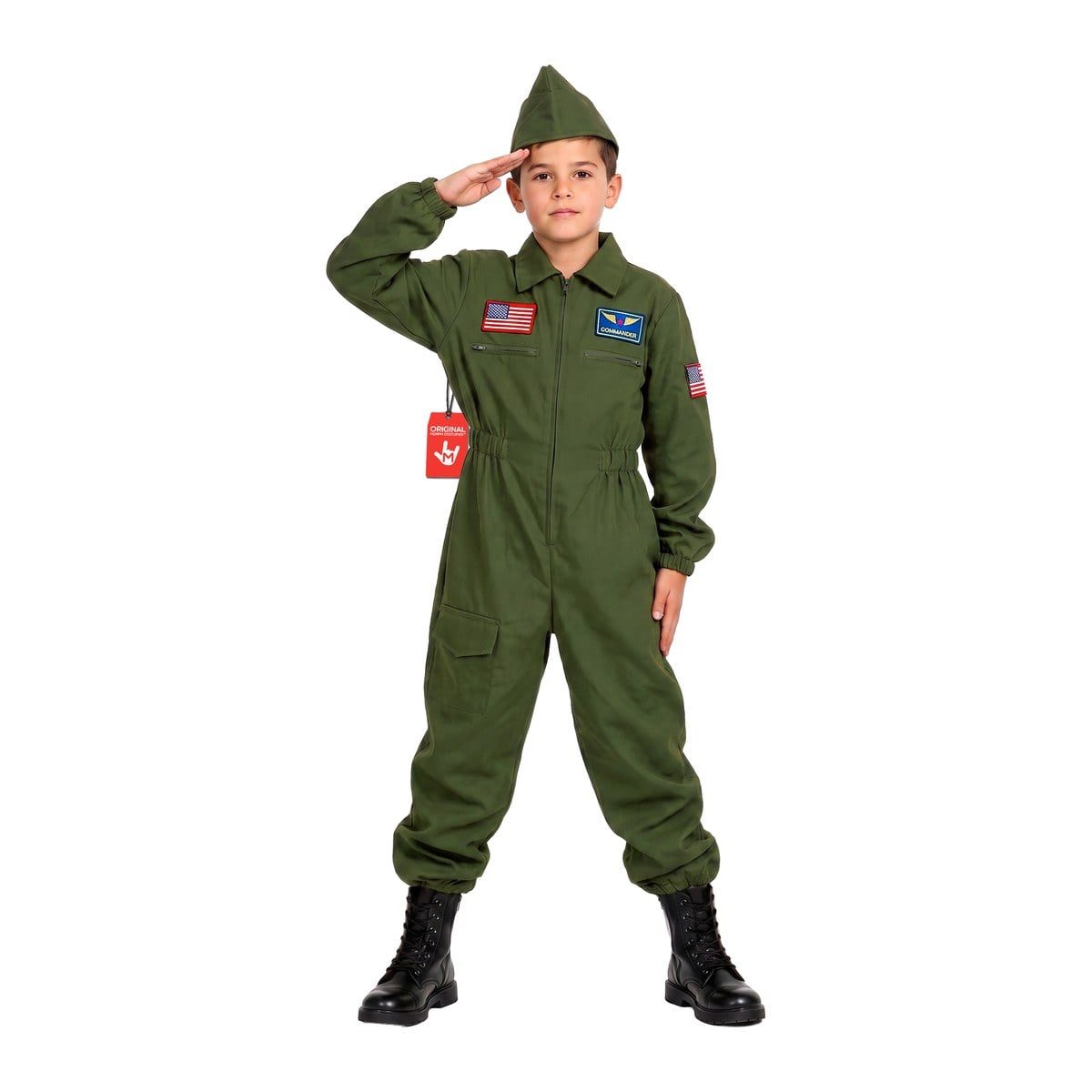
The Boys Air Cadet Fighter Pilot Costume is a green aviator jumpsuit with military-style badges and a matching green hat, sized by age from 4-6 to 12-14 years; boots are not in the pack. A grown-up flies as the wingman in our Pilot Hat, Goggles and Scarf Set, one adult size.
Can pretend play build thinking skills like memory?
Pretend play improved preschoolers' executive function, a set of thinking skills, in one randomized trial, and the clearest gain was working memory: holding rules and instructions in mind. The trial randomly assigned 110 children aged 3 to 5 to five weeks of adult-led fantastical pretend play, such as a pretend trip to the moon, to non-imaginative play like singing songs and passing a ball, or to their usual day; only the pretend group improved (Thibodeau and colleagues, 2016). A British Psychological Society write-up of the trial notes no effect on impulse control.
One detail matters for parents: the children who threw themselves into the pretending gained the most, so pick a role your child gets excited about.
The alien for a story nobody else has told
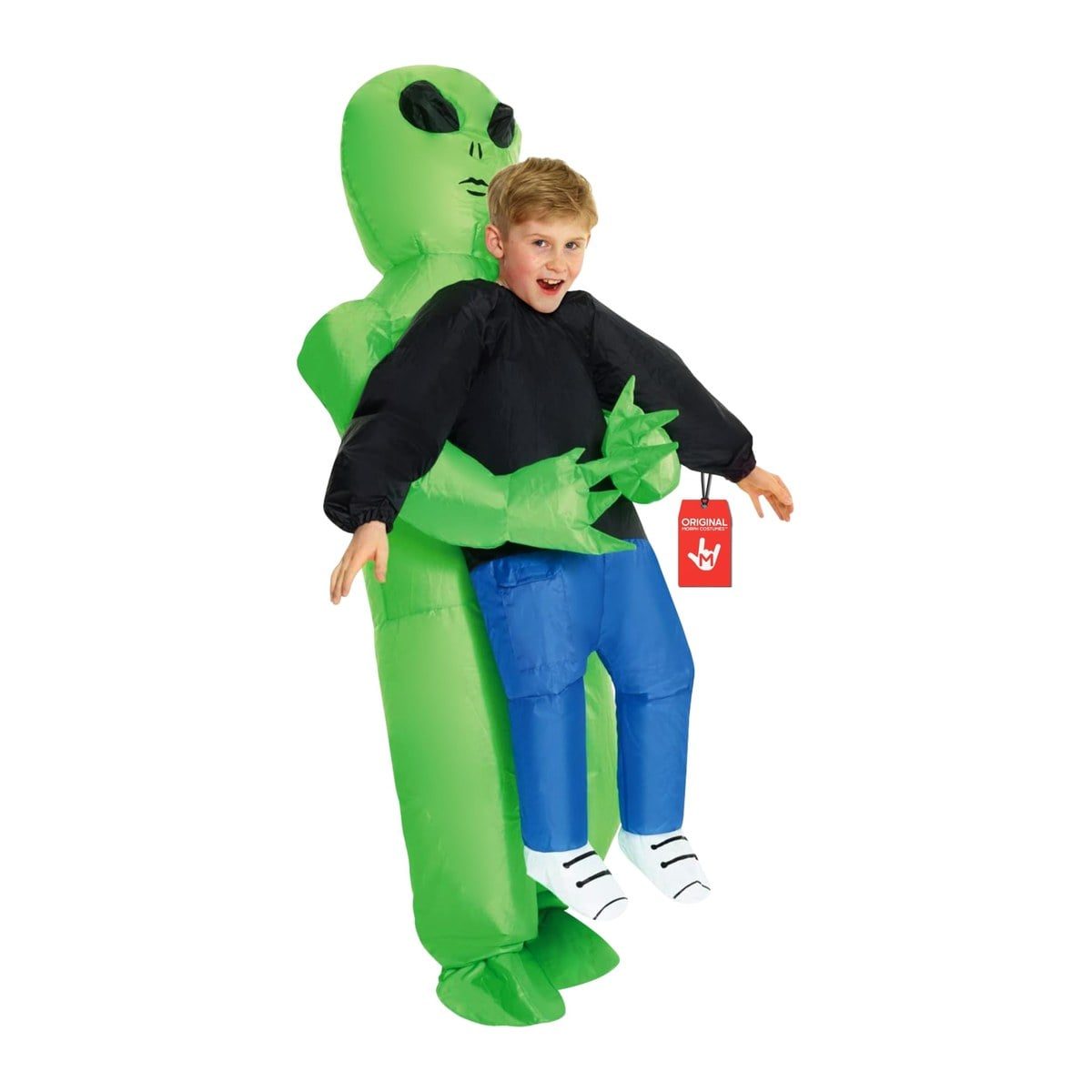
For a fantastical role, our Kids Pick Me Up Alien Inflatable Costume fills from a built-in fan into a green alien that looks to be carrying your child off. It is one size, designed to fit most children from 3'11" to 5'3", and runs on 4 AA batteries (not included) for up to 4 hours. A grown-up in our Bug Antenna Headband (ages 14 and up) plays the second alien.
Does acting out animals help kids handle their feelings?
Acting out animals and characters helped four-year-olds with one part of handling feelings, emotional self-control, in one randomized trial. The trial worked with 97 four-year-olds from low-income families and compared dramatic pretend-play games with closely matched activities; the other social-emotional skills the researchers measured did not change (Goldstein and Lerner, 2018).
That is one outcome, not "social skills" in general. If your child already prowls the house as an animal, our best animal costumes for kids guide has the full herd.
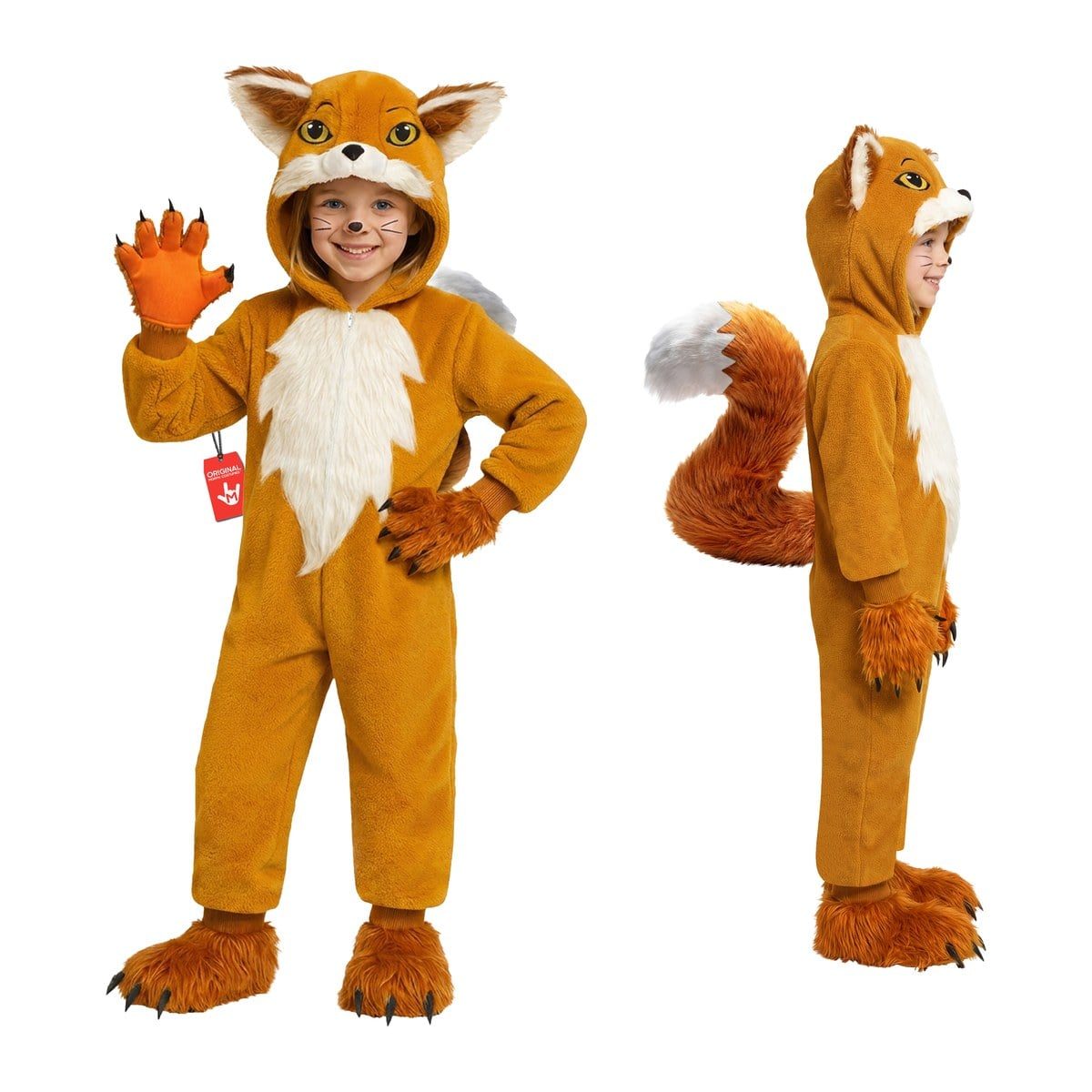
The fox for a child who likes to prowl and pounce
The Kids Fox Jumpsuit Costume is one piece with the hood, gloves, and feet attached, a center back zip, and a loose fit for easy movement, in four sizes from 4-6 to 12-14 years. A grown-up in our Adult Pith Helmet Safari Explorer Hat plays the explorer trying to spot the fox.
What does the research not show?
The research does not show that pretend play is essential, or that a costume makes a child smarter. A major review of the field, by Lillard and colleagues in 2013, found the evidence does not support strong causal claims; for several skills, pretend play looks like one of many routes, or possibly a by-product of development rather than a cause (Psychological Bulletin). The same review found no compelling evidence that pretend play helps problem solving, and inconsistent results on creativity and intelligence.
Three practical readings follow from that:
- Skip any list that promises a costume will "boost" a named skill. The trials above ran for minutes to weeks, with 97 to 180 children each.
- Other play counts too. Building, drawing, running around, and reading together sit in the same AAP report as good play.
- The best reason to dress up is the one any child gives you: it is fun. The rest is a bonus the studies hint at.
Which costumes suit pretend play at each age?
Role costumes suit pretend play by about age 4: the CDC lists pretending to be something else, such as a teacher, superhero, or dog, as something most children do by then, a 4-year milestone. Simpler pretending, like feeding a block to a doll, is a 30-month milestone. Then pick by the role your child already acts out: a job for a child who copies grown-ups, an animal for one who crawls and growls, a fantastical role for a storyteller.
| Costume | Role type | In the pack | Sizes | Who plays opposite |
|---|---|---|---|---|
| Boys Vet Costume | Job | Top, pants, cap, face mask | 4-6 to 12-14 years | Patient in dalmatian ears |
| Girls Cowgirl Cutie Costume | Job and story | Dress, cow print vest, hat | 3-4 to 10-12 years | Friends in red cowboy hats |
| Boys Air Cadet Fighter Pilot Costume | Hero | Jumpsuit, hat | 4-6 to 12-14 years | Wingman |
| Kids Fox Jumpsuit Costume | Animal | Jumpsuit with hood, gloves, feet | 4-6 to 12-14 years | Explorer |
| Kids Pick Me Up Alien Inflatable Costume | Fantastical | Inflatable costume (batteries not included) | One size, 3'11" to 5'3" | Second alien |
The vet for a child who bandages every stuffed toy
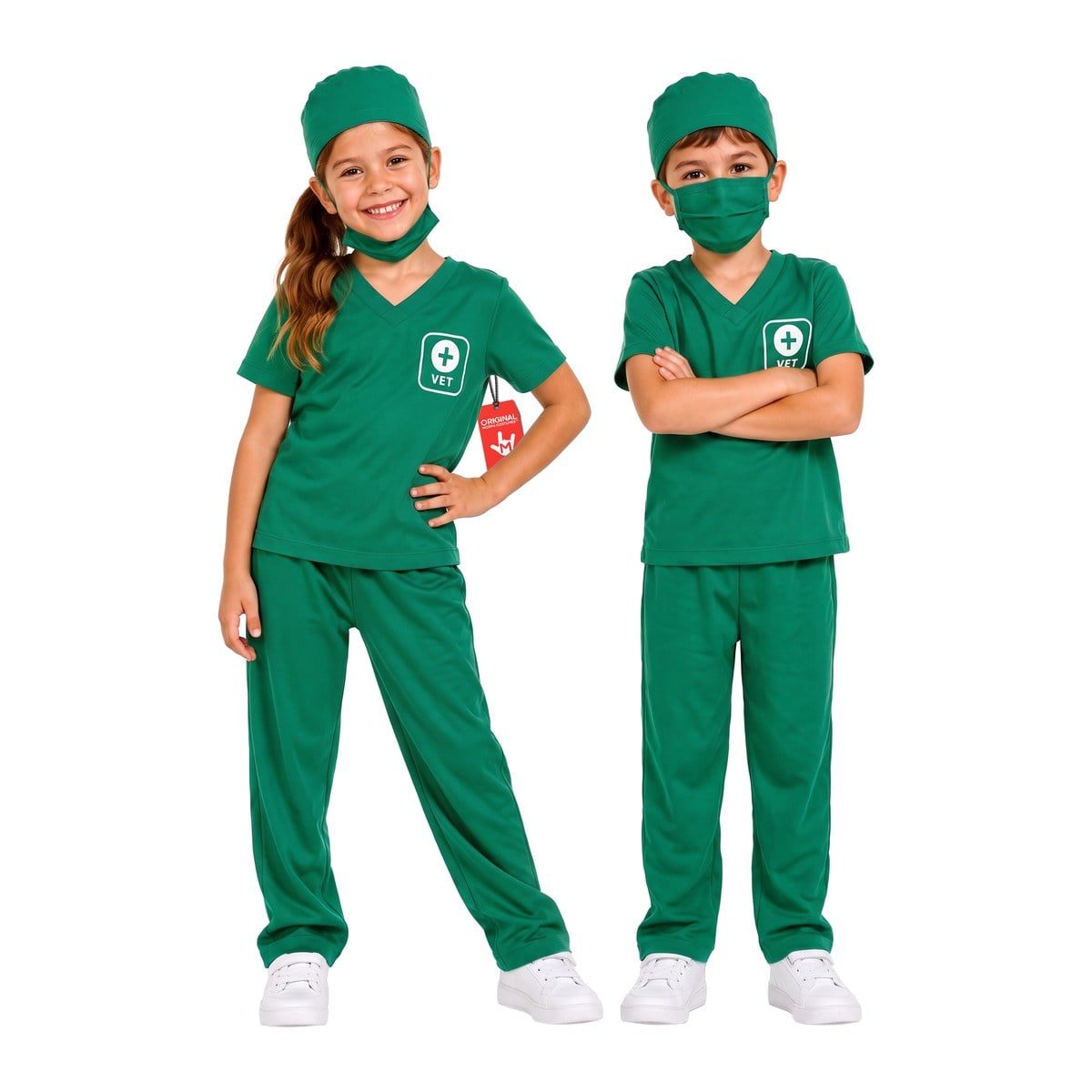
The Boys Vet Costume is a set of green scrubs: a top with a vet logo, matching pants, a cap, and a face mask, in four sizes from 4-6 to 12-14 years. A grown-up in our Dalmatian Ears, Tail and Nose Set, one size for adults, gets to be the patient for once.
The cowgirl for a child who runs the whole ranch
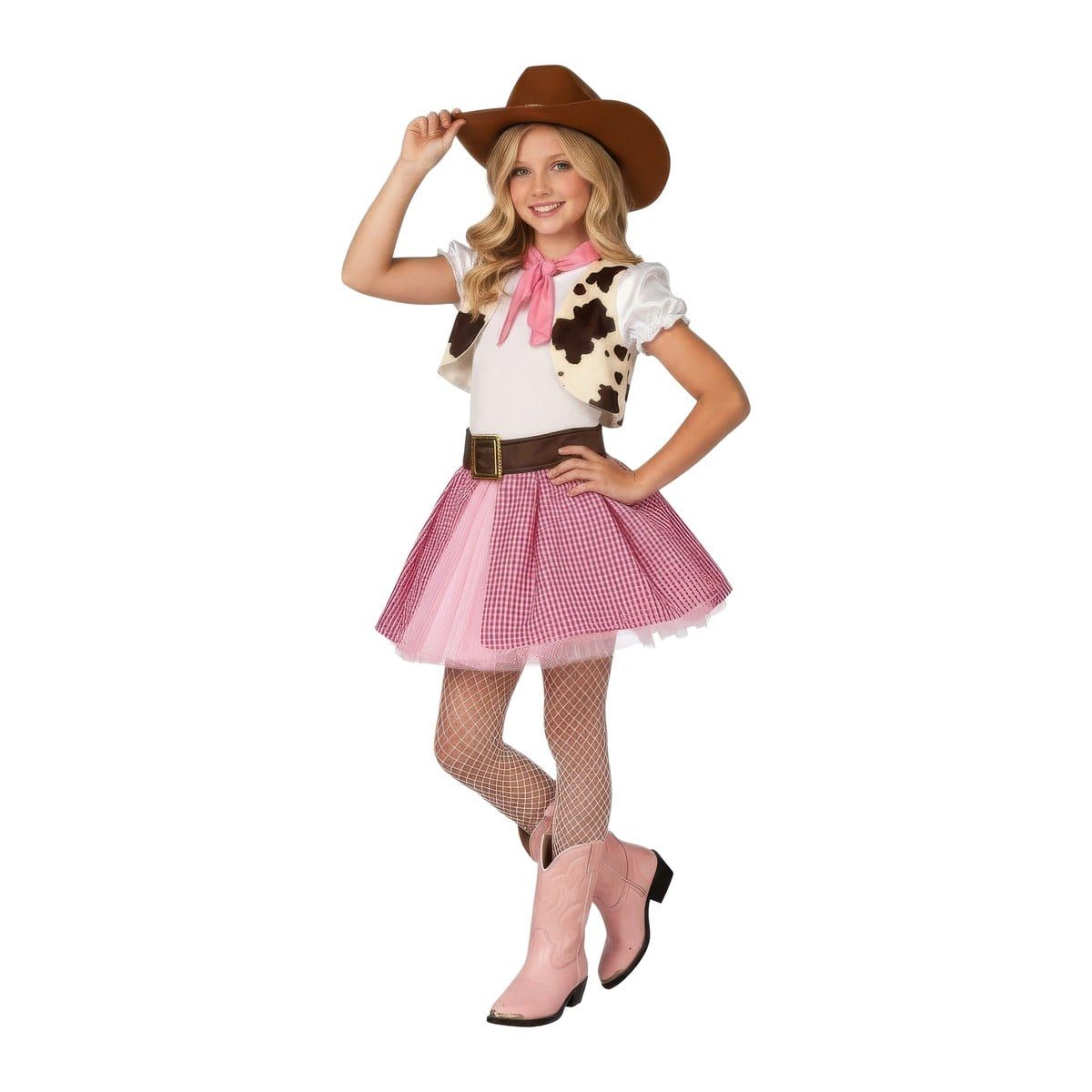
The Girls Cowgirl Cutie Costume packs a dress with frilled sleeves and a flared skirt, a mock cow print vest, and a brown cowgirl hat; the boots, tights, belt, and neckerchief in the photo are not on the pack list. Sizes run from 3-4 to 10-12 years. Our Kids Red Cowboy Hat comes single or in packs of 2, 4, 6, or 12, so the whole playdate can ride along.
More roles live in our kids uniform costumes, kids animal costumes, and kids Wild West costumes ranges, and in our career and occupation costumes and book character costumes for kids guides.
How do you get kids to actually play in their costumes?
Kids play in their costumes more when they pick the role, can reach the box, have someone to play opposite, and are free to change the story. The first and last lean on the 2016 trial; the middle two are our own experience:
- Let them pick, any role. The children most engaged in the 2016 trial gained most, so offer a role they get excited about, whichever aisle it sits in.
- Keep a low box, not a closet. A costume on a high shelf gets worn on Halloween; one in a box at their height gets worn on a Tuesday.
- Play opposite. A vet needs a patient and a fox needs an explorer; every pick above names a piece for the second player.
- Leave the script open. The 2016 trial used fantastical, made-up stories, so let the vet treat a dragon.
How do you look after dress-up clothes that get worn every week?
Fabric dress-up clothes worn every week need a cold hand wash and an air dry; hats, ears, and headbands are spot clean only, and an inflatable needs its fan and batteries out before it is cleaned. The vet, pilot, and cowgirl product pages all say hand wash only and lay flat to dry, and every hat and headband paired above says spot clean. All of our kids' products are safety tested by accredited labs. On top of that, as a brand we run over 500,000 quality checks a year. Our best toddler costumes guide covers the smallest sizes.
Frequently asked questions
Is dress up good for kids' development?
Yes, as one kind of play. Small trials link pretend play to sticking with a dull task (180 children), better working memory (110 children), and better emotional self-control (97 children), and the American Academy of Pediatrics backs play in general for social, cognitive, language, and self-regulation skills. A 2013 review cautions that pretend play is one of many routes to these skills.
Does pretending to be a hero help kids focus?
In one 2017 study of 180 children aged 4 and 6, those who pretended to be a hard-working character kept at a boring 10-minute task longer than those who stayed themselves. We found no replication, and the role-play may simply have made the task more fun.
What are good dress-up costumes for kids who love animals or jobs?
A vet, pilot, or cowgirl suits a child who copies grown-ups at work; a full animal jumpsuit like our Kids Fox Jumpsuit Costume suits one who crawls and growls. About three in ten kids' costumes bought on our US site from May 1 to October 25, 2026 was an animal, a dinosaur, or a dragon.
What age do kids start pretend play?
Simple pretending usually starts between 2 and 3. The CDC lists pretending with objects, like feeding a block to a doll, as a 30-month milestone, and pretending to be something else, such as a teacher, superhero, or dog, as a 4-year milestone. In this guide, the cowgirl starts at 3-4 years and the vet, pilot, and fox at 4-6.
Does a costume have to be realistic for pretend play?
No. The 2016 trial that improved preschoolers' working memory used fantastical pretend play, adult-led stories such as a trip to the moon, so an alien or a vet who treats dragons fits the kind of play that was tested.
How do you wash kids' dress-up costumes?
Fabric costumes take a cold hand wash and an air dry, laid flat, and stay out of the washing machine. Hats, ears, and headbands are spot clean only. For an inflatable, take out the fan and batteries before cleaning and let it dry fully before folding.
