


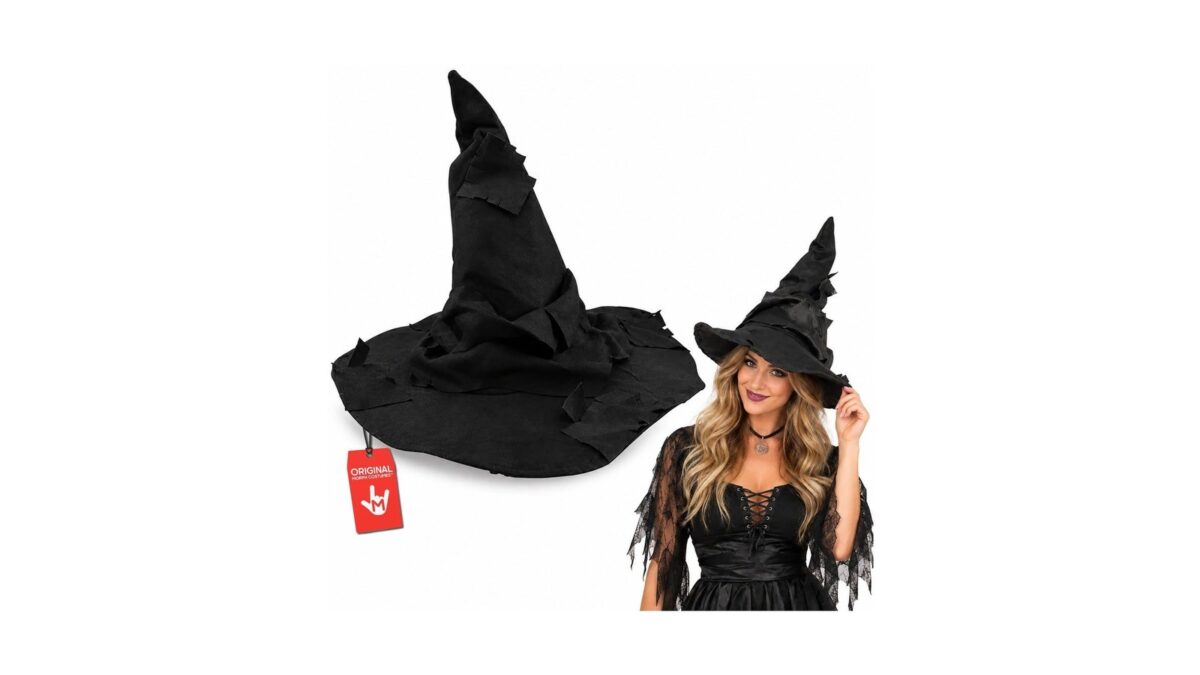
A DIY witch costume is five pieces: dark base layers, a cape, a pointed hat, hair, and one prop. Four of them come from your closet, a thrift store, or a yard of fabric, and the hat is the piece we would buy. Our Tattered Witch Hat stands 14 inches tall and 17.5 inches across with a bendable wire brim, and the whole build fits into four short sittings.
Plan on about 2 to 3 hours if you buy the hat, spread over a weekend. The order matters: the makeup test needs a couple of days, and the cape and the hat each change how the next piece sits. Prefer to start from a ready-made outfit? Our best Halloween costumes guide and Halloween costumes collection cover the full range.
What does a DIY witch costume need?
Five pieces, and every one of them is a choice:
- Base layers. A dark dress, or a dark top with a long skirt or trousers, plus dark tights if you like and flat boots.
- A cape. A hip-length rectangle of lightweight dark fabric, tied at the neck.
- A hat. Pointed, with a brim that bends. This is the one to buy.
- Hair. Your own, teased and left loose, or a wig.
- One prop. A short, soft-tipped broom, or nothing at all.
Plenty of people make some or all of their costume. In a YouGov poll of 1,106 U.S. adult citizens, October 11 to 14, 2024, about 10% already had a costume picked out; among that small group, 15% said it was completely homemade and 21% said it was more homemade than store-bought. We take that as a cue to put the steps first and the shopping second.
Pick a palette before you start. The table gives three, and every cell is optional, so mix them freely:
| Palette | Base layers | Cape fabric | One accent |
|---|---|---|---|
| Classic black | Black dress, or a black top with a long skirt or trousers | Black polyester or velour | A velvet ribbon choker |
| Woodland | Moss green or brown dress, or layered knit tops and a skirt | Dark green or brown lightweight fabric | A sprig of faux greenery on the hat band |
| Plum | Dark purple or burgundy dress | Plum velour or satin | Black lace trim on the cape edge |
Sitting 1: How do you prepare the base layers?
Spend 30 minutes raiding your closet before you buy anything: lay out every dark dress, skirt, top, tights, and flat boots you own and choose one palette from the table. A thrift store fills the gaps, and a long skirt is usually easy to find there.
Then tatter the hem. A ragged edge is what makes a plain dark skirt read as witchy, and it needs no sewing:
- Pick a skirt you do not mind cutting. A thrifted one is ideal.
- Snip small vertical cuts. Make them 1 to 2 inches deep, every 2 to 3 inches around the hem, and vary the depth so it looks worn rather than patterned.
- Pull a few threads. On woven fabric the cuts will fray on their own. On knits, cut jagged triangles instead, because knits do not fray.
- Try it on. The hem should land between your knee and ankle, so you can climb stairs without holding it.
Start your makeup test in this sitting, too. The FDA's novelty makeup page suggests putting a dab of the product on your arm and waiting a couple of days to see whether you react, so do it now and the answer is in well before the night.
Sitting 2: How do you make a cape that is safe to wear?
Make it hip-length, not floor-length. The U.S. Consumer Product Safety Commission's Halloween safety release says costumes should fit well and not drag on the ground, and, to reduce the risk of contact with candles and other fire sources, to avoid large capes or billowing skirts. It is dated 2012, with many tips aimed at children, and we hold an adult cape to the same standard. Allow about 45 minutes.
- Cut a rectangle. Start with about 40 inches wide and 28 inches long of lightweight dark fabric, then trim so the lower edge lands at your hip.
- Finish the sides. Use hem tape or fabric glue, or skip it and cut the edges jagged for a tattered cape.
- Make the neck casing. Fold the top edge over about 1 inch and secure it with hem tape, leaving the ends open.
- Thread a ribbon. Pull it through the casing, gather the fabric to your neck width, and tie a loose bow. A bow pulls free more easily than a knot if the cape catches on something.
On fabric: the same CPSC release says to look for flame-resistant fabrics, such as nylon or polyester, when you choose a costume. Fabric by the yard will not carry a costume label, so check the fiber content on the bolt end, and keep the cape away from candles and open flames. The U.S. Fire Administration's Halloween fire snapshot puts it plainly: candle flames and flammable costumes can be a dangerous combination.
Sitting 3: Should you make or buy the hat?
Buy it if you want the point to stay put and the evening to stay short. Make it if you enjoy craft work and have an evening to spare. Either route works with every palette above:
| Route | What it takes | Watch for |
|---|---|---|
| Make it | Stiff craft felt or poster board for the cone, a circle of the same for the brim, hot glue, and florist wire along the brim edge | Fit: measure your head above the eyebrows and ears first. Tuck the wire ends so nothing pokes |
| Buy it | One hat, about 20 minutes to try on and shape | Head size: check the circumference on the page against your own |
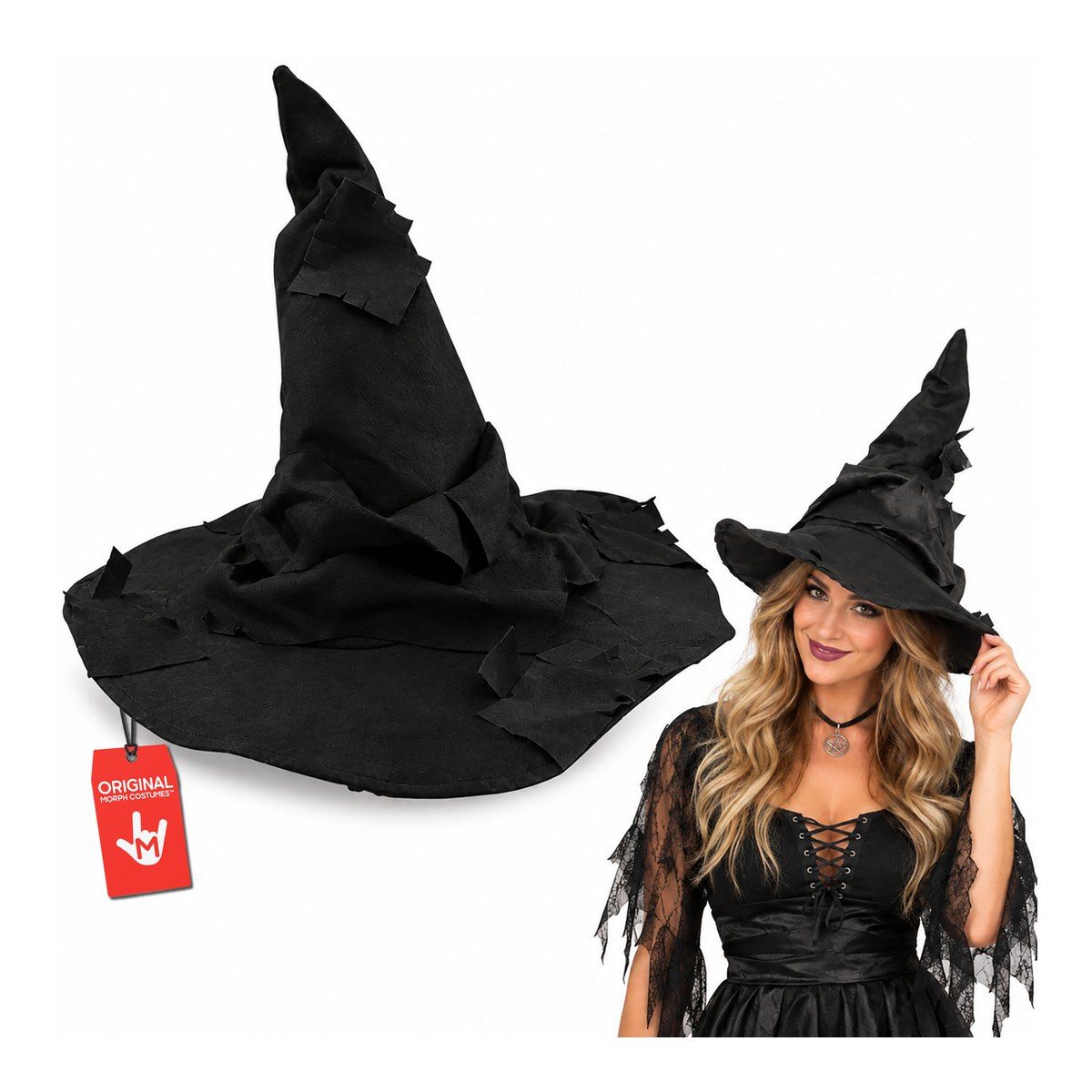
Our Tattered Witch Hat is soft polyester with a suede-like feel, a distressed finish, and a lightweight bendable wire that runs around the brim and up to the point. It measures 17.5 inches across when fully open and stands 14 inches tall, and it fits a head circumference of about 23.6 inches (60 cm), one size fits most from age 14 up. It is spot clean only: wipe it with a damp cloth, then bend the wire back into place and store it flat or on a stand. The pack is one hat.
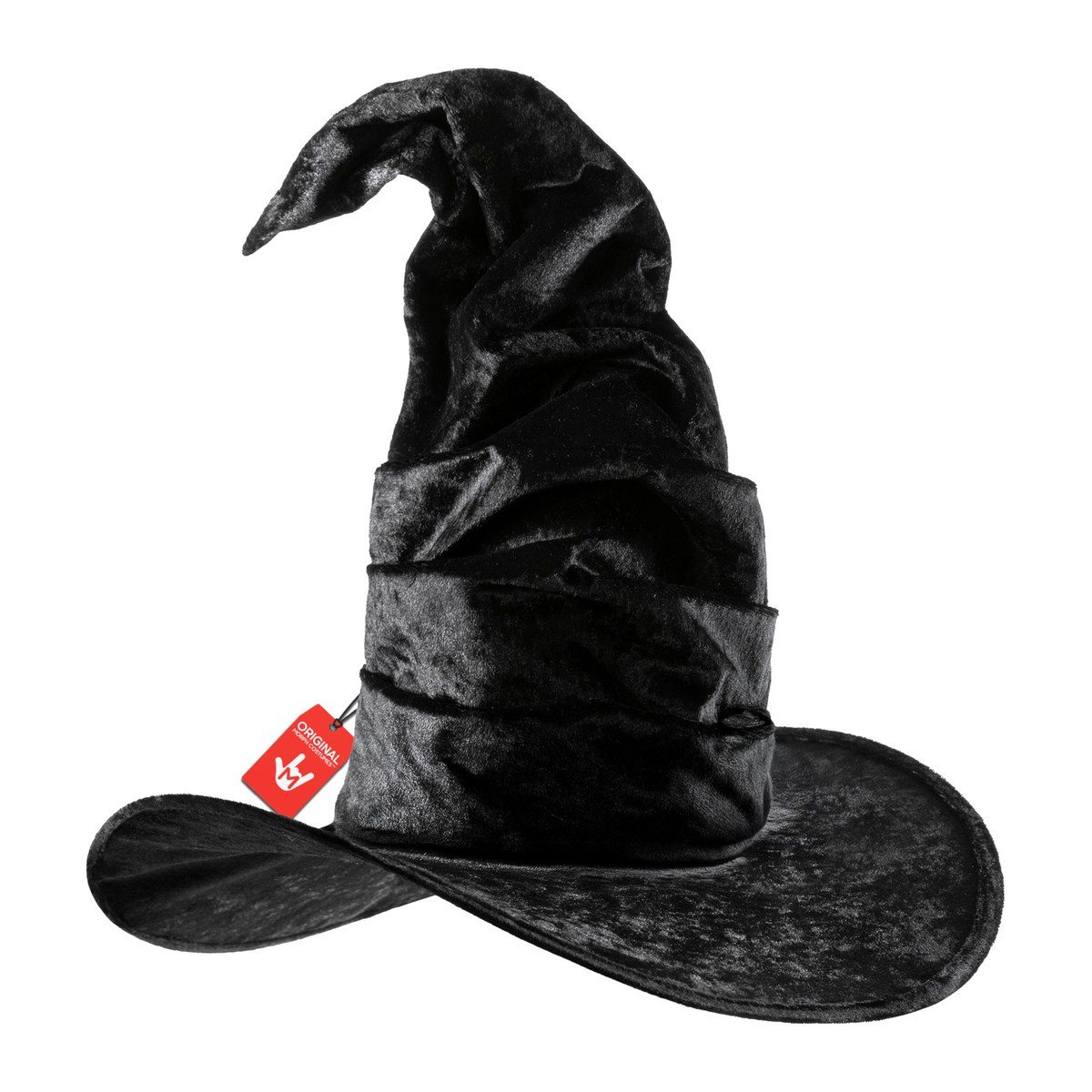
Prefer a crooked peak and a wider brim? The Crooked Witch Hat in black velour is 100% polyester velour with a wide brim, a crooked peak, and a satin buckle detail. It is structured and non-stretch, so check your head circumference against our size guide before you order. We suggest wearing it slightly back on the crown to keep the peak upright. Wash it by hand in cool water, reshape the brim and peak while it is damp, and let it air dry away from direct heat and sunlight. More hats and props live in our costume accessories collection.
Sitting 4: How do you finish the hair, face, and broom?
Allow 30 minutes. Hair first, because the hat sits over it. If you are using your own, brush it out, tease it lightly at the crown, and leave it loose. Put the hat on after and pin it to your hair with two or three bobby pins so it does not slide forward.
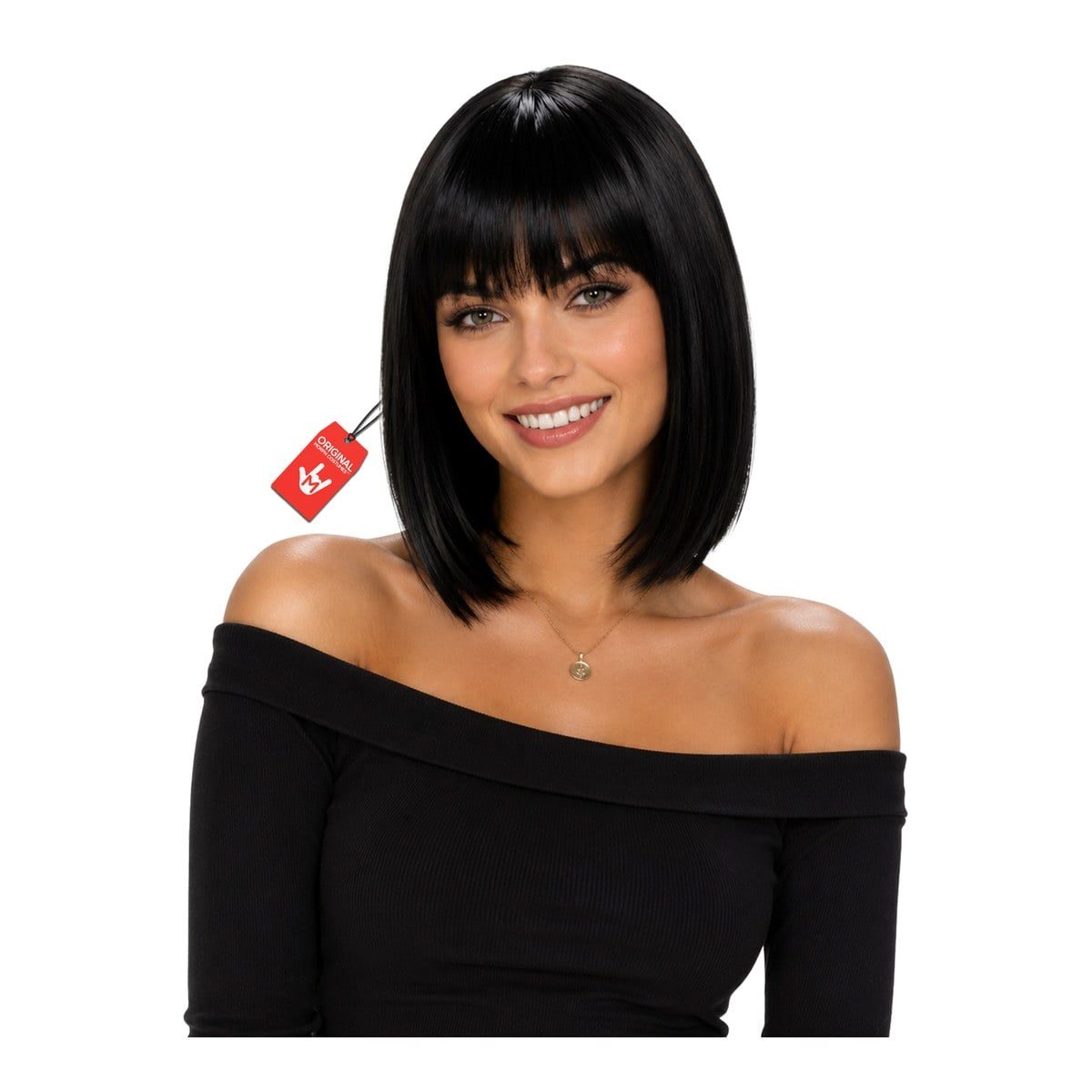
For a different hair color without a trip to the salon, our Mid Length Straight Black Wig is a straight, shoulder-length bob in 100% polyester, one size fits most adults. Care is by hand: rinse it gently in cool water without wringing, leave it to dry in the air, and keep it flat or on a wig stand. More styles sit in our wigs collection and our Halloween wigs guide.
For the face, a pale base, a dark lip, and smoky eyes are enough, and green face paint is optional. The FDA's novelty makeup page says color additives have to be approved by the FDA for use in cosmetics, so read the color names on the ingredient list, and that none of the fluorescent colors are allowed near the eyes. Use only what passed the arm test from sitting 1.
The prop is the last piece. Make a broom from a short wooden dowel with a bundle of raffia or twigs wrapped and taped at one end, and keep it short and soft at the tip. The CPSC release says swords, knives, and similar costume accessories should be made of soft, flexible material, and we hold a broom to the same rule. Venues set their own prop rules, so ask first, and if the answer is no, the broom stays in the car.
What should you check before you leave the house?
Stand by a window with everything on and run six checks. Allow about 5 minutes, and most of them come from the guidance linked above:
- Hem. The American Academy of Pediatrics writes its Halloween safety tips for children, and the same sense holds for an adult: costumes should be short enough to prevent tripping and avoid catching on objects. Walk up and down one flight of stairs in the skirt.
- Vision. The AAP adds that hats should not slide over eyes or block vision. Look left, right, and down with the hat pinned in place.
- Wire. Run a finger around the hat brim and tuck or bend back any wire end that catches.
- Visibility. The CPSC suggests trimming costumes with reflective tape that will glow in a car's headlights. A strip across the back of the cape does the job.
- Flames. Keep the cape and skirt away from candles and open flames.
- Skin. If the arm test shows any reaction, skip the face paint.
Want a witch outfit you do not have to build? Our Halloween witch costumes and best witch costumes for women guides cover ready-made options, and our last-minute Halloween costumes guide has more builds for a short deadline. Across the company, we run over 500,000 quality checks a year.
Frequently asked questions
How do you make a DIY witch costume?
Build five pieces in four short sittings: dark base layers with a tattered hem, a hip-length cape, a pointed hat, hair, and one soft-tipped prop. Most of it comes from a closet or a thrift store, and the hat is the piece we would buy.
Can you make a witch costume without sewing?
Yes. Hem tape or fabric glue finishes a cape, a ribbon threaded through a taped casing gathers the neck, and a hat cone can be rolled from stiff felt and joined with hot glue. A tattered hem needs only scissors.
How do you keep a witch hat on?
Pin it to your hair with two or three bobby pins, and check the fit first: our Tattered Witch Hat fits a head circumference of about 23.6 inches, and the velour Crooked Witch Hat is non-stretch and sits best slightly back on the crown, so measure against our size guide.
How do you tatter a witch costume hem?
Snip small vertical cuts 1 to 2 inches deep every 2 to 3 inches around the hem of a skirt you do not mind cutting, and vary the depth. Woven fabric frays on its own; on a knit, cut jagged triangles instead.
How do you care for a witch hat?
Spot clean our Tattered Witch Hat with a damp cloth, then bend the wire brim back into place and store it flat or on a stand. Wash the Crooked Witch Hat by hand in cool water, reshape it while damp, and let it air dry.
