


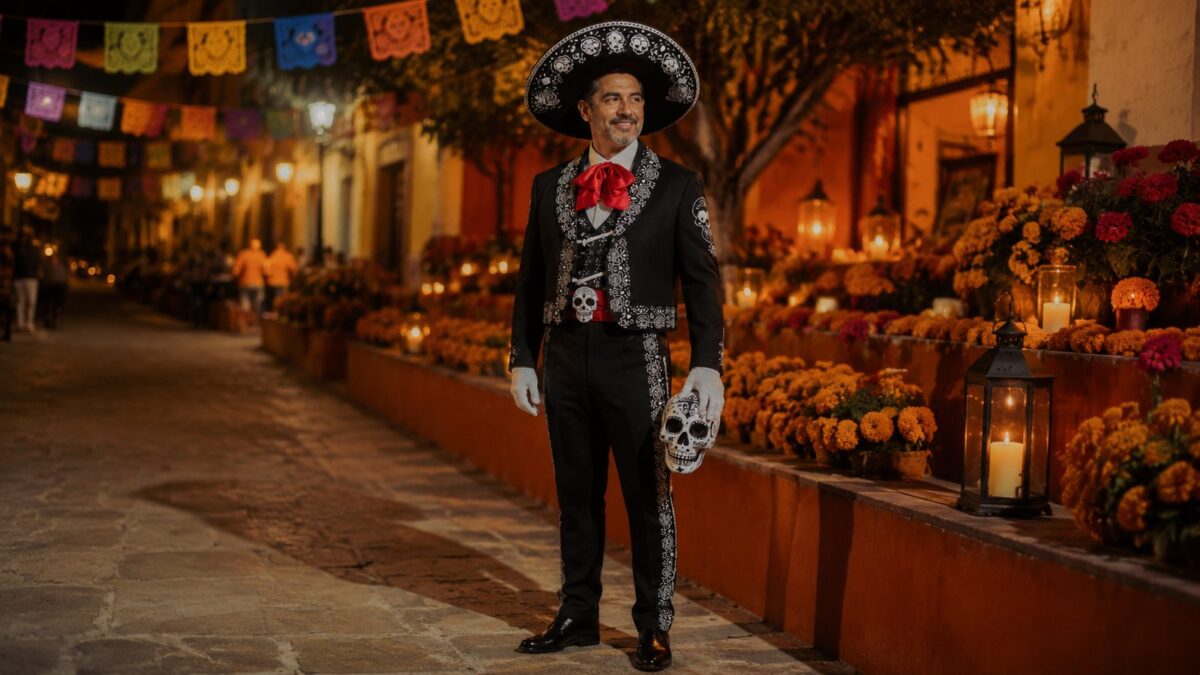
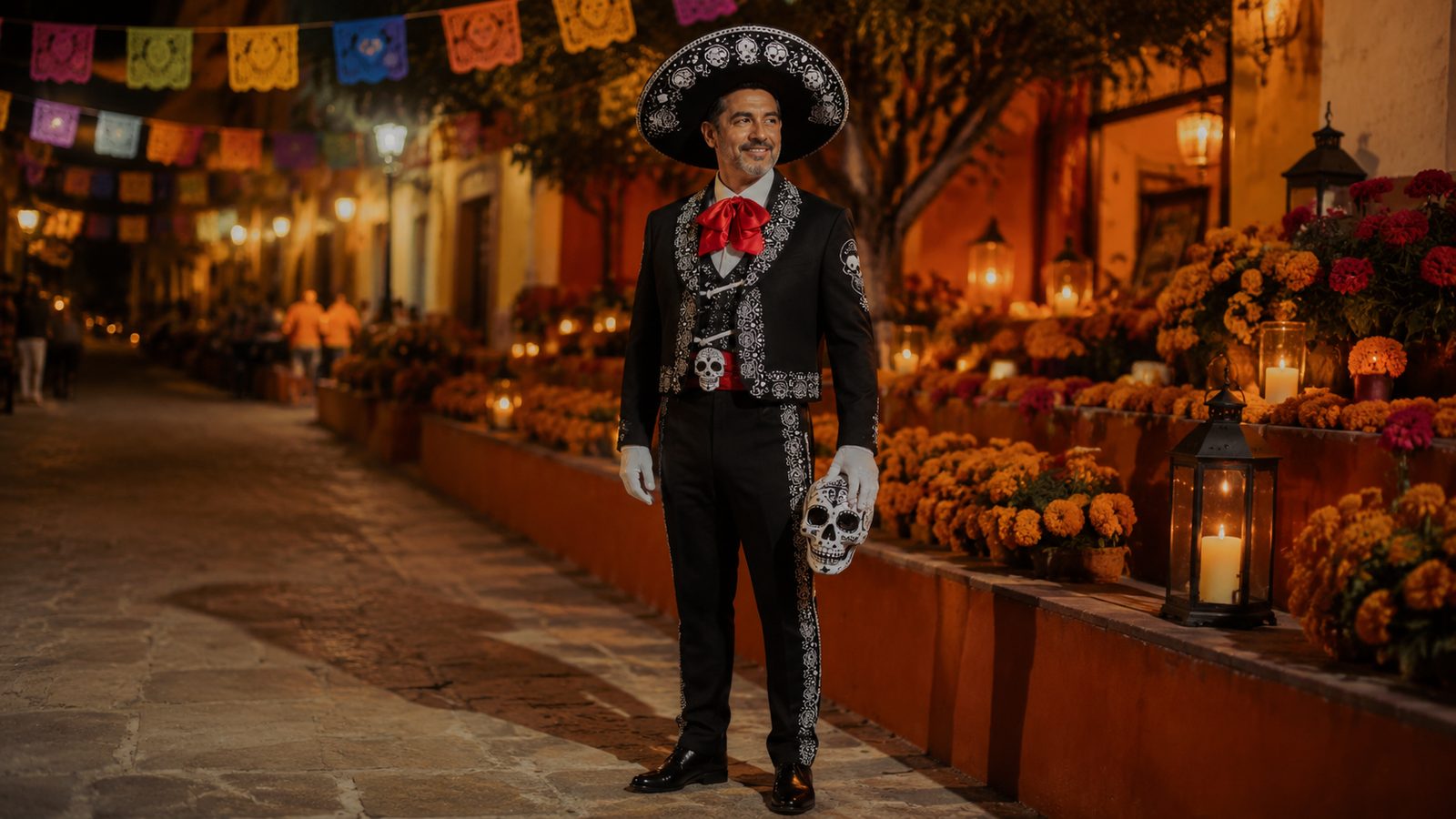
For men, a Day of the Dead outfit, or a Día de los Muertos one, means formal dress plus a calavera skull face, not a plain Halloween skeleton. The decision that shapes everything else is what you do about the face: wear a pack that brings its own mask, paint a calavera onto a blank base, or zip a printed skull hood over the lot. Two of our costumes cover those routes between them, and the fullest arrives as seven pieces, sombrero and full skull mask included, so nothing is left for you to source on the day.
Table of Contents
- The three routes, and what comes in each pack
- What men actually wear, and what "mariachi-style" really means
- Finishing the look: paint, flowers and fit
- Wearing it with respect
- Frequently asked questions
The three routes, and what comes in each pack
Most men's guides start with the suit. That is the wrong end: the suit is the easy part, and how you handle the face decides which costume is right for you. Do not want to paint? Take a pack with the mask included. Want zero makeup but not a full suit? Take the hooded jumpsuit. Want the face to be yours? Take the same jumpsuit with the hood off, or build the look around a suit you already own. Prices and stock below are as they sell today.
If you are dressing a couple, a group or the whole family rather than yourself, our Day of the Dead costume guide covers all four looks we make, and our Día de los Muertos outfits guide goes wider on styling.
| The build | What you do about the face | In the pack | Sizes | Price |
|---|---|---|---|---|
| Señor suit | Mask included, no paint needed | Jacket, vest with built-in shirt, pants, belt, sombrero, gloves, mask | M to XXXL | $45.95 |
| Electric skeleton jumpsuit | Hood up for a skull, hood off to paint | Jumpsuit, removable mesh-eye skull hood, gloves | M to XXL | $25.95 |
| Build it yourself | Yours, and it carries the look | A dark suit you own, plus face paint and a marigold | Your own | Varies |
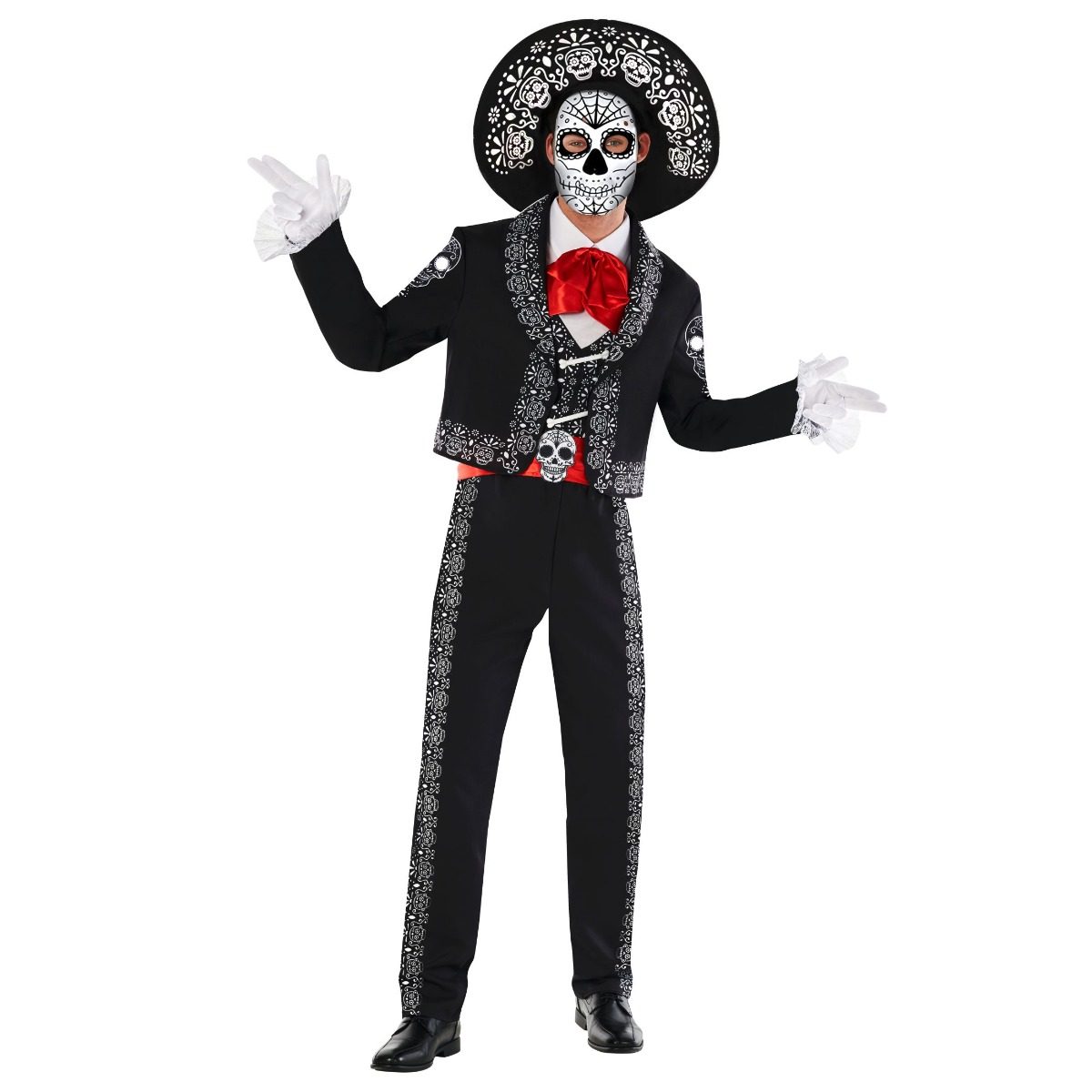
The full build: our Day of the Dead Señor suit
Our Mens Day of the Dead Señor Suit Costume ($45.95) is the only one here that arrives as a full seven-piece outfit: a printed jacket, a vest with the shirt built in, pants, a belt, a decorated sombrero, gloves and a full mask with a decorative skull design. The built-in shirt matters more than it sounds, since it removes the layer most men get wrong under a jacket. It runs M to XXXL, the widest range we make for the occasion; size up if you are between two, because it needs room to move under a hat and mask.
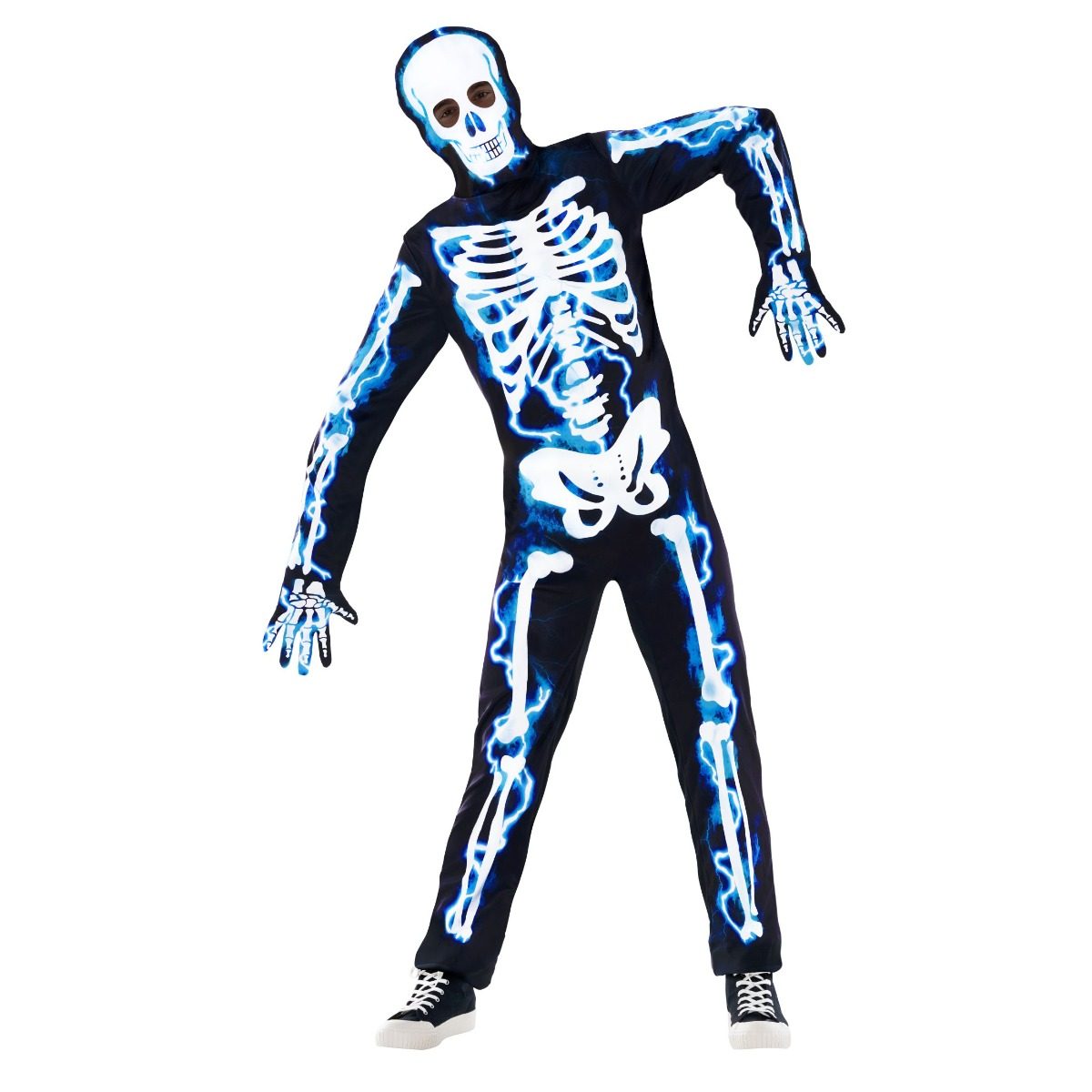
The one that works both ways: our electric skeleton jumpsuit
Be clear about what this is: our Skeleton Costume Electric Jumpsuit Mens ($25.95) is a skeleton jumpsuit, not a Day of the Dead costume out of the bag. What makes it one is you. The useful part is that the skull hood is removable, so it answers the face question twice. Pull it up and you get an instant skull head, with mesh at the eyes so you can still see. Take it off and your face is a blank canvas, which is when your calavera paint becomes the whole look rather than competing with a printed one. The bones are white on an electric-blue glow, skeleton-print gloves are included, the stretch fabric layers over your own clothes on a cold night, and at M to XXL it is the cheapest way in here.
The third route: build it yourself
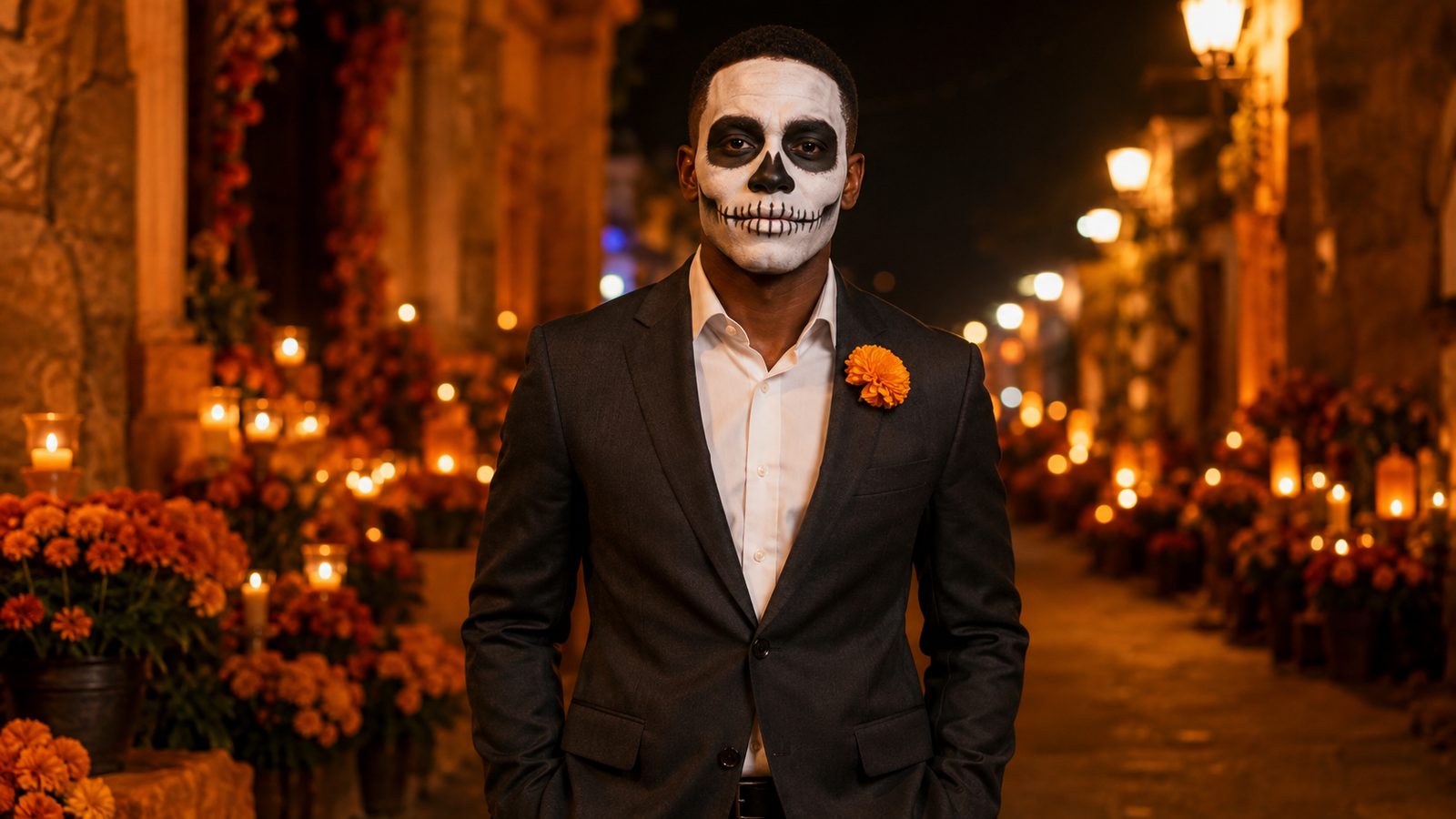
The honest third answer is that you do not have to buy a skeleton at all. The documented look is a suit, so a dark suit you already own plus a calavera face and a marigold is a legitimate El Catrín, and for many men it is the better-fitting one. Where we can help is the pieces around it: the skeleton range sits in skeleton costumes and the wider men's range in men's costumes. Face paint is the one thing nobody sells you as part of a pack, ours included.
Both costumes are 100% polyester and sized by chest and height rather than by a vague small-medium-large. We have made costumes since 2009, every costume goes through 30+ measurement checks and we run 500,000+ quality checks a year, so buy to the chart on the product page rather than to the size you assume you are.
What men actually wear, and what "mariachi-style" really means
The documented male look for Día de los Muertos is simpler than the internet suggests: a suit, worn with a skull-painted face. National Geographic describes celebrants with faces "artfully painted to resemble skulls", who put on formal suits and gowns in imitation of the calavera Catrina. That is the whole brief. The formal wear is the point, and it carries a joke most people miss.
The figure everyone is imitating began as satire. In the early 1900s the Mexican printmaker José Guadalupe Posada etched a skeleton in European high fashion, aimed at rich Mexican women eager to adopt European dress and customs before the Revolution; Diego Rivera later put her at the center of a mural and named her Catrina, after the catrines, the flashily well-dressed rich. Wake Forest University's Lam Museum of Anthropology puts the meaning plainly: in death we are all equal, and earthly riches cannot be taken to the next life. Catrín is simply the masculine form of the word, the same dandy with bones underneath, which is where the men’s version of the look comes from. Wear the suit and the finery is the punchline, not the flex.
Which brings us to a phrase on our own product page: mariachi-style. The charro suit mariachi bands wear belongs to a different tradition, and UNESCO's mariachi entry describes those groups in regional costumes adapted from the charro costume, signifying Mexican nationhood rather than remembrance. It belongs first to mariachi tradition rather than originating in the holiday. What is true is that mariachis really do play at graveside vigils, and the skeleton mariachi is a genuine folk-art figure: Pittsburg State University's collection includes a mariachi band composed of four little skeletons. So the Señor suit renders something real, a calavera mariachi rather than the formal catrín look. Both belong to the holiday; we would just rather you knew which one you were wearing.
One thing reframes the occasion. UNESCO's description of the festivity, inscribed on its Representative List of the Intangible Cultural Heritage of Humanity in 2008, covers altars, candles, marigold petals and the food the dead loved. It does not mention costume at all. Dressing up is a living part of how the day is marked in public, but it is not the heart of it.
Finishing the look: paint, flowers and fit
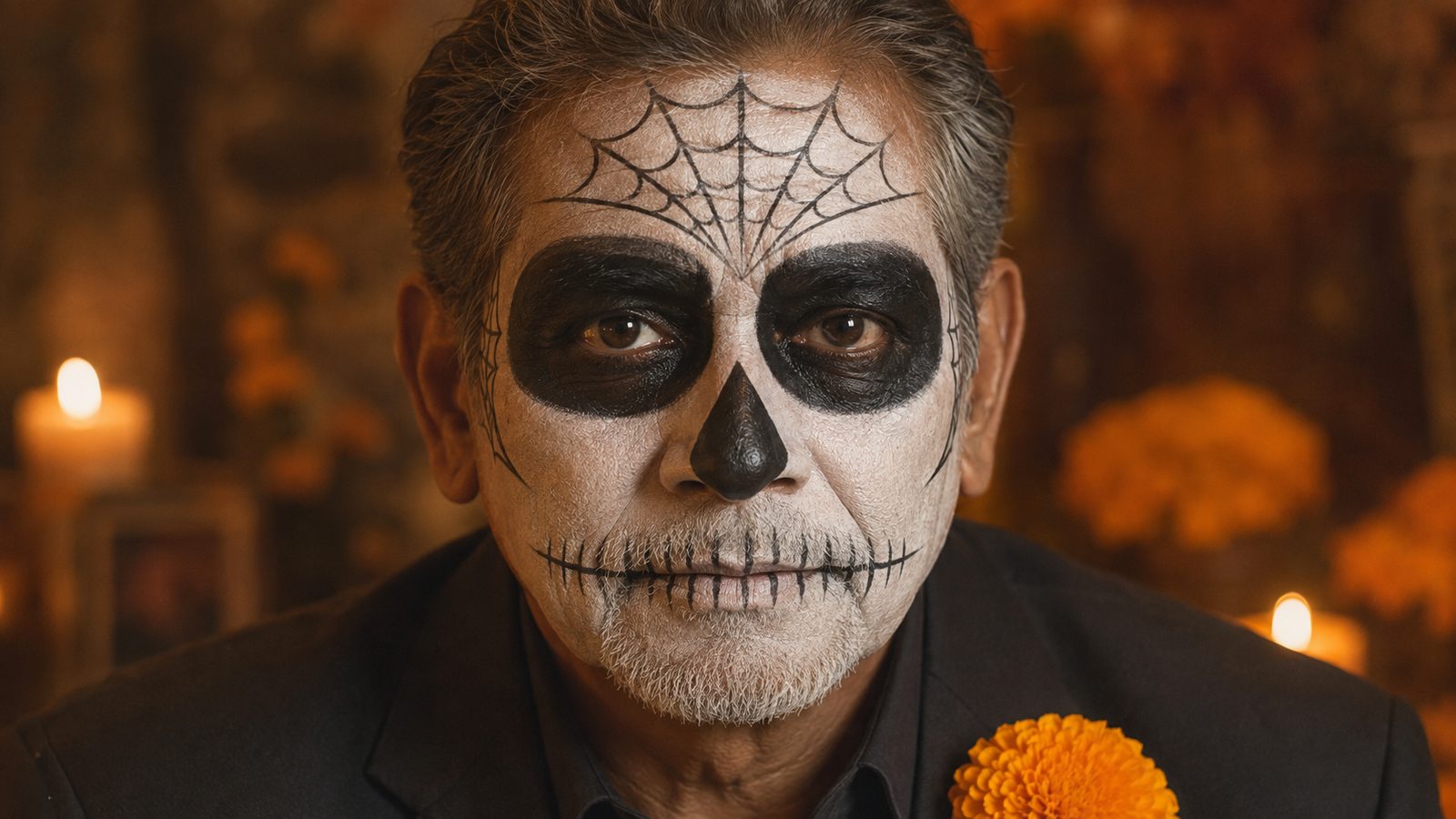
No costume pack includes face paint, ours included, so budget for it separately. A men's calavera is less fussy than the floral version: a white base, black shaded deep into the eye sockets, a line of stitches across the lips, a blacked-out nose, restrained web detail on the forehead. Keep it symmetrical and clean. The mistake to avoid is blood or wounds, which drags the look back into Halloween.
Marigolds are the finishing touch, and the one accessory with real meaning behind it. The cempasúchil is the flower families scatter from altar to grave, and National Geographic notes the golden petals are there to guide wandering souls back to their place of rest. A single bloom in the hatband or at the lapel does more for a men's look than any amount of extra makeup; our Day of the Dead headband guide covers the flower pieces in detail.
On care, treat these as costumes rather than shirts: hand wash only in cool water and air dry, never machine wash or tumble dry, and take the mask and accessories off before the suit goes near water. The garment label is the authoritative instruction. Hang it the night before rather than pulling it from the bag an hour ahead, so it drops out of the packaging folds.
Wearing it with respect
We sell costumes, so take this for what it is worth, but the honest answer to "can I wear this" is that people with far more standing than us disagree. Monica De La Torre of Arizona State University argues for openness with a condition: you cannot police people around that, and the move is to educate, while being clear that taking only the fun part is irresponsible. Andi Xoch, who founded Latinx With Plants in East Los Angeles, takes the harder line, and she is talking about exactly what this page sells. On people outside the culture painting calavera faces or dressing as a Catrina, she told NPR that the tradition does not belong to them no matter how cool or commercialized it gets, and that once it becomes a trend it is no longer being respected. Both positions are held in good faith, no institution issues permission slips, and anyone telling you the question is settled is selling you something.
Practically: know whose day it is and what the symbols mean before you put them on, and keep the look celebratory rather than gruesome. Halloween "embraces terror and mischief", while Day of the Dead unfolds in what National Geographic calls an explosion of color and life-affirming joy. And if the section above gave you pause, Xoch names her own alternative in that same interview: cempasúchil displays, she says, are a way anyone can take part. The flowers are the part nobody objects to.
For scale, Americans spent a record $13.1 billion on Halloween in 2025, $4.3 billion of it on costumes, per the National Retail Federation. Día de los Muertos has grown alongside it, and parts of it are newer than they look: Mexico City’s parade dates from 2016, staged after a James Bond film opened with a fictional version of it. A tradition that old is still changing shape. The rest of our seasonal range sits in Halloween costumes.
Frequently asked questions
What do men wear for Day of the Dead?
A suit, worn with a calavera skull face. National Geographic describes celebrants putting on formal suits with faces painted to resemble skulls, in imitation of the Catrina figure. Our Señor suit covers both in one pack, since a full skull mask comes with the jacket, vest, pants, belt, sombrero and gloves.
What is the difference between a Day of the Dead costume and a Halloween skeleton?
Intent, and the look follows it. A Halloween skeleton is built to frighten; a Day of the Dead look is built to be elegant and celebratory, in formal dress with colorful calavera makeup and marigolds. In practice: no blood, no wounds, no gore.
Do you need face paint for a men's Day of the Dead costume?
Only if your costume does not bring its own face. Our Señor suit includes a full skull mask, and our electric skeleton jumpsuit comes with a removable skull hood with mesh at the eyes, so neither one needs paint. Take that hood off, or build the look around a suit you own, and calavera paint becomes the whole look. No costume pack includes face paint, so buy it separately.
What is El Catrín?
The masculine form of La Catrina: a skeleton dressed as a well-turned-out gentleman. The figure traces to an etching by the Mexican printmaker José Guadalupe Posada in the early 1900s, satirizing rich Mexican women adopting European dress. The point is that earthly riches cannot be taken to the next life, so the tailoring is the joke, not the boast.
Can non-Mexicans wear a Day of the Dead costume?
People with real standing in the debate disagree, and no institution issues guidance. Monica De La Torre of Arizona State University argues you cannot police participation and that the answer is education; Andi Xoch of Latinx With Plants says calavera face paint and Catrina costumes are not outsiders’ to wear, no matter how commercialized they get. If you take part, learn what the symbols mean and keep the look celebratory, not gruesome.
What sizes do men's Day of the Dead costumes come in?
Our Señor suit runs M, L, XL, XXL and XXXL, and our electric skeleton jumpsuit runs M to XXL. Both are sized by chest and height, so check the size guide on the product page rather than guessing, and size up if you are between two. Every costume goes through 30+ measurement checks.
