


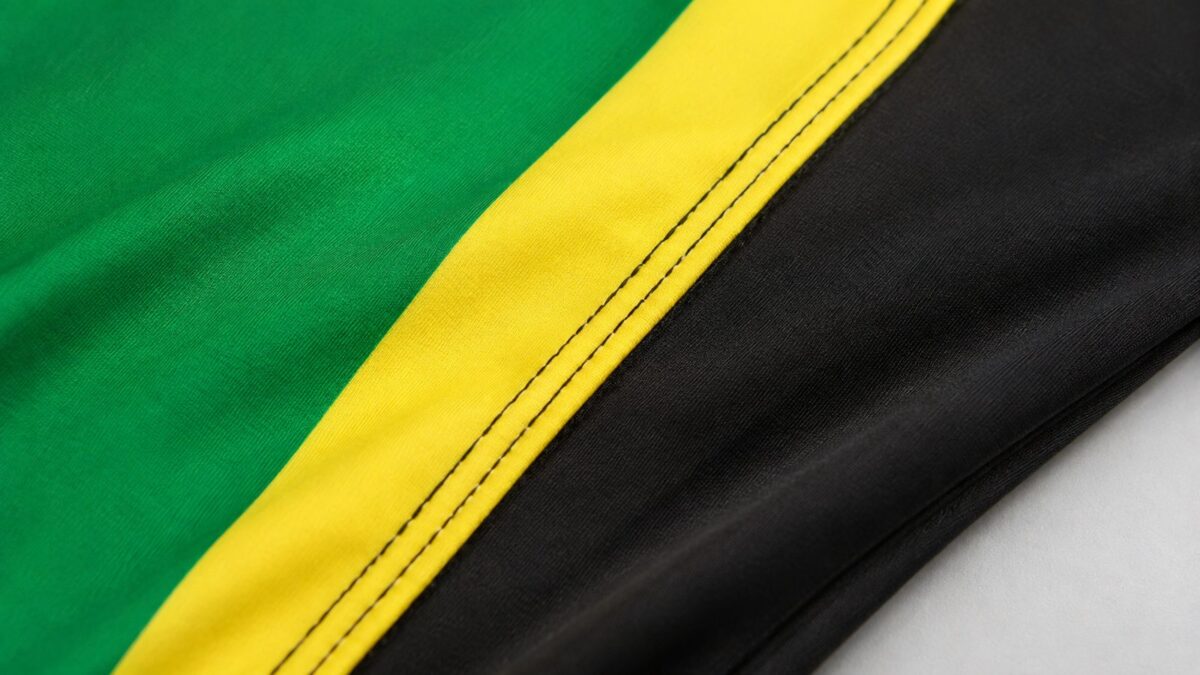
A custom printed Morphsuit works by dye sublimation: the design is printed onto polyester spandex fabric before it is cut and sewn, so the color becomes part of the fiber, not a layer on top of it. Our own Morphsuits use a 91% polyester, 9% elastane knit for that reason, since sublimation dye only bonds fully to synthetic fiber. Feed the file at 150 to 300 DPI at finished size and the pattern holds up under stretch; a small screenshot prints exactly as blurry as it looked on screen.
Two things decide whether that print comes out sharp: the file you hand over, and where the seams fall. For how a Morphsuit is built and sized generally, see what a Morphsuit is and how it works; if you searched for a custom spandex bodysuit or a custom lycra bodysuit, Morphsuit vs. zentai suit vs. spandex bodysuit sorts out the naming.
Table of Contents
- What is a custom printed Morphsuit?
- Designing a pattern that survives being sewn
- The step-by-step printing process
- Image quality: resolution, file format, and what ruins a print
- Frequently asked questions
What is a custom printed Morphsuit?
A custom printed Morphsuit is a full-body spandex bodysuit with your own artwork dye sublimation printed into the fabric before the suit is cut and sewn. Shoppers also search for the same garment as a custom spandex suit, a custom printed bodysuit, or a custom lycra bodysuit; all three describe this. The print is not a finishing step applied to a made suit. Heat and pressure drive the dye into the polyester fiber itself, creating a permanent color bond rather than a surface coating, the mechanism Kornit Digital's process glossary describes directly. That is also why the print does not sit on the surface waiting to crack: it moves and washes the way the fabric underneath it does.
The fabric has to be mostly polyester for this to work: sublimation dye is hydrophobic and only bonds permanently to polyester fiber, not to natural fibers like cotton, per textile-printing supplier guidance. It is also why an all-over print is not done the way a cotton T-shirt is: standard direct-to-garment inkjet, built for cotton tees, sits on the surface as a layer rather than bonding into it, so on stretch fabric it is the print most likely to crack or peel where the suit stretches. Dye sublimation is the standard fix for polyester-spandex, not something we do differently from the rest of the industry.
Core materials for a custom print
Every Morphsuit we make, patterned or solid, is knitted from the same 91% polyester, 9% elastane blend with 4-way stretch: enough polyester for the dye to bond fully, enough elastane left to stretch and recover. Every costume goes through over 30 measurement checks, and the business runs over 500,000 quality checks a year. On a print-then-cut garment those measurements matter earlier than on a plain suit: a panel dimension that is out means reprinting fabric, not unpicking a seam.
Designing a pattern that survives being sewn
Designing a custom Morphsuit pattern means mapping the artwork to the suit's actual pattern pieces before it is printed, not centering a logo on a flat rectangle and hoping. Cut-and-sew sublimation prints the design onto flat panels first and sews the garment afterward, so a design that ignores where seams fall gets cropped, split, or squeezed into a curve it was never drawn for. Garment decorators generally keep artwork at least an inch clear of a seam, more around the sleeve and side seams, a standard placement rule.
Two things a flat design cannot show you: seam matching and stretch. Panels printed and sewn separately do not line up pixel for pixel; a shift of an inch or two during construction is a normal tolerance for the method, not a fault. A pattern that looks correct flat will not look identical once stretched over a body, either: fine detail can distort, and it shows first wherever the fabric stretches most, the chest, hips, and underarms. Neither is something we can eliminate; designing around them, keeping fine detail clear of the highest-stretch zones and the seams, is what changes the outcome.
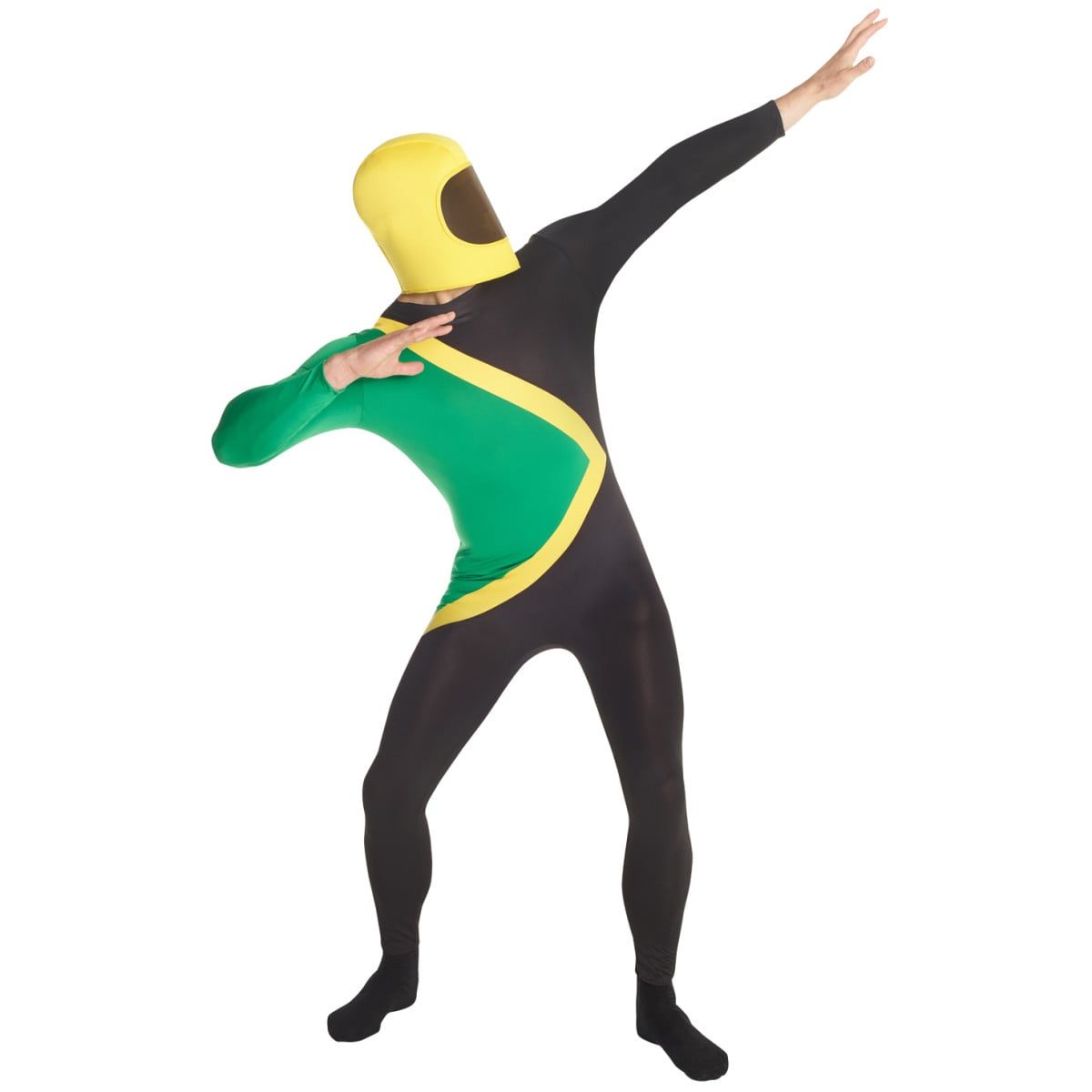
What a full-body pattern looks like
The Jamaican Bobsleigh Team Morphsuit is one of our own patterned pieces: a bold diagonal color panel across the chest and arm, on the same polyester-elastane knit as every suit we make, with double zips and reinforced stitching at the stress points. It shows what a deliberately placed panel looks like sewn into a finished suit, not sitting on a flat sheet.
The step-by-step printing process
Five stages take a design from a file to a finished suit; printing sits at stages two and three, before a single panel is cut.
- Map the artwork to the pattern. The design is laid out against the suit's actual flat pattern pieces, not a mannequin photo, so seam lines and stretch zones are accounted for before anything is printed.
- Print onto transfer paper. The design prints onto a sublimation transfer sheet using the specialty dye inks the process depends on.
- Heat press the fabric. Transfer paper and fabric go through a heat press, commonly 350 to 450°F under pressure, the step where the dye turns to gas and bonds into the polyester fiber.
- Cut and sew. Once the fabric has cooled and the color has locked in, the printed panels are cut and sewn into the finished suit, to the same construction as the rest of our range.
- Quality check. The design was measured across 30+ points at the prototype stage, same as every MorphCostumes style, and the finished suit goes through our standard checks like any other costume.
Image quality: resolution, file format, and what ruins a print
A sharp custom print needs a file at 150 to 300 DPI measured at the finished print size, not resized up afterward. Sublimation print suppliers generally report no visible difference between a 150 and a 300 DPI file once printed, since fabric texture and dye spread limit how fine a detail the material can hold; what does show is a low-resolution file stretched past its native size, which forces the software to interpolate pixels and comes out soft or blocky. On a full-body suit, finished size means a whole leg or torso panel, not a chest-sized graphic, so a file that looks fine on a phone can still come apart printed at that scale.
File format matters as much as resolution. True vector artwork (AI, EPS, PDF, SVG built from paths, not an embedded raster image) scales to any size with no quality loss, so it suits logos and flat-color graphics; photographs and gradients are safer as a high-resolution PNG or TIFF than JPEG, because JPEG's lossy compression degrades a little more every time the file is edited and re-saved. A screenshot pulled off a social post has usually been through several rounds of exactly that already.
| File type | Best for | Why |
|---|---|---|
| Vector (AI, EPS, PDF, SVG) | Logos, text, flat-color graphics | Scales to any size with no quality loss |
| PNG or TIFF | Photographs, gradients, detailed artwork | High resolution without lossy compression |
| JPEG (high quality, unedited) | Simple photographic images only | Usable if it has not been repeatedly re-saved or resized |
Color mode practice varies by supplier, so ask before you submit a file: some, including textile printers like Mereton, recommend CMYK since the physical inks are CMYK; others print from RGB. What does not vary is the physics: a screen shows color as light, additive, and a printed suit shows color as pigment, subtractive, so a color will not match a monitor exactly. A physical sample, not the on-screen preview, is the reliable way to confirm color before printing a full suit.
Frequently asked questions
What printing process do custom printed Morphsuits use?
Dye sublimation. Heat and pressure drive the dye into the polyester fiber itself, rather than sitting on top of it as a layer, which is why the print survives stretching and washing without cracking or peeling. It is the standard method for polyester-spandex costumes.
What image resolution do I need for a sharp Morphsuit print?
150 to 300 DPI, measured at the actual finished print size. Going higher than 300 DPI generally makes no visible difference once the dye is set into the fabric; the real risk is a small or low-resolution file stretched larger than its native size, which prints soft or blocky.
Can you dye a Morphsuit a different color after purchase?
We do not offer aftermarket dyeing on a Morphsuit you already own: color and pattern are set during manufacturing, and we cannot guarantee an even, durable result from re-dyeing finished spandex at home. For a different look, our range already runs from plain colors to printed patterns.
What are Morphsuits made of?
A 91% polyester, 9% elastane knit with 4-way stretch, the same fabric across our solid-color and patterned range. The high polyester content is also what makes the fabric printable: sublimation dye bonds to synthetic fiber, not to natural fibers like cotton.
Why do sublimation prints sometimes look different on the front and back panel?
Each panel is printed flat and joined afterward, so the two halves do not meet pixel for pixel. A shift of an inch or two is within tolerance, not a defect; keeping fine detail away from the seam lines is what keeps that shift from being noticeable.
