


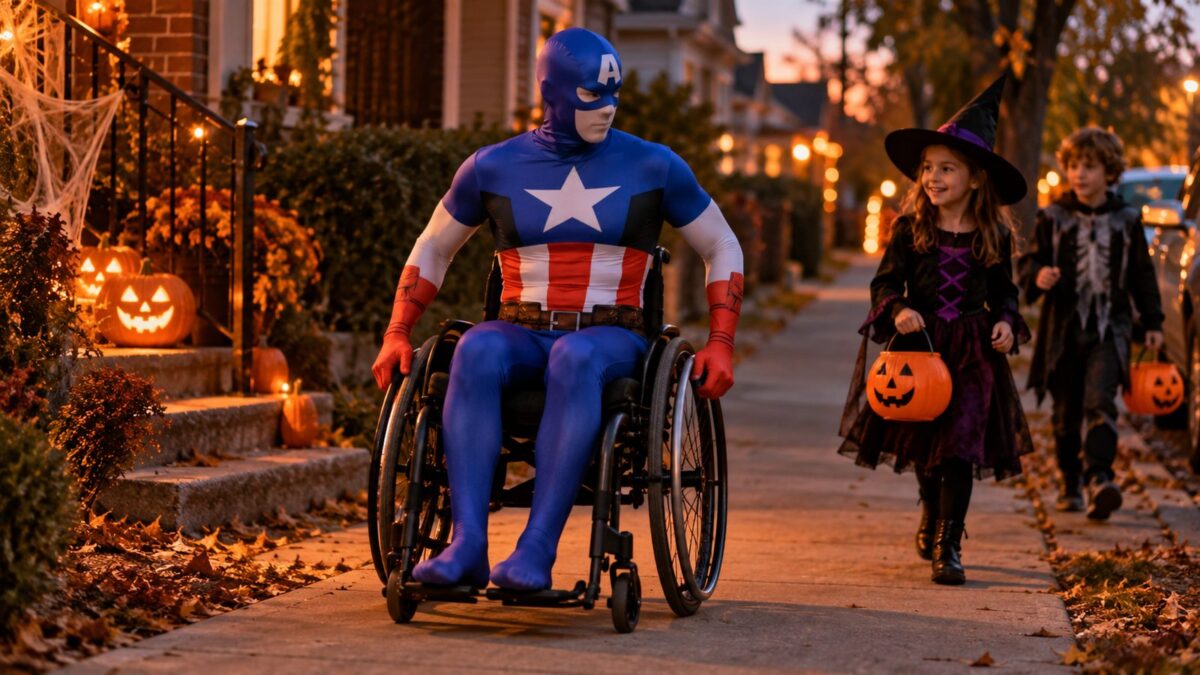
6 costumes on this list work for a wheelchair user: a mask, a Morphsuit, a tabard, a costume set worn over regular clothes, and 2 Disney wheelchair covers that make the chair itself part of the costume. 9 in 10 of what we have sold since our website analytics went live this spring was not an inflatable or a piggyback costume, the two styles built around standing up.
Two different things get called a "wheelchair costume." A wheelchair cover fits over the chair itself, so the wearer's own clothes underneath do not need to change at all. An adaptive costume is a garment worn on the body, adjusted for easier dressing or a better seated fit. This list covers both, counting down from the fastest build to the most involved.
The general basics do not change here: fit, flame safety, and clear sightlines, all covered in Are Halloween Costumes Safe. Every costume goes through over 30 measurement checks. Browse the full Halloween costumes range for more than the six picks below. What follows is the wheelchair-specific part: what changes when a costume has to share space with wheels, push-rims, and the chair's own controls.
What actually changes when the costume shares space with a wheelchair?
Four things change: what the wheels can catch, what the push-rims need left clear, whether the chair is manual or powered, and how the wearer gets in and out of it. The CPSC's Halloween costume guidance puts the annual average at 3,200 Halloween-related injuries treated in U.S. emergency departments across 2019 to 2021, and it is written throughout for a costume on a person who walks. None of what follows is medical advice; it is that same guidance read against a chair.
- Keep long fabric off the wheels. A trailing cape, a long skirt hem, or a loose tabard edge that hangs past the seat can catch in the spokes or in the caster wheels at the front. The CPSC files "overly long or baggy costumes" under trips and falls; on a chair that same loose fabric is a spoke hazard instead, so hem or clip anything that falls below seat height.
- Leave the push-rims and hand controls clear. If the wearer self-propels, nothing from the costume or the cover should sit over the push-rims. Neither of the two covers in this list states how it attaches to the frame, so check a cover's own photos and description for that before buying, not just the theme.
- Manual and power chairs are not the same build. A cover made for a standard manual wheelchair with 24-inch wheels is not made for a power chair's motor housing, vents, or joystick controller, and blocking any of those is a real problem rather than a cosmetic one. The product page states the chair type it is for; read that line before you order.
- Keep a line clear for transfers. If the wearer moves in or out of the chair during the evening, anything mounted to the front or the sides has to allow that without coming off first.
Two categories come off the table before you start: an inflatable, which holds its shape with a fan and a battery pack, and a piggyback costume, which fakes a second body carrying the wearer. Both are a standing illusion and neither works sitting down. Those two categories are the only ones the 9-in-10 figure above excludes; everything on this list falls outside them.
6 wheelchair Halloween costume builds, ranked
Counting down from the fastest to the most involved. The first four are worn on the body and never touch the chair; the last two are covers that mount to the frame.
| # | Build | What it is | Effort |
|---|---|---|---|
| 6 | Mask + your own clothes | Worn on the head only | Under a minute |
| 5 | Full-body Morphsuit | One worn garment, head to toe | A few minutes |
| 4 | Tabard + separate hood | Layers over regular clothes | A few minutes |
| 3 | Costume set (tunic, cape, belt, crown) | Multi-piece worn set | 10 to 15 minutes |
| 2 | Wheelchair cover, mount style | Fits onto a standard manual chair, 24in wheels | One-time fit to the frame |
| 1 | Wheelchair cover, full build | Turns the chair into the vehicle | 24 pieces to assemble |
6. A mask and your own clothes
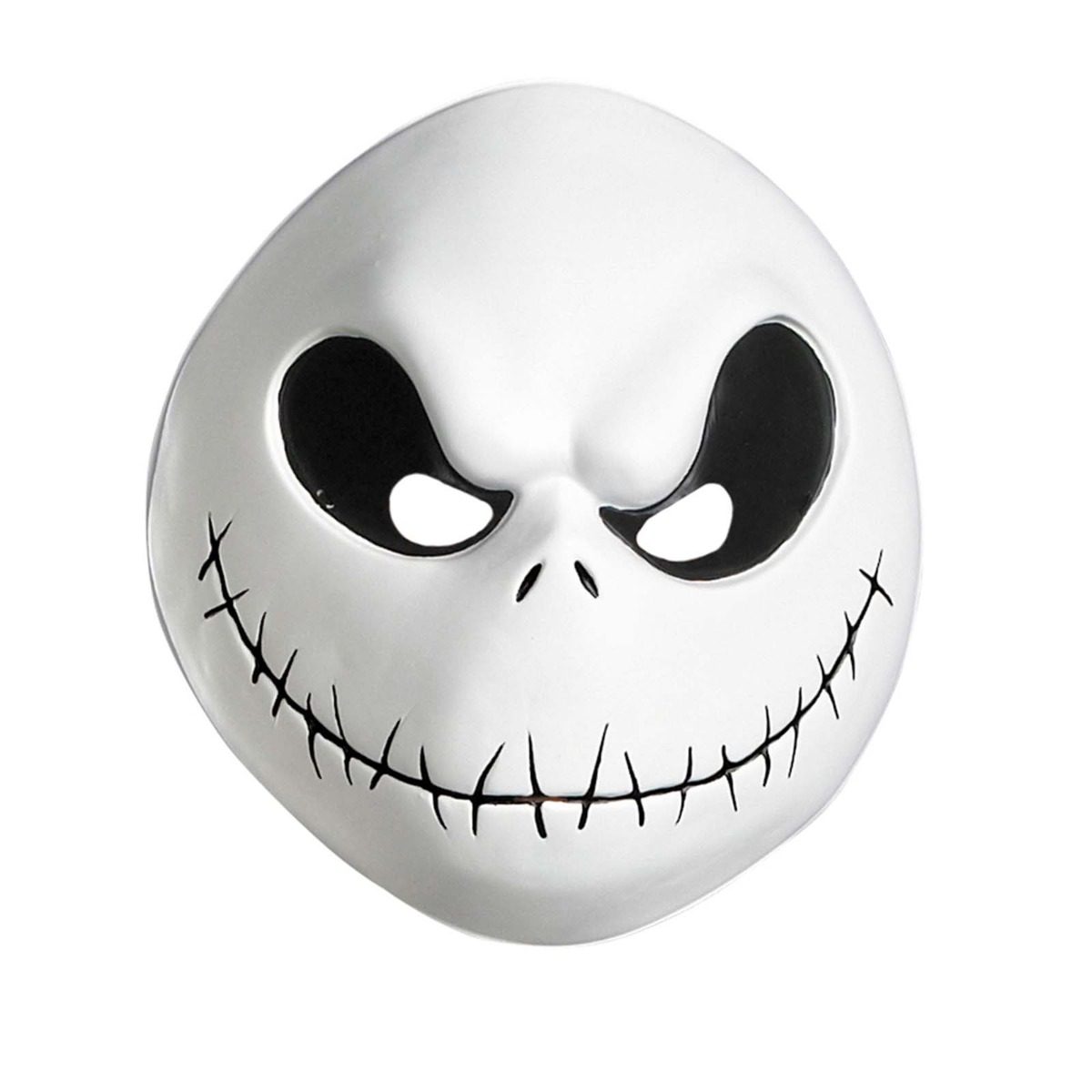
A mask changes nothing about the wearer's clothes and adds nothing to the chair, which is why the countdown starts here. Our Jack Skellington Mask is a Disney vacuform mask, mask only in the pack, worn over whatever the person already has on. One check before committing to it for a whole evening: full eye and nose openings, the same test set out in Are Halloween Costumes Safe. It matters more here than it does standing up, because a wearer who self-propels is reading the sidewalk and their own hands on the rims at the same time.
5. A full-body Morphsuit
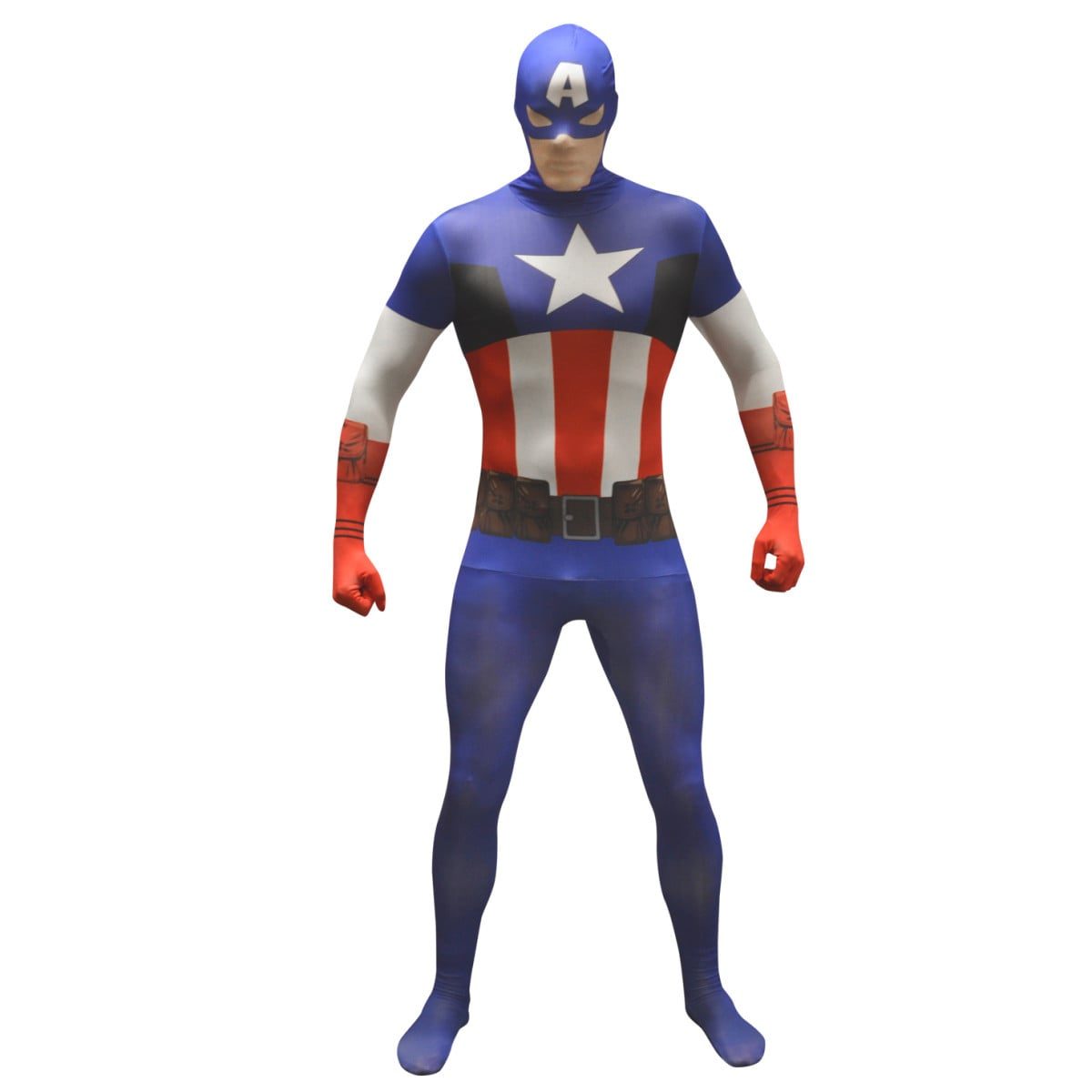
One garment, no separate pieces to keep track of, and nothing in its cut assumes the wearer is standing. Our Captain America Value Morphsuit is a 4-way stretch bodysuit with cover-stitched inner seams, built to flex rather than hold a fixed shape, and it covers head to toe, face included. Sizing runs by height across four sizes, which is the one thing to check twice: size it on the wearer's full height rather than their seated height.
4. A tabard with a separate hood
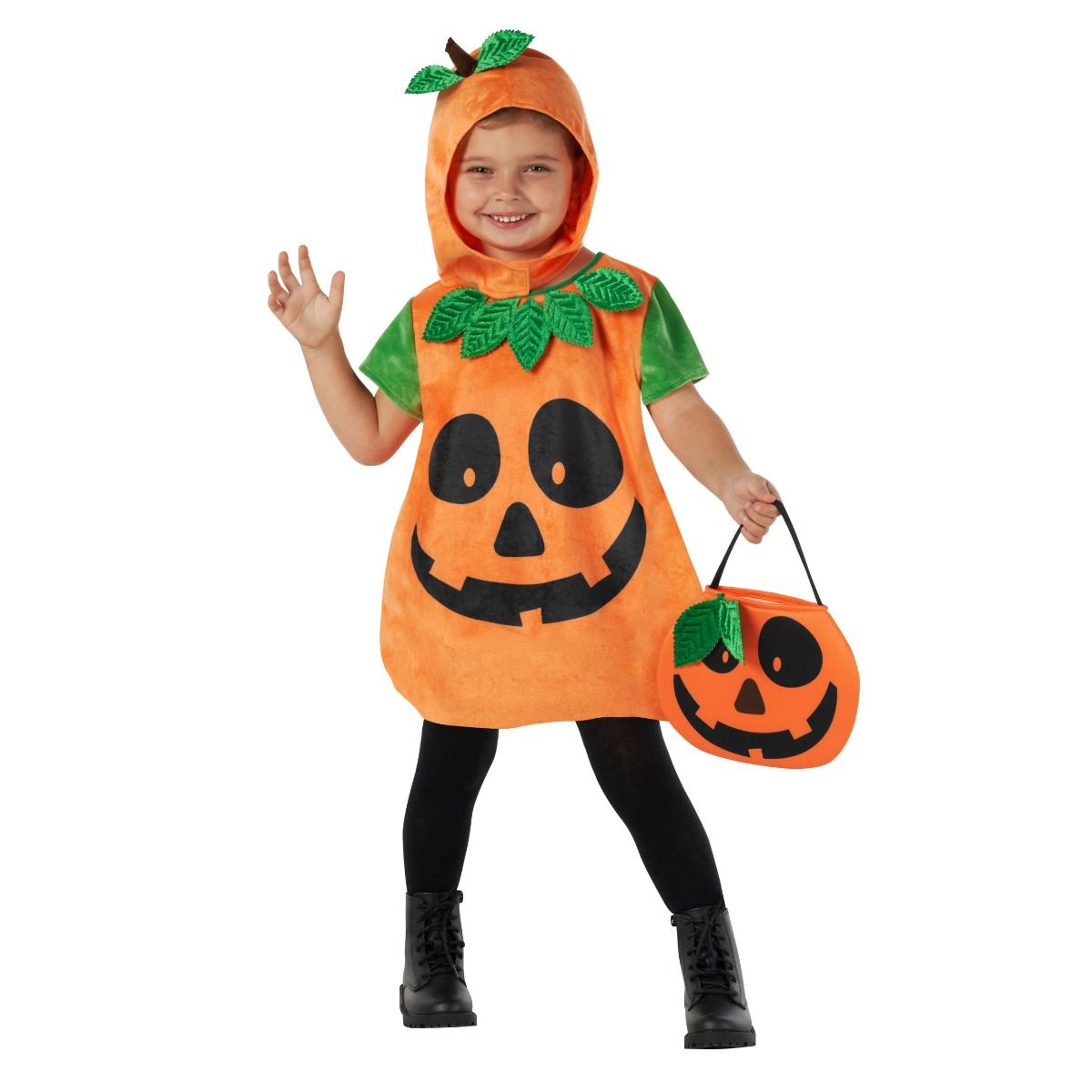
A tabard goes on over whatever the wearer already has on and asks nothing of the legs. Our Kids Pumpkin Tabard Costume layers over regular clothes, and its matching hood is a genuinely separate piece rather than sewn on, so it comes off on its own if a hood bunched behind the head is uncomfortable against a seat back. It is sized for toddlers through small kids (T1, Toddler, S); the king set below is the same idea in the older sizes.
3. A full costume set, worn in pieces
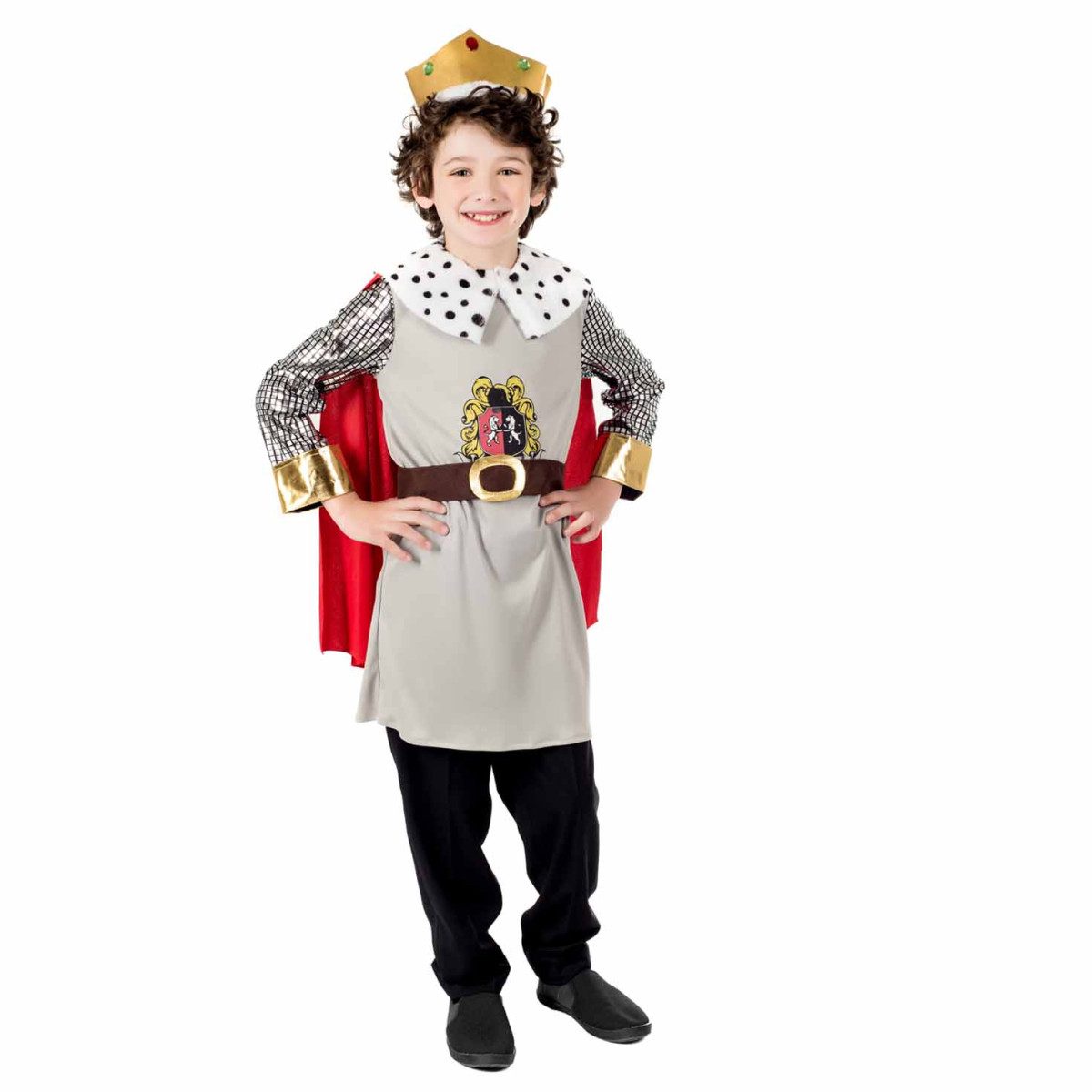
More pieces, still nothing that touches the chair. Our Kids King Costume is four separate items, a crested tunic, a cape, a belt, and a crown, sized for ages 4 to 12, and every one of them stays on the body. The cape is the piece to look at: once the wearer is settled, check where the hem lands and clip it above seat height if it reaches the wheels.
2. A wheelchair cover, mounted to the chair
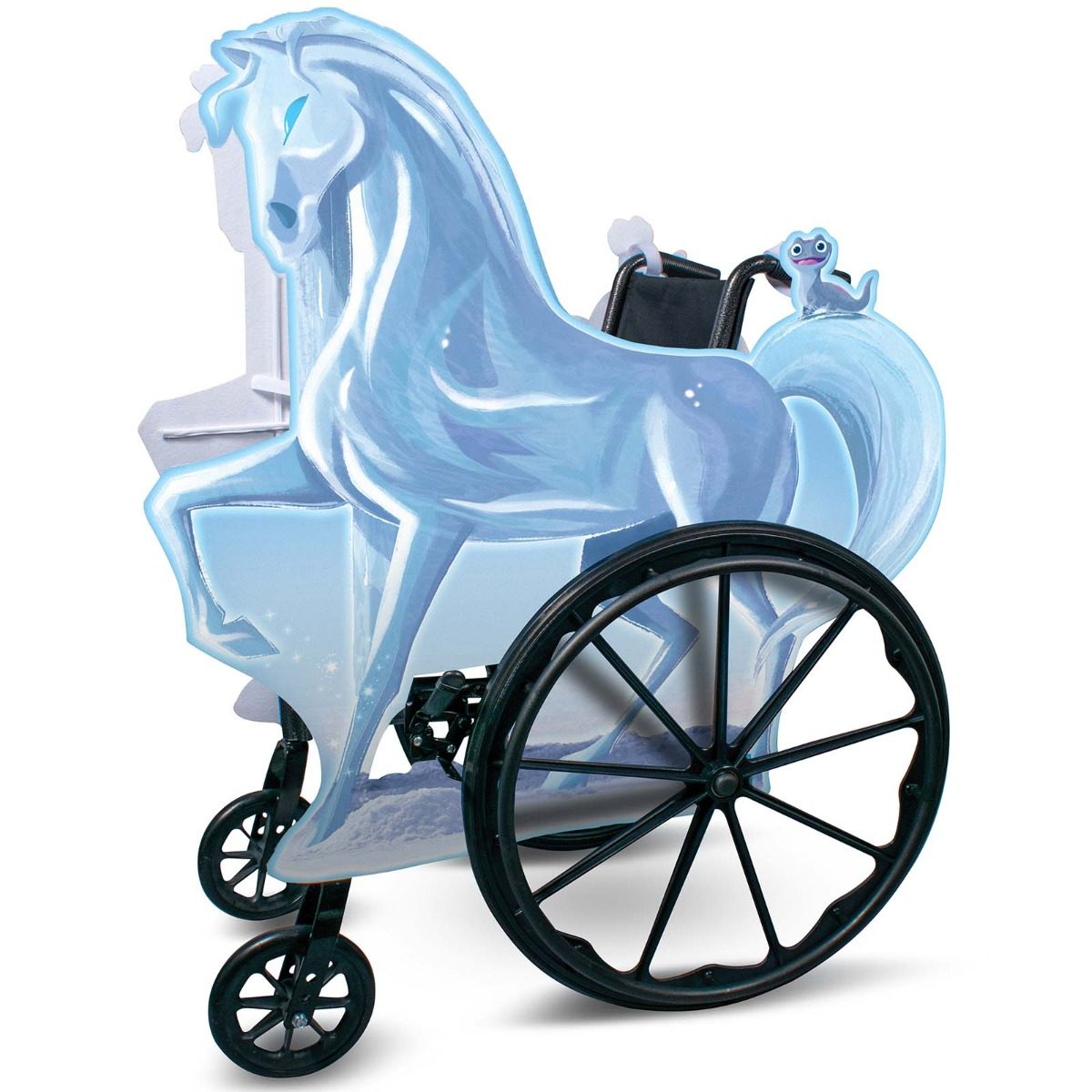
The first build where the chair is part of the costume rather than the person alone. Our Disney Frozen Ice Nokk Wheelchair Costume is a cover printed with the graphics of Elsa's horse Ice Nokk, and its product page is explicit about which chair it fits: standard wheelchairs with 24-inch wheels, not battery-powered chairs, strollers, or buggies. That rules out power chairs by name, the manual-versus-power line from above, written as a limit on this specific product rather than as general advice.
1. A wheelchair cover, full vehicle build
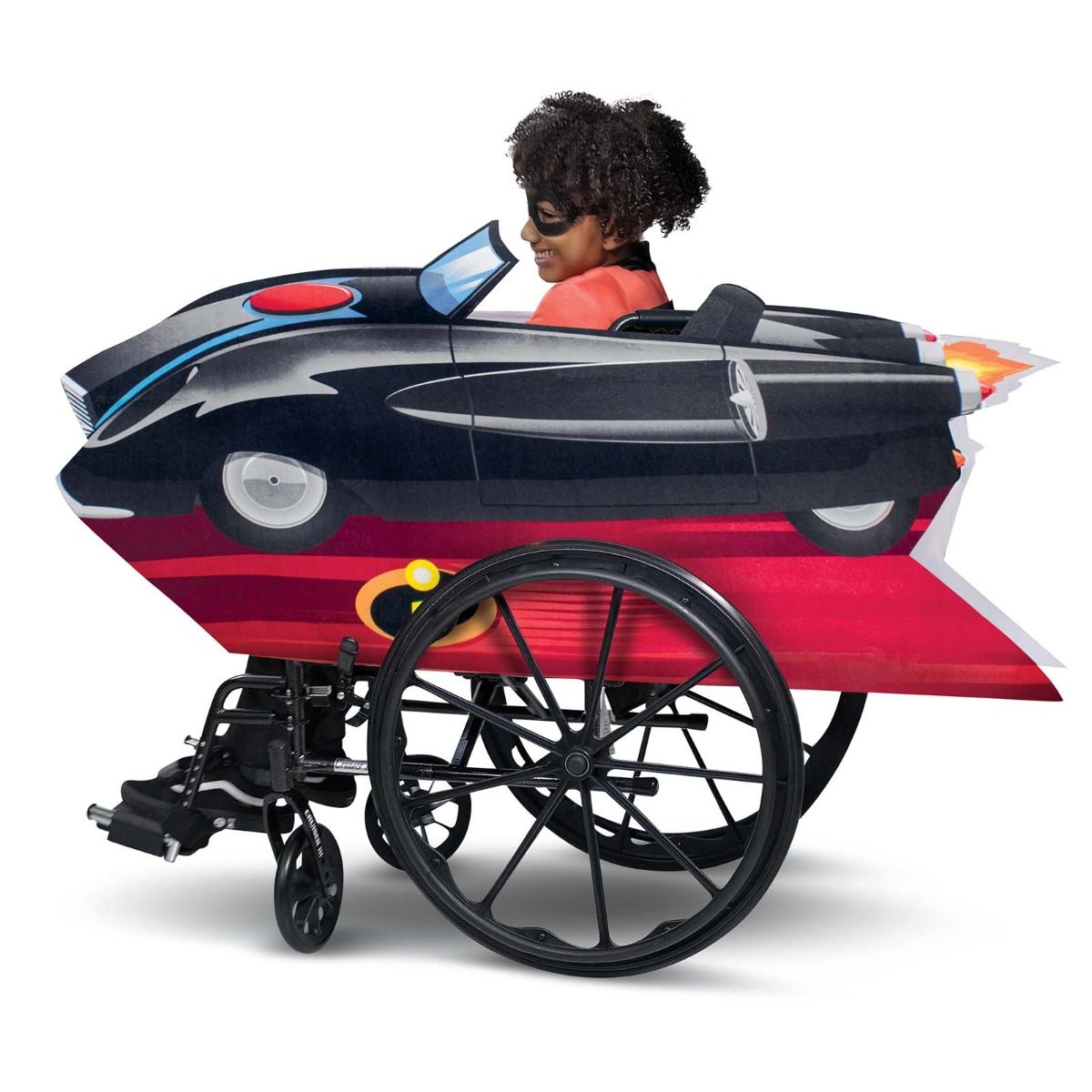
The full version of dressing the chair rather than the rider: the chair reads as the vehicle, and the rider drives it. Our Disney Incredibles Wheelchair Costume arrives as 2 felt car pieces and 22 supportive plastic piping pieces, styled as the Incredibles' car, and like the Ice Nokk cover it is built for standard wheelchairs with 24-inch wheels, not battery-powered chairs. Home-made versions run to flower pots, claw machines, and fishing boats with a net. The shape varies; the rule does not: whatever you build, keep it clear of the wheels and never wrap it under the seat.
Frequently asked questions
What Halloween costumes work with a wheelchair?
Anything worn on the body works exactly as it does for anyone else, from a mask to a full-body Morphsuit to a layered tabard or costume set. On top of that, a wheelchair cover makes the chair itself part of the costume, like our Disney Incredibles and Frozen Ice Nokk covers. Since our website analytics went live this spring, 9 in 10 of what we have sold was not an inflatable or a piggyback costume, the two styles that only work standing up.
Is it safe to attach a costume to a wheelchair?
Yes, as long as it leaves the push-rims and wheels clear and does not wrap under the seat. Neither of our own Disney wheelchair covers states how it attaches to the frame, so check a cover's own photos and description for that before buying. A home-made build should hold to the same two rules: wheels clear, nothing under the seat.
Do wheelchair costumes work for power wheelchairs?
Not automatically, and it is worth checking rather than assuming. Our own Disney wheelchair covers say on their product pages that they are made for standard wheelchairs with 24-inch wheels and are not suitable for a battery-powered chair. A power chair's motor housing, vents, and joystick controller all have to stay clear of anything mounted to the chair, which is a different set of limits from a manual chair's wheels and push-rims.
Can a wheelchair user wear a regular Halloween costume?
Yes. A Morphsuit, a tabard, a mask, or a costume set goes on the body the same way seated as standing, and none of them is cut around a standing pose. Two categories are the exception, worth ruling out before you order rather than after: inflatable costumes and piggyback costumes. Both are built as a standing illusion, one on a fan-and-battery frame and one on a carried rig, and both need the wearer upright to read at all.
What is a wheelchair cover costume, and how is it different from an adaptive costume?
A wheelchair cover fits over the chair itself, so the person's own clothes underneath do not need to be a costume at all; our Incredibles and Ice Nokk covers are both this type, and both are sized to the chair rather than to a body. An adaptive costume is a garment worn on the body, adjusted for easier dressing or a better seated fit. The two terms get used interchangeably online, and they are different products solving different parts of the same evening.
