


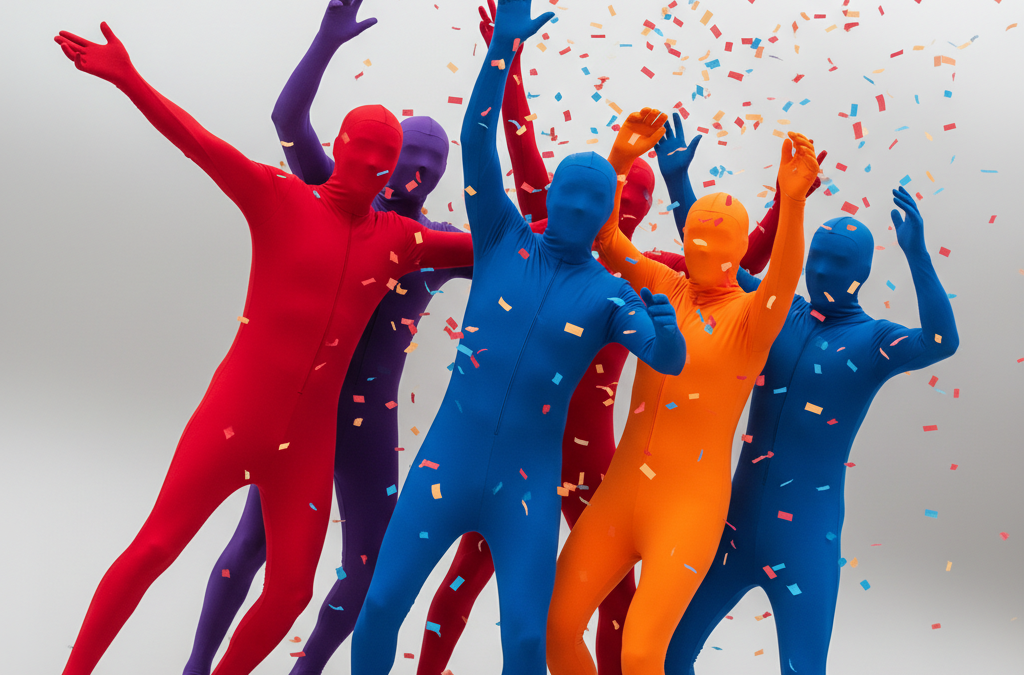
How do you create a group costume concept using matching Morphsuits in different colors?
Key Takeaways
- Start by selecting distinct colors that collectively tell a story.
- Choose a unifying theme such as superheroes, elements, or a rainbow squad.
- Assign specific colors to roles within the chosen theme for clarity.
- Using colored Morphsuits creates a cohesive and visually striking group costume.
- A well-planned color scheme enhances recognition and looks great in photos.
Table of Contents
- Start Here: The Quick-Start Formula for a Colored Morphsuit Group Costume
- Planning Your Group: Size, Roles, and Color Assignment
- Color Theory Basics: Turning Solid Morphsuits into a Visually Striking Group
- Choosing the Right Morphsuits: Fit, Comfort, and Safety for Every Body
- Building the Concept: From Random Colors to a Clear Theme
- Best Group Themes Using Different-Colored Morphsuits
How Do You Create a Group Costume Concept Using Matching Morphsuits in Different Colors?
Creating a memorable group costume starts with choosing distinct colors that tell a story together. How do you create a group costume concept using matching Morphsuits in different colors? Pick a unifying theme first—like superheroes, elements, or a rainbow squad—then assign specific colors to roles within that concept. This approach transforms individual colored suits into a cohesive visual statement that photographs brilliantly and creates instant recognition at any event.
The secret lies in treating each colored Morphsuit as a character rather than just a costume. Red becomes the leader, blue the strategist, green the nature expert, and yellow the energy source. This role-based approach gives everyone purpose while maintaining the visual impact that makes group costumes unforgettable. For a wide selection of shades, explore solid colour Morphsuits to match your group's vision.
Start Here: The Quick-Start Formula for a Colored Morphsuit Group Costume
Follow the 5-step framework: Define your event type (30 seconds), set group size and budget (£25-£60 per person), choose your color rule (rainbow, teams, or gradient), decide the vibe (spooky, heroic, silly), then assign roles to colors. Most successful concepts can be planned in under 20 minutes using this method.
The fastest path to a winning group concept starts with constraints, not endless possibilities. When you know your event type—whether it's a family Halloween party, office celebration, or bar crawl—you immediately eliminate half your options and focus on what actually works for your situation.
Budget clarity prevents last-minute compromises that weaken the overall effect. Setting a per-person range upfront ensures everyone can participate fully without financial stress affecting costume quality or enthusiasm. If you're planning for kids, check out Kids Morphsuits for comfortable and fun options.
The 5-Step "Blank Canvas" Framework
- Event Type (30 seconds): Kids' party, bar crawl, office function, or club night determines formality and coverage needs
- Group Size & Budget: 2-3 people need tight color sets; 4-6 allow balanced teams; 7+ create crowd effects
- Color Rule: All one shade, full rainbow, 2-3 team colors, or smooth gradient progression
- Vibe Decision: Choose one word—spooky, silly, sporty, heroic, or abstract—to guide all other choices
When Different Colors Work Best
Multi-color group costumes create dynamic visual interest that single-color themes simply cannot match. In photographs, the color variation draws the eye across the entire group rather than creating a flat, uniform block. Each person maintains individual identity while contributing to the larger concept.
Different colors also solve practical problems. Height differences become part of the design when a tall person in dark blue stands next to someone shorter in bright yellow. The contrast enhances rather than fights natural variations in your group.
Quick Inspiration: 10 Concepts You Can Decide on in Under 3 Minutes
- Rainbow Squad: Classic color wheel progression for universal appeal
- Power Team: Each color represents a different superpower or ability
- Good vs Evil: Light colors versus dark colors in friendly opposition
- Neon Ninjas: Bright colors with simple black accessories
- Emoji Wall: Colors matching popular emoji expressions
- Elemental Quartet: Fire, water, earth, air represented through color
- Office Highlighters: Workplace-friendly fluorescent marker theme
- Color-Coded Game Characters: Video game inspired roles
- Festival Crowd: Concert or festival attendee simulation
- Family Color Heroes: Each family member gets signature color powers
Planning Your Group: Size, Roles, and Color Assignment

How Group Size Shapes the Best Concept
Small groups of 2-3 people work best with tight color relationships that create immediate visual connections. Primary colors (red, blue, yellow), traffic light themes (red, yellow, green), or rock-paper-scissors concepts give each person equal importance and clear definition.
Medium groups of 4-6 people allow for balanced team dynamics and simple storylines. You can create opposing forces (warm versus cool colors), elemental themes, or sports team structures where each color represents a different position or role.
Large groups of 7-12+ people excel at creating crowd effects—rainbow progressions, gradient lines, or abstract concepts where the group forms a larger visual pattern. Individual roles matter less than the collective impact.
Assigning Colors Without Arguments
The "hat draw" method eliminates personality conflicts and ensures fairness. Write colors on paper, fold them up, and let each person draw randomly. This removes the pressure of choosing and prevents anyone from feeling stuck with an "unwanted" color.
Alternatively, match favorite colors to suitable roles within your theme. Natural leaders often gravitate toward red or gold, while creative types might prefer purple or teal. Use personality preferences to strengthen the concept rather than fighting against them.
Consider practical modesty concerns when assigning colors. Very pale yellows or whites can appear more transparent under certain lighting conditions. Quality 125GSM+ fabric construction significantly reduces this risk, but darker colors provide additional confidence for those who prefer more coverage. For more on choosing the right shade, see the Mens Yellow Morphsuit Costume and Mens White Morphsuit Costume for examples of light and dark options.
Role Mapping: Turn Colors into Characters or Jobs
Transform abstract colors into concrete roles that everyone can understand and embody. Red naturally becomes the leader or tank character, blue suits the strategist or healer, green works perfectly for nature experts or support roles, while yellow energizes as the speed specialist or morale booster.
Office-friendly concepts work exceptionally well when colors represent departments or project roles. Marketing gets bright orange, IT takes cool blue, HR wears calming green, and Finance sports professional navy. This approach makes workplace costume events feel inclusive rather than silly.
| Color | Hero Role | Sports Role | Office Role | Simple Prop |
|---|---|---|---|---|
| Red | Tank/Leader | Captain | Marketing | Toy shield |
| Blue | Strategist | Coach | IT | Clipboard |
| Green | Nature Expert | Goalkeeper | HR | Plant prop |
| Yellow | Speed/Energy | Referee | Finance | Whistle |
| Purple | Mind Powers | Mascot | Creative | Crystal ball |
Color Theory Basics: Turning Solid Morphsuits into a Visually Striking Group
Warm vs Cool Colors and What They Communicate
Warm colors—red, orange, and yellow—project energy, chaos, and heroic determination. These shades naturally draw attention and work brilliantly for leaders, fighters, or anyone meant to stand out as the group's focal point. They photograph exceptionally well under artificial lighting and maintain their vibrancy even in dimmer venue conditions.
Cool colors—blue, green, and purple—communicate mystery, calm intelligence, and otherworldly power. These shades work perfectly for villains, mystics, or support characters who operate from the shadows. Cool colors also provide excellent contrast when paired with warm tones, creating dynamic visual tension that makes group photos pop. For more on the science behind color choices, see this overview of color theory.
Matching vs Contrasting: How to Choose a Palette
Analogous color schemes use neighboring colors on the color wheel—like blue flowing into teal flowing into green—to create smooth, gradient effects that feel harmonious and sophisticated. This approach works brilliantly for elemental themes or when you want the group to feel like parts of a single entity.
Complementary palettes pair opposite colors—purple with yellow, red with green—to create high-impact visual clashes that grab attention from across any venue. Triadic schemes using red, blue, and yellow deliver classic comic-book vibes that feel instantly recognizable and energetic.
Planning Your Line-Up for Photos
Position your highest-contrast color pairs in the center of group formations to create natural focal points that draw the eye inward. This technique ensures that even casual snapshots have professional-looking composition without requiring photography expertise from whoever's taking the picture.
Use height combined with color to create dynamic "V" formations or wave patterns that add movement and energy to static poses. Taller people in darker colors can anchor the ends while shorter people in brighter shades create peaks in the middle, forming natural visual rhythms.
Mark specific spot orders in advance using a simple phone sketch or written note. When everyone knows exactly where to stand, group photos take 30 seconds instead of 5 minutes of awkward shuffling and repositioning.
Color Coding by Function
Assign specific colors to functional roles that make sense within your theme's logic. The "leader" gets red for authority, the "healer" takes calming green, the "villain" claims dramatic purple, while the "chaos element" rocks unpredictable orange. This system helps everyone understand their character instantly.
When mixing adults and children in family groups, use color intensity to maintain connection while showing relationships. Adults wear primary versions (bright red, deep blue) while kids get pastel variations (pink, light blue) of the same base tones, creating clear family units within the larger group. For more family costume inspiration, you might enjoy this blog on festival group ideas.
Choosing the Right Morphsuits: Fit, Comfort, and Safety for Every Body
Sizing a Full-Body Suit for Real Humans (Not Mannequins)
Proper Morphsuit sizing requires more than just height and weight ranges—it demands understanding how fabric behaves on moving, breathing human bodies. Quality manufacturers test over 30 separate measurements per design to ensure the suit moves naturally when you walk, sit, dance, or reach for drinks without creating uncomfortable pulling or awkward bunching. For help finding your ideal fit, consult the Size Guide – Find Your Perfect Fit Every Time.
Schedule a fitting session 48-72 hours before your event, allowing 5-10 minutes per person to check zippers, seam placement, and full range of motion. This timing gives you space to make adjustments or size changes without last-minute panic, while ensuring the suits still feel fresh and exciting on the actual day.
Comfort & Breathability: What to Look For
When choosing full-body suits for your group concept, comfort directly impacts whether your team will maintain enthusiasm throughout the entire event. The fabric weight makes a significant difference—125GSM+ material provides the ideal balance between opacity and breathability, preventing the see-through issues that plague cheaper alternatives while allowing proper air circulation during active wear.
Temperature regulation becomes critical when multiple people are wearing full-body coverage in crowded venues. Quality suits allow moisture to escape rather than trapping heat and sweat against the skin. For groups planning extended wear (3+ hours), consider the venue temperature and activity level when deciding on base layers—thin cotton undergarments work well for air-conditioned spaces, while going minimal underneath suits warmer outdoor events.
Safety and Visibility in Group Settings
Group coordination requires clear visibility protocols, especially when how do you create a group costume concept using matching Morphsuits in different colors involves managing multiple people in crowded spaces. Designate at least one person as the "navigator" who keeps their hood down or uses modified eye openings for enhanced peripheral vision. This person leads the group through busy areas and monitors the overall safety of the team.
For events involving children or low-light conditions, establish clear rules about when hoods stay up versus down. Photo opportunities and staged performances work perfectly with full coverage, but transitioning between venues or navigating stairs requires unobstructed vision. Create simple hand signals or verbal cues that the entire group understands for quick communication when voices are muffled.
Safe modification techniques include carefully enlarging existing eye openings using small scissors, always cutting conservatively and testing vision before making additional adjustments. Never modify the mouth area in ways that could compromise the suit's structural integrity—instead, plan regular "air breaks" where the group can partially unzip or lower hoods for comfort.
Bathroom Break Logistics for Groups
Practical planning prevents mid-event costume crises. Build 10-15 minute "refresh windows" into your timeline every 2-3 hours, allowing the entire group to handle bathroom breaks, hydration, and quick comfort adjustments simultaneously. Assign "zip buddies" before the event begins—each person partners with someone to help with back zippers and ensure proper re-sealing.
Strategic underlayer choices streamline the process significantly. Avoid complicated clothing that requires complete undressing; instead, choose simple pieces that allow quick access while maintaining modesty. Position zippers correctly during initial dressing and do a practice run to identify any fit issues before leaving for the event.
Building the Concept: From Random Colors to a Clear Theme

Transforming individual colored suits into a cohesive group identity requires structured brainstorming that moves beyond "we'll figure it out when we get there." The most successful group concepts emerge when teams invest 15-20 minutes in focused planning rather than hoping inspiration strikes spontaneously. For more creative brainstorming tips, read our latest blog articles on group costumes and party ideas.
Step-by-Step Brainstorm Session (15–20 Minutes Max)
Start with your available colors and work systematically toward a unified concept. Step 1: List your group's colors in order of preference or availability—this creates your palette foundation. Step 2: Generate 5 nouns that naturally connect to those colors (fire, ocean, forest, lightning, shadow, galaxy). Step 3: Transform each noun into a specific role or character archetype that someone can embody. Step 4: Identify one simple prop or accessory per person that instantly communicates their role to observers.
This framework prevents the common trap of overthinking while ensuring every group member has a clear character purpose. Keep the brainstorm moving quickly—first instincts often produce the most memorable concepts, while excessive deliberation tends to dilute creative energy.
Clarity Test: Will Strangers Get It in 3 Seconds?
Effective group concepts pass the immediate recognition test. Ask yourself: would a stranger identify your theme from a single photograph without explanation? Can you describe the entire concept in eight words or fewer? If the answer to either question is uncertain, your concept needs simplification or clearer visual cues.
When themes require additional explanation, strategic mini-props solve the clarity problem without overcomplicating costumes. Consider small chest emblems, handheld signs, or matching accessories that reinforce the concept. The goal is instant understanding, not elaborate storytelling—save complex narratives for intimate gatherings where you can explain the concept directly.
Real-World Scenarios
Mixed groups with varying enthusiasm levels benefit from flexible "spectrum squad" approaches—assign colors along a gradient and let individual personalities determine how fully they embrace character roles. Office environments often work best with professional-friendly concepts like "department color-coding" or "project team rainbow," allowing workplace participation without compromising professional standards.
Family groups spanning multiple age ranges succeed with elemental or nature-based themes where younger children can interpret their roles simply while adults add sophisticated details. Stag parties, hen dos, and birthday celebrations thrive on competitive concepts—team captains versus chaos characters, or good versus evil dynamics that encourage playful interaction throughout the event. For more real-world inspiration, check out this fun Marvel-themed group costume blog.
Best Group Themes Using Different-Colored Morphsuits
Proven concepts that consistently deliver visual impact and group cohesion provide reliable starting points for teams seeking memorable costume experiences. These themes scale effectively across different group sizes while maintaining clear identity markers that photograph beautifully.
Rainbow Squad (3–12+ People)
The rainbow concept offers unmatched flexibility, scaling from three primary colors up to a full twelve-color spectrum depending on group size. Arrange team members in color-wheel order for photos, creating natural gradient effects that look professionally coordinated. This theme works exceptionally well for family groups since it accommodates any number of participants without excluding anyone. For a ready-made option, consider the Rainbow Morphsuit for instant group impact.
Frequently Asked Questions
What are the key steps to planning a cohesive group costume using different-colored Morphsuits?
Start by selecting a unifying theme and distinct colors that tell a story together. Define your event type, set group size and budget, choose a color scheme like rainbow or teams, decide the vibe, and assign roles to each color for clarity and cohesion.
How can assigning specific roles to colors enhance the overall impact of a group Morphsuit costume?
Assigning roles to colors turns each Morphsuit into a character with purpose, making the group costume more meaningful and recognizable. This approach creates a clear visual story that stands out and makes photos pop.
Why is it important to consider event type, group size, and budget when creating a colored Morphsuit group costume?
Knowing the event type narrows down theme options that fit the occasion, while group size and budget ensure everyone can participate comfortably without compromising costume quality. This planning prevents last-minute compromises and keeps the group looking sharp and coordinated.
How do different colors in Morphsuits improve visual interest and accommodate group member differences like height?
Using varied colors creates a striking and dynamic look that draws attention and highlights each member's role. Different colors also help balance visual differences such as height, making the group appear more harmonious and well-planned.
About the Author
Joe is the chief contributing writer for the MorphCostumes Blog.
MorphCostumes is the Costume Brand that gives you the costumes that make your best times in life even better.
We are the brand for people who want to make Halloween, Christmas, Easter, Birthdays or BBQ Parties even better with great costumes and have won many awards.
We know that many people have experienced having these events ruined by a rubbish costume they have bought online from a no-brand Chinese factory. The costume might turn up not looking like it was advertised, badly fitting, of poor quality so it tears easily. The material may be see-through, non-breathable or itchy. It also might be missing key accessories that complete the look.
MorphCostumes ensures that it makes your best times better by doing the following:
- Having thousands of innovative and unique costume designs.
- Ensuring fit by testing 30 or more separate measurements on each costume design.
- Guaranteeing quality by performing over 500,000 in-person quality checks each year.
- Always using 125 GSM or more material for a soft, breathable and quality feel.
- Always being clear on what is included in the costume so you are never disappointed.
Through sticking to these values since launching in 2009, we have won awards such as Disney Product of the Year, and the business has been recognised as an Ernst & Young Entrepreneur of the Year finalist (twice), featured on the FEBE 100 fastest growing companies list (twice), the Sunday Times Fast Track, and the Maserati Top Companies List.
We have also appeared across publications such as the Wall Street Journal, CNBC, BBC, Wired, BuzzFeed, The Times, The Telegraph, The Financial Times, and The Guardian.
